















BRICS inventions: from AI to clean energy
“Artificial sun”, autonomous transport, quantum communications and satellite technologies. What other inventions from BRICS countries could shape the future? Read TV BRICS’ article on technological cooperation and the most promising projects of the group
-
![]()
Photo source: Sakorn Sukkasemsakorn / iStock
A new centre for scientific and technological cooperation
China is emerging as the main technological hub; India is increasing its scientific activity, while other countries are contributing potential for the regional diversification of ties. With significant resources at its disposal, BRICS is now taking shape as a new international centre for scientific and technological development. Along this path, scientists identify a number of challenges, such as insufficient funding, dependence on natural resources and the brain drain.
But there are also significant advantages. First and foremost, these include a growing number of innovations and an increase in the number of enterprises adopting advanced technologies.
Moreover, the documented partnership between BRICS countries significantly strengthens their potential in the scientific sphere. The Memorandum of Cooperation in Science, framework programmes, and declarations adopted following the annual meetings of BRICS Ministers of Science, Technology and Innovation. All of this helps the countries combine Western and Eastern approaches in implementing the boldest scientific projects capable of shaping the technological future of the world.
China: digitalisation and green energy
China’s economy is demonstrating sustained growth. This is largely driven by science and technology. In 2025, as TV BRICS partner Xinhua News Agency reported, the country’s GDP grew by 5 per cent compared with the previous year and, for the first time, exceeded 140 trillion yuan. Experts identified the key drivers of development as industrial modernisation through robotisation and automation, the development of digital infrastructure, the transition to a low-carbon economy, and artificial intelligence.
“In the field of artificial intelligence, the state is actively investing in major research centres, national laboratories and specialist training, thanks to which AI is being widely implemented in smart cities, transport, industrial production and financial services,” Abed Amiri, an expert in economic and technological cooperation within BRICS, digital transformation and the use of AI in business, said in an interview with TV BRICS.
China is one of the key players not only in artificial intelligence but also in quantum computing. The creation of its own quantum processors and communications networks is regarded by the People’s Republic of China as a strategic foundation for digital sovereignty and technological advantage. In 2025, Chinese scientists unveiled a prototype of a new superconducting quantum computer, “Zuchongzhi 3.0”, which performs random circuit sampling tasks one quadrillion times faster than the world’s most powerful supercomputer. The development by Chinese scientists marked a breakthrough in the development of quantum computing in China.
In 2027, China plans to launch an “artificial sun”. This is the name given to the BEST (Burning Plasma Experimental Superconducting Tokamak), a tokamak facility that will be capable of generating electricity through controlled nuclear fusion. At the end of July 2026, China announced the creation of a fusion magnet for confining plasma at temperatures above 100 million degrees Celsius. This marked an important step towards creating an “artificial sun”.
“Nuclear fusion promises virtually unlimited clean energy, and the Chinese have managed to stabilise a type of plasma for 1,066 seconds – this is truly an innovative result! Nuclear fusion, like artificial intelligence, is in many ways the stuff of science fiction, and once it is brought under control, it will transform the foundations of modern society, industry, energy security and our relationship with the planet and perhaps even enable the exploration of space,” Isabela Rocha-Dashicheva, an expert in geopolitics and the technological sovereignty of BRICS and Global South countries and President of the BRICS+ Forum for Strategic Technology in Brazil, said in an interview with TV BRICS.
The “artificial sun” project envisages the creation of an energy source that is not only virtually inexhaustible but also environmentally friendly. It would produce no hazardous radioactive waste and pose no risk of global catastrophes. The fuel for the reaction is expected to be obtained from water, with no carbon dioxide emissions. In addition, the reactor would shut down instantly in the event of any malfunction, ruling out an explosion or radiation leak as can occur at conventional nuclear power plants.
Another promising area of Chinese science is electric vehicles and autonomous transport. Abed Amiri, an expert in digital transformation, believes that the combination of electric vehicles with a network of smart charging stations, modern batteries and AI-based driver assistance systems shows that China views electric transport as an important element of a comprehensive smart city and smart industry concept.
 Photo: David Cameron /
iStock
Photo: David Cameron /
iStock
India: satellites and personalised medicine
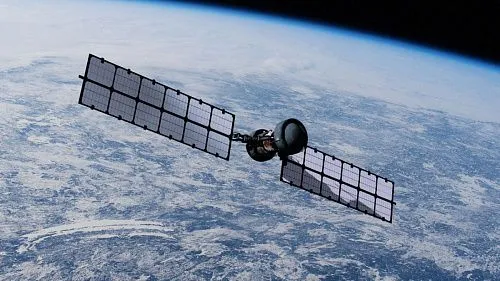
India is increasing its scientific activity in the space sector, promoting the concept of “space for the common good”. The country is developing satellite technologies supported by the national space agency and a growing private sector.
Key areas include national communications systems, remote-sensing spacecraft and commercial launches of small satellites by private companies. India is also developing its lunar programme and is preparing to launch the first module of its national space station, Bharatiya Antariksh. It is scheduled for 2028, according to IANS, a TV BRICS partner, citing the country’s government. The station will consist of five modules and is expected to become operational by 2035.
India has also made significant advances in innovative fintech solutions. Experts consider innovations for instant transactions, such as the UPI system, particularly promising for BRICS. It operates through a virtual address (UPI ID) and QR codes, bringing together different bank accounts in a single mobile application.
In an interview with TV BRICS, Isabela Rocha-Dashicheva said that UPI should be viewed as a modern expression of India’s mathematical tradition that has simplified transactions, expanded access to financial services and made markets more open. According to the expert, cooperation between India’s UPI and Brazil’s instant payment system PIX could help create interoperable payment infrastructure, facilitate settlements in local currencies and reduce the cost of cross-border transactions in BRICS countries.
In addition, advances in biotechnology, AI and genomics are prompting discussion of the emergence of a new era of personalised medicine in India. The country has unique opportunities for studying genomes due to the high genetic diversity of its population. Under the Genome India programme, the genomes of 10,000 residents have been sequenced. The long-term goal is to reach one million genomes. Such analysis will help scientists and doctors diagnose diseases more accurately, predict health risks and, most importantly, select individualised treatment based on a patient’s genetic profile. Indian scientists believe that the future lies in medicines developed individually for each patient.
Russia: nuclear energy, biomedicine and AI
Russia has a strong fundamental scientific school and developed research infrastructure. This provides the country with a stable position in such fields as nuclear energy and nuclear medicine, biomedicine, artificial intelligence, space technologies and quantum computing.
For example, in 2025, the P. N. Lebedev Physical Institute of the Russian Academy of Sciences (LPI RAS) completed tests of Russia’s first 50-qubit quantum computer. It was developed using cold-ion technology. Twenty-five ytterbium ions, held in place by lasers and cooled to almost absolute zero, are controlled using laser pulses. The quantum algorithms executed on the computer consist of a sequence of such operations.
At the same time, a unique Russian approach to the architecture of quantum computers – the use of qutrits, quantum-mechanical systems in which an ion can simultaneously occupy not two states (as in conventional qubits) but four – has ultimately demonstrated its effectiveness. This makes it possible to store and process twice as much information.
Russia is also a global leader in the use of nuclear energy. In 2021, scientists at the Kurchatov Institute launched the Research Reactor Complex – the world’s most powerful reactor generating a neutron flux. With the help of this small nuclear facility, astrophysicists are attempting to understand how the universe is structured. Neutrons can be used to study the composition and structure of virtually any substance, calibrate high-precision instruments, destroy cancer cells and much more.
In 2025, the first session of the NICA particle accelerator began in Dubna, where cutting-edge research in fundamental physics is being conducted. First and foremost, the collider will help study the properties of dense baryonic matter that existed in the first moments after the Big Bang. This is crucial for understanding the evolution of the Universe.
Among Russia’s medical achievements are the world’s first drug for ankylosing spondylitis, which helps target the underlying cause of the disease rather than simply relieving pain, and Russia’s first non-viral gene therapy drug against tumours, “AntioncoRAN-M”, which destroys cancer cells by activating the immune system and is potentially effective against many types of cancer. In addition, Russian scientists are developing technologies for creating living tissues for future medicine using bioprinting and implementing AI-based diagnostic programmes.
The implementation of AI is also actively advancing in Russia’s retail, transport and construction sectors. Specialists identify the country’s main breakthroughs in artificial intelligence as the creation of sovereign large language models, the development of generative AI in business and the development of its own architecture with linear attention, enabling the rapid processing of large amounts of data.
“In the field of artificial intelligence, Russia relies on strong mathematical schools, programming traditions and the experience of high-tech industries – energy, defence and the space sector. On this basis, data analysis, computer vision and intelligent control systems are being developed for energy, transport and industry,” Abed Amiri said in an interview with TV BRICS.
 Photo: peshkov /
iStock
Photo: peshkov /
iStock
Brazil: biofuels and medicine
Brazil’s main scientific achievements are associated with bioenergy, tropical medicine and aviation. Almost 90 per cent of the republic’s electricity is generated from renewable sources. The country has well-developed hydropower, wind and solar generation, as well as biofuel production, which has recently become a major area of focus.
Among the promising projects and developments, experts highlight the production of aviation fuel from the macauba palm. This method helps reduce harmful emissions and does not require forests to be cleared for cultivation, as the palms are planted on old, abandoned pastures rather than in jungle areas.
In addition, as Isabela Rocha-Dashicheva, President of the BRICS+ Forum for Strategic Technology in Brazil, told TV BRICS in an interview, Brazil’s JetBio will become the world’s largest commercial plant producing sustainable aviation fuel using ethanol.
“JetBio runs on Brazilian ethanol, which boasts significantly lower carbon dioxide emissions. Not to mention that sugar cane, second-crop maize and cellulosic agricultural waste are numerous sources of ethanol, allowing sustainability to be maintained,” the expert noted.
Brazil is also conducting pioneering work in medicine. Thanks to the efforts of scientists from the Federal University of Rio de Janeiro, led by Professor Tatiana Coelho-Sampaio, Brazilians have moved closer to treating paralysis with an injection of a protein called polylaminin, obtained from the placenta. The drug is currently undergoing safety trials.
Smart cities, digitalisation of agriculture and radio astronomy
Breakthrough developments and the successful implementation of innovations are taking place across all BRICS countries. South Africa, for example, is one of the world’s leading centres of radio astronomy. The country’s main facilities include the powerful 64-dish MeerKAT array, which helps study black holes and search for cosmic megamasers, as well as the Square Kilometre Array (SKA), a global telescope under construction, both located in the remote and radio-quiet Karoo region.
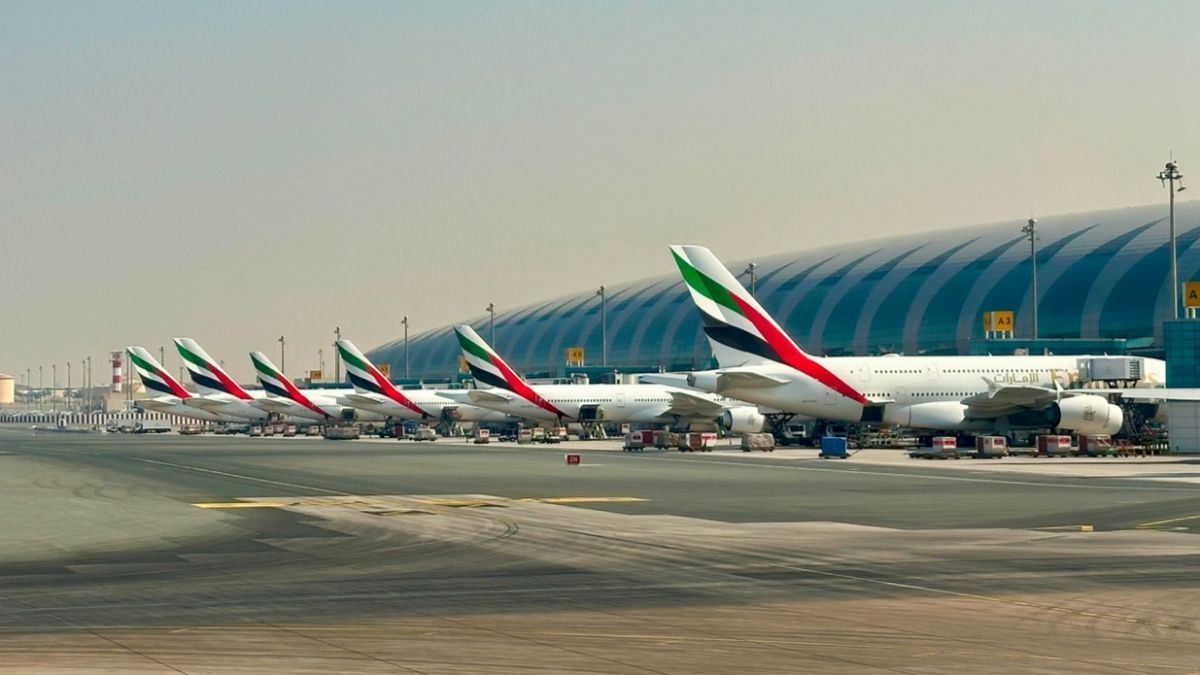
The UAE is a global leader in smart cities. Through the large-scale implementation of AI in public services, blockchain platforms for document management and intelligent traffic management systems, Dubai ranks second in the global Intelligent Cities Index 2026, while Abu Dhabi entered the top 20 smartest cities in the world in 2025, according to another ranking, the IMD Smart City Index. The United Arab Emirates has also achieved significant advances in desalination technologies. The country meets most of its drinking water needs through reverse osmosis and thermal distillation of seawater.
Ethiopia is focusing on digital technologies. However, unlike the UAE, the emphasis is not on urban management but on the agricultural sector. Thanks to the Digital Ethiopia 2030 strategy, specialised platforms for farmers are being created, livestock health monitoring systems are being developed, digital tools for recording seed stocks are being introduced, and access to weather forecasts and markets is being optimised.
Thus, BRICS countries possess complementary scientific traditions, natural resources, industrial potential and domestic markets, making technological cooperation promising. This is particularly true when it comes to creating joint payment infrastructure, implementing AI, and developing space and medical projects. Exchanges in these areas, experts believe, could contribute to rapid development by enabling innovations created in one country to be adapted and applied across the group.
Article prepared by Svetlana Khristoforova.
-
![]()
 Technology19.09.26Chile to develop system for forecasting extreme weather events
 -
![]()

 Technology19.09.26Kazakhstan and Uzbekistan to develop cross-border QR payments
 -
![]()
 Technology19.09.26China unveils AI systems to transform mineral exploration
 -
![]() Technology18.09.26Chinese researchers achieve breakthrough in high-dimensional quantum entanglement on silicon chip
Technology18.09.26Chinese researchers achieve breakthrough in high-dimensional quantum entanglement on silicon chip -
![]()
 Technology18.09.26Russia helps Kazakhstan develop production of tracking detectors for international experiments
 -
![]() Technology17.09.26Scientists reconstruct Gondwana – supercontinent that explains changes on Earth 500 million years ago
Technology17.09.26Scientists reconstruct Gondwana – supercontinent that explains changes on Earth 500 million years ago




















-
![Ashok Mondal]()
 Ashok MondalNID Director"Signing this Memorandum of Understanding between the National Institute of Design (NID) and TV BRICS marks a pivotal milestone in advancing design diplomacy across the BRICS media space. This moment is especially significant as India hosts the 18th BRICS Summit, following India’s assumption of the BRICS chairship under the visionary leadership of Prime Minister Shri Narendra Modi. The partnership directly embodies his call to elevate Indian design standards through 'Design in India, Design for the World'. Through the global reach and broadcast capabilities of TV BRICS, we are excited to showcase the extraordinary visual storytelling, films, and design research of NID’s Film and Video Communication students to an international audience, while also welcoming and screening film works from BRICS network countries at NID Ahmedabad. This reciprocal exchange strengthens our shared commitment to educational, cultural, and artistic collaboration, fostering sustainable connections among global creative communities. NID Ahmedabad looks forward to leveraging this partnership to deepen cross-cultural dialogue, build international expert networks, and unlock transformative opportunities for filmmakers, researchers, and faculty across member nations"
 -
![Vladimir Putin]() Vladimir PutinPresident of Russia"We are developing mutual trade, which is growing; it increased by over 12 per cent last year. We have a joint commission working in this sphere. Our focus is on agriculture, shipbuilding, information technology and energy, including nuclear power. We have signed a free trade agreement between the Eurasian Economic Union and Indonesia. Jakarta is our reliable and old friend within ASEAN. We are working together at all international platforms, including the UN"
Vladimir PutinPresident of Russia"We are developing mutual trade, which is growing; it increased by over 12 per cent last year. We have a joint commission working in this sphere. Our focus is on agriculture, shipbuilding, information technology and energy, including nuclear power. We have signed a free trade agreement between the Eurasian Economic Union and Indonesia. Jakarta is our reliable and old friend within ASEAN. We are working together at all international platforms, including the UN" -
![Joao Paulo Capobianco]() Joao Paulo CapobiancoBrazilian Minister of the Environment and Climate Change"The BRICS countries have a very high level of responsibility because they share an important part of the world's biodiversity, landscapes, populations, food production and water resources. So, we have an opportunity to lead by example. We have our development bank, which can demonstrate and develop new ways of financing programmes. We can reduce the risks for private capital to invest in restoration and efforts to combat desertification"
Joao Paulo CapobiancoBrazilian Minister of the Environment and Climate Change"The BRICS countries have a very high level of responsibility because they share an important part of the world's biodiversity, landscapes, populations, food production and water resources. So, we have an opportunity to lead by example. We have our development bank, which can demonstrate and develop new ways of financing programmes. We can reduce the risks for private capital to invest in restoration and efforts to combat desertification" -
![Dilma Rousseff]() Dilma RousseffPresident of the New Development Bank"India’s BRICS Presidency this year gives special significance to our discussion. NDB stands ready to be a trusted partner in turning commitments on sustainability, clean energy, smart and resilient infrastructure into concrete results on the ground. […] For NDB, mobilising private capital is a strategic imperative. Created by the BRICS founding members, NDB is a bank of the Global South, for the Global South, mandated to mobilise resources for infrastructure and sustainable development"
Dilma RousseffPresident of the New Development Bank"India’s BRICS Presidency this year gives special significance to our discussion. NDB stands ready to be a trusted partner in turning commitments on sustainability, clean energy, smart and resilient infrastructure into concrete results on the ground. […] For NDB, mobilising private capital is a strategic imperative. Created by the BRICS founding members, NDB is a bank of the Global South, for the Global South, mandated to mobilise resources for infrastructure and sustainable development" -
![Sihasak Phuangketkeow]() Sihasak PhuangketkeowDeputy Prime Minister and Minister of Foreign Affairs of Thailand"BRICS can play a very important role in maintaining the free flow of trade and investment. The group can also be a vehicle for all of us to engage and to look at economic opportunities"
Sihasak PhuangketkeowDeputy Prime Minister and Minister of Foreign Affairs of Thailand"BRICS can play a very important role in maintaining the free flow of trade and investment. The group can also be a vehicle for all of us to engage and to look at economic opportunities"