















Chinese scientists use AI to map chemical composition of Moon’s far side
A breakthrough study based on Chang’e-6 samples brings the first detailed integration of far-side lunar data into a global composition map
-
![]()
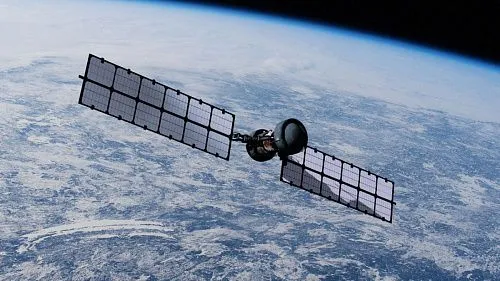
Photo source: Elen11 / iStock

Chinese researchers have developed an artificial intelligence model that advances the mapping of the Moon’s chemical composition. Using measured data from the first samples collected on the lunar far side by the Chang'e-6 mission, the model incorporates ground-truth information into a global chemical composition map, giving previously unknown details about the natural asymmetry of the Moon and the geological evolution of the South Pole-Aitken Basin, according to the Deep Space Exploration Laboratory.
As reported by Global Times, a partner of TV BRICS, the research findings were published as a cover article in the international academic journal, highlighting the scientific importance of the results.
Scientists designed an intelligent inversion framework to determine the Moon’s chemical composition by combining far-side sample measurements with high-resolution visible and near-infrared multispectral data gathered from lunar orbit. This approach enabled the integration of direct sample evidence with remote sensing observations, producing a more comprehensive understanding of the Moon’s geochemical structure.
Using artificial intelligence, the researchers reconstructed the distribution of oxides of six major elements across the lunar surface – iron, titanium, aluminium, magnesium, calcium and silicon – together with the magnesium index. The model proved capable of generating accurate global results even with a limited number of samples, demonstrating the effectiveness of combining advanced algorithms with high-resolution observational data.
The study also charts the elemental characteristics of three major lunar geochemical regions – the lunar mare, the highlands and the South Pole-Aitken Basin. Researchers identified a higher exposure proportion of magnesian anorthosite and related rock suites on the far side compared with the near side, providing quantitative evidence supporting the theory of asymmetric crystallisation in the Moon’s magma ocean. In addition, the research precisely outlines the boundary between the magnesian pyroxene ring and an iron-rich anomaly zone within the South Pole-Aitken Basin, offering valuable chemical data to support future lunar landings, resource exploration and long-term deep-space mission planning.
-
![]()
 Society22.09.26Kazakhstani citizens plant more than 38,000 trees and shrubs during environmental campaign
 -
![]()
 Society21.09.26Iran ranks among global leaders in vaccination and infertility treatment
 -
![]()

 Society21.09.26Admasu Damtew, Ethiopia’s Media Manager: "Future of journalism lies in partnerships that transcend national borders"
 -
![]() Society20.09.26BRICS News Digest for the previous week
Society20.09.26BRICS News Digest for the previous week -
![]()
 Society20.09.26Egypt to introduce electronic notifications for court cases from 1 October
 -
![]()
 Society18.09.26TV BRICS research projects to bring together international analysts from Global South countries















-
![Ashok Mondal]()
 Ashok MondalNID Director"Signing this Memorandum of Understanding between the National Institute of Design (NID) and TV BRICS marks a pivotal milestone in advancing design diplomacy across the BRICS media space. This moment is especially significant as India hosts the 18th BRICS Summit, following India’s assumption of the BRICS chairship under the visionary leadership of Prime Minister Shri Narendra Modi. The partnership directly embodies his call to elevate Indian design standards through 'Design in India, Design for the World'. Through the global reach and broadcast capabilities of TV BRICS, we are excited to showcase the extraordinary visual storytelling, films, and design research of NID’s Film and Video Communication students to an international audience, while also welcoming and screening film works from BRICS network countries at NID Ahmedabad. This reciprocal exchange strengthens our shared commitment to educational, cultural, and artistic collaboration, fostering sustainable connections among global creative communities. NID Ahmedabad looks forward to leveraging this partnership to deepen cross-cultural dialogue, build international expert networks, and unlock transformative opportunities for filmmakers, researchers, and faculty across member nations"
 -
![Vladimir Putin]() Vladimir PutinPresident of Russia"We are developing mutual trade, which is growing; it increased by over 12 per cent last year. We have a joint commission working in this sphere. Our focus is on agriculture, shipbuilding, information technology and energy, including nuclear power. We have signed a free trade agreement between the Eurasian Economic Union and Indonesia. Jakarta is our reliable and old friend within ASEAN. We are working together at all international platforms, including the UN"
Vladimir PutinPresident of Russia"We are developing mutual trade, which is growing; it increased by over 12 per cent last year. We have a joint commission working in this sphere. Our focus is on agriculture, shipbuilding, information technology and energy, including nuclear power. We have signed a free trade agreement between the Eurasian Economic Union and Indonesia. Jakarta is our reliable and old friend within ASEAN. We are working together at all international platforms, including the UN" -
![Joao Paulo Capobianco]() Joao Paulo CapobiancoBrazilian Minister of the Environment and Climate Change"The BRICS countries have a very high level of responsibility because they share an important part of the world's biodiversity, landscapes, populations, food production and water resources. So, we have an opportunity to lead by example. We have our development bank, which can demonstrate and develop new ways of financing programmes. We can reduce the risks for private capital to invest in restoration and efforts to combat desertification"
Joao Paulo CapobiancoBrazilian Minister of the Environment and Climate Change"The BRICS countries have a very high level of responsibility because they share an important part of the world's biodiversity, landscapes, populations, food production and water resources. So, we have an opportunity to lead by example. We have our development bank, which can demonstrate and develop new ways of financing programmes. We can reduce the risks for private capital to invest in restoration and efforts to combat desertification" -
![Dilma Rousseff]() Dilma RousseffPresident of the New Development Bank"India’s BRICS Presidency this year gives special significance to our discussion. NDB stands ready to be a trusted partner in turning commitments on sustainability, clean energy, smart and resilient infrastructure into concrete results on the ground. […] For NDB, mobilising private capital is a strategic imperative. Created by the BRICS founding members, NDB is a bank of the Global South, for the Global South, mandated to mobilise resources for infrastructure and sustainable development"
Dilma RousseffPresident of the New Development Bank"India’s BRICS Presidency this year gives special significance to our discussion. NDB stands ready to be a trusted partner in turning commitments on sustainability, clean energy, smart and resilient infrastructure into concrete results on the ground. […] For NDB, mobilising private capital is a strategic imperative. Created by the BRICS founding members, NDB is a bank of the Global South, for the Global South, mandated to mobilise resources for infrastructure and sustainable development" -
![Sihasak Phuangketkeow]() Sihasak PhuangketkeowDeputy Prime Minister and Minister of Foreign Affairs of Thailand"BRICS can play a very important role in maintaining the free flow of trade and investment. The group can also be a vehicle for all of us to engage and to look at economic opportunities"
Sihasak PhuangketkeowDeputy Prime Minister and Minister of Foreign Affairs of Thailand"BRICS can play a very important role in maintaining the free flow of trade and investment. The group can also be a vehicle for all of us to engage and to look at economic opportunities"