















Chinese team achieves first in-orbit test of brain-computer interface
Breakthrough experiment delivers new data for protecting astronauts during long-duration missions
-
![]()
Photo source: gorodenkoff / iStock

A team from Northwestern Polytechnical University (NPU) in Xi’an, Shaanxi Province, has carried out the world’s first in-orbit verification of a wireless implantable brain-computer interface (BCI) device. As reported by Global Times, a TV BRICS partner.
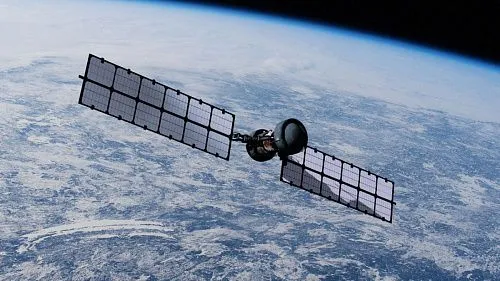
The system, created by researchers led by Chang Honglong and Ji Bowen, was sent into orbit aboard an experimental platform in December. Working in extreme space conditions, the equipment continuously recorded electroencephalogram signals within a simulated body-fluid environment, allowing specialists to obtain crucial information on interference levels and operational durability.
Data returned from the experiment provide direct evidence for evaluating how electrodes perform over long periods in orbit and open new possibilities for studying the influence of microgravity on neural activity. The source stated that the findings will offer important technical support for safeguarding astronauts’ brain health during long-duration space missions.
A key element of the project is a flexible electrode array engineered to adapt to the soft, curved surface of brain tissue. By improving contact while reducing the risk of material degradation, the design enables the capture of high-quality signals without harming the cerebral cortex. Trials demonstrated markedly greater stability, with several performance indicators increasing by hundreds of times compared with conventional metal alternatives. The platform is also compatible with ultra-high-field magnetic resonance imaging.
BCI technologies enjoy strong policy support in China. National plans list the sector among priority industries, while guidelines issued by the Ministry of Industry and Information Technology and other authorities in August 2025 aim to expand applications in manufacturing, healthcare and consumer markets by 2027 and build a secure, reliable industrial ecosystem by 2030.
-
![]()
 Society20.09.26BRICS News Digest for the previous week
 -
![]()
 Society20.09.26Egypt to introduce electronic notifications for court cases from 1 October
 -
![]()
 Society18.09.26TV BRICS research projects to bring together international analysts from Global South countries
 -
![]()
 Society18.09.26President Prabowo Subianto pushes green transformation for Indonesia’s capital
 -
![]() Society17.09.2691% of Egyptians help elderly relatives to use digital services
Society17.09.2691% of Egyptians help elderly relatives to use digital services -
![]()
 Society16.09.26Balthasar Staehelin, Personal Envoy of President to China and Head of Regional Delegation for East Asia of International Committee of Red Cross: “We see BRICS as format centred around constructive agenda of jointly addressing global challenges”
















-
![Ashok Mondal]()
 Ashok MondalNID Director"Signing this Memorandum of Understanding between the National Institute of Design (NID) and TV BRICS marks a pivotal milestone in advancing design diplomacy across the BRICS media space. This moment is especially significant as India hosts the 18th BRICS Summit, following India’s assumption of the BRICS chairship under the visionary leadership of Prime Minister Shri Narendra Modi. The partnership directly embodies his call to elevate Indian design standards through 'Design in India, Design for the World'. Through the global reach and broadcast capabilities of TV BRICS, we are excited to showcase the extraordinary visual storytelling, films, and design research of NID’s Film and Video Communication students to an international audience, while also welcoming and screening film works from BRICS network countries at NID Ahmedabad. This reciprocal exchange strengthens our shared commitment to educational, cultural, and artistic collaboration, fostering sustainable connections among global creative communities. NID Ahmedabad looks forward to leveraging this partnership to deepen cross-cultural dialogue, build international expert networks, and unlock transformative opportunities for filmmakers, researchers, and faculty across member nations"
 -
![Vladimir Putin]() Vladimir PutinPresident of Russia"We are developing mutual trade, which is growing; it increased by over 12 per cent last year. We have a joint commission working in this sphere. Our focus is on agriculture, shipbuilding, information technology and energy, including nuclear power. We have signed a free trade agreement between the Eurasian Economic Union and Indonesia. Jakarta is our reliable and old friend within ASEAN. We are working together at all international platforms, including the UN"
Vladimir PutinPresident of Russia"We are developing mutual trade, which is growing; it increased by over 12 per cent last year. We have a joint commission working in this sphere. Our focus is on agriculture, shipbuilding, information technology and energy, including nuclear power. We have signed a free trade agreement between the Eurasian Economic Union and Indonesia. Jakarta is our reliable and old friend within ASEAN. We are working together at all international platforms, including the UN" -
![Joao Paulo Capobianco]() Joao Paulo CapobiancoBrazilian Minister of the Environment and Climate Change"The BRICS countries have a very high level of responsibility because they share an important part of the world's biodiversity, landscapes, populations, food production and water resources. So, we have an opportunity to lead by example. We have our development bank, which can demonstrate and develop new ways of financing programmes. We can reduce the risks for private capital to invest in restoration and efforts to combat desertification"
Joao Paulo CapobiancoBrazilian Minister of the Environment and Climate Change"The BRICS countries have a very high level of responsibility because they share an important part of the world's biodiversity, landscapes, populations, food production and water resources. So, we have an opportunity to lead by example. We have our development bank, which can demonstrate and develop new ways of financing programmes. We can reduce the risks for private capital to invest in restoration and efforts to combat desertification" -
![Dilma Rousseff]() Dilma RousseffPresident of the New Development Bank"India’s BRICS Presidency this year gives special significance to our discussion. NDB stands ready to be a trusted partner in turning commitments on sustainability, clean energy, smart and resilient infrastructure into concrete results on the ground. […] For NDB, mobilising private capital is a strategic imperative. Created by the BRICS founding members, NDB is a bank of the Global South, for the Global South, mandated to mobilise resources for infrastructure and sustainable development"
Dilma RousseffPresident of the New Development Bank"India’s BRICS Presidency this year gives special significance to our discussion. NDB stands ready to be a trusted partner in turning commitments on sustainability, clean energy, smart and resilient infrastructure into concrete results on the ground. […] For NDB, mobilising private capital is a strategic imperative. Created by the BRICS founding members, NDB is a bank of the Global South, for the Global South, mandated to mobilise resources for infrastructure and sustainable development" -
![Sihasak Phuangketkeow]() Sihasak PhuangketkeowDeputy Prime Minister and Minister of Foreign Affairs of Thailand"BRICS can play a very important role in maintaining the free flow of trade and investment. The group can also be a vehicle for all of us to engage and to look at economic opportunities"
Sihasak PhuangketkeowDeputy Prime Minister and Minister of Foreign Affairs of Thailand"BRICS can play a very important role in maintaining the free flow of trade and investment. The group can also be a vehicle for all of us to engage and to look at economic opportunities"