















Dubai introduces AI-powered system for faster household water quality testing
The new technology enables earlier detection of bacterial contamination and strengthens public health protection across the emirate
-
![]()
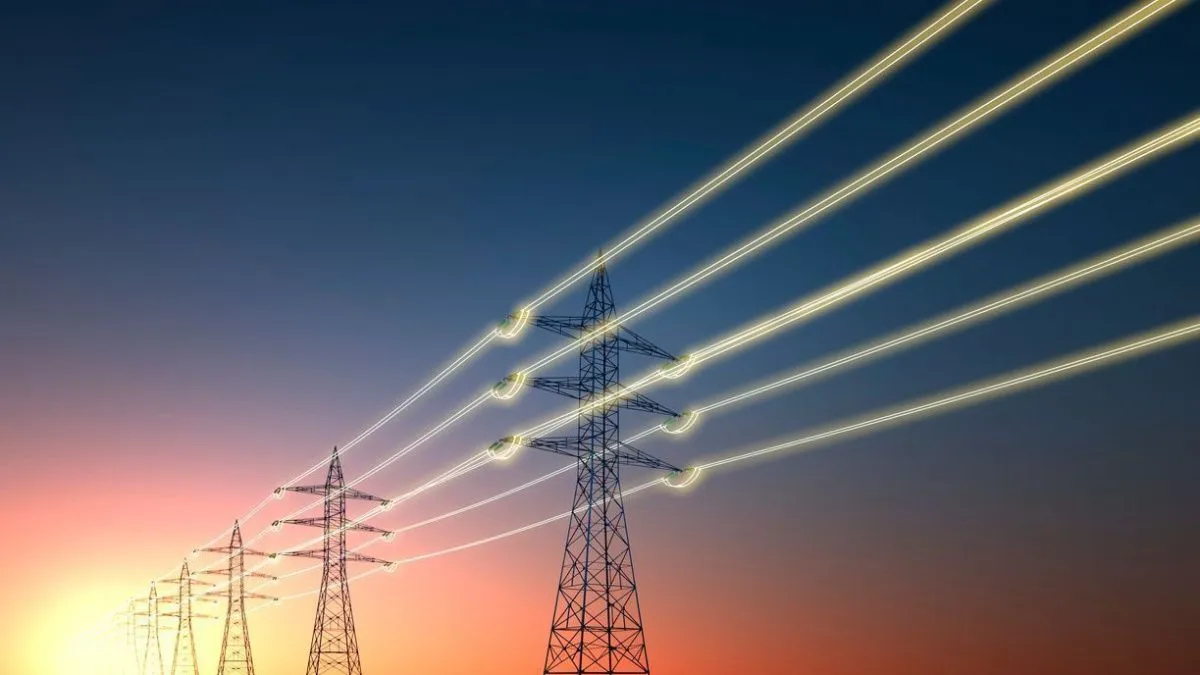
Photo source: Totojang / iStock

Dubai Municipality has introduced an artificial intelligence (AI)-powered system to improve household water quality testing, enabling the early and accurate detection of bacterial contamination, including Legionella and Escherichia coli (E. coli). According to the municipality, the upgraded service enhances laboratory capabilities and supports the protection of public health, reports Emirates News Agency (WAM), a partner of TV BRICS.
The expanded testing system now covers a broader range of domestic and recreational water sources, including water storage tanks, taps, swimming pools and non-bottled drinking water.
The introduction of AI technologies has also significantly reduced laboratory testing times. Results for Legionella and E. coli can now be delivered much faster than with conventional methods through a fully digital analysis process, allowing prompt preventive measures where necessary.
"Dubai Municipality continues to leverage advanced technologies and artificial intelligence to deliver laboratory solutions that strengthen proactive protection against public health risks. The ongoing enhancement of our services is focused on accelerating testing, improving reliability, and supporting faster preventive action, reflecting our commitment to advancing Dubai’s public health ecosystem and contributing to its vision of becoming the world’s best city to live in," said Hind Mahmoud Ahmed, Director of the Dubai Central Laboratory Department at Dubai Municipality.
The initiative forms part of Dubai Municipality’s broader efforts to modernise laboratory services in line with international standards. The enhanced testing system is expected to support residential, hospitality, recreational and public facilities by helping ensure safe water quality and strengthening confidence in public health services.
BRICS countries and partner states are increasingly integrating artificial intelligence into public services, developing digital solutions that improve healthcare, agriculture, environmental protection and the quality of life.
Chinese researchers have developed an artificial intelligence system that can automatically detect space hurricanes in the Earth's upper atmosphere, marking an advance in space weather monitoring. According to Global Times, a partner of TV BRICS, the system was created by scientists at the National Space Science Center of the Chinese Academy of Sciences using more than 300,000 auroral images collected between 2005 and 2021. The AI model achieved a detection accuracy of nearly 97.9 per cent and is expected to support the analysis of data from the SMILE satellite (Solar wind Magnetosphere Ionosphere Link Explorer), which studies the interaction between the solar wind, the magnetosphere and the ionosphere. Researchers believe the technology will improve monitoring of space weather, enhance the safety of polar communications and navigation, and contribute to the development of future space weather forecasting systems.
Vietnam, meanwhile, has launched the AI-powered V-Standard digital platform to support agricultural certification and product traceability, helping farmers and businesses meet international standards and expand access to export markets. According to Vietnam News Agency (VNA), a partner of TV BRICS, the initiative is designed to streamline certification procedures, improve transparency across agricultural supply chains and strengthen the global competitiveness of Vietnamese agricultural products through the use of digital technologies and artificial intelligence.
Kazakhstan’s East Region is introducing an artificial intelligence-based early forest fire detection system for the first time to improve wildfire monitoring. Kazinform, a partner of TV BRICS, reported that 90 antenna and mast complexes equipped with video cameras and automated image analysis technology will be installed across nine forestry enterprises. The system will automatically detect smoke and immediately alert dispatch centres, enabling a faster response to fires, particularly in mountainous and hard-to-reach areas.
Furthermore, Thailand has launched an artificial intelligence-powered digital platform designed to promote healthier lifestyles and reduce the risk of non-communicable diseases among the working-age population. According to Vietnam News Agency (VNA), a partner of TV BRICS, the application monitors key health behaviours, including nutrition, sleep, physical activity and relaxation, while providing personalised recommendations to encourage long-term healthy habits.
-
![]()

 Technology04.09.26BRICS satellites protecting environment: how member countries are saving Earth from space
 -
![]()
 Technology03.09.26Russian scientists discover new mechanism for energy transfer in ocean
 -
![]()
 Technology01.09.26Iranian researchers develop dual-purpose electrodes for renewable energy storage
 -
![]()

 Technology31.08.26Vietnam targets ASEAN’s top three in artificial intelligence by 2030
 -
![]()
 Technology29.08.26China completes world’s largest-diameter underwater shield tunnel
 -
![]()
 Technology29.08.26Kazakhstan develops drought-resistant and salt-tolerant new barley variety









-
![Vladimir Putin]()
 Vladimir PutinPresident of Russia"We are developing mutual trade, which is growing; it increased by over 12 per cent last year. We have a joint commission working in this sphere. Our focus is on agriculture, shipbuilding, information technology and energy, including nuclear power. We have signed a free trade agreement between the Eurasian Economic Union and Indonesia. Jakarta is our reliable and old friend within ASEAN. We are working together at all international platforms, including the UN"
 -
![Vladimir Putin]() Vladimir PutinPresident of Russia"More and more Iranian students are choosing Russian education. We are very pleased about this. A great many future doctors are studying in Russia. In the 2025–2026 academic year, the number of Iranian students in Russia approached 10,000, with 802 of them studying at the expense of the Russian state budget"
Vladimir PutinPresident of Russia"More and more Iranian students are choosing Russian education. We are very pleased about this. A great many future doctors are studying in Russia. In the 2025–2026 academic year, the number of Iranian students in Russia approached 10,000, with 802 of them studying at the expense of the Russian state budget" -
![Xi Jinping]() Xi JinpingPresident of the People’s Republic of China"The foundation of our bilateral relations will only grow stronger, and we will confidently move forward to a better future. […] The striving of nations on our planet for peace, development, cooperation and mutual benefit remains unchanged. The vital mission of the Shanghai Cooperation Organisation is to maintain stability and promote the development of our region"
Xi JinpingPresident of the People’s Republic of China"The foundation of our bilateral relations will only grow stronger, and we will confidently move forward to a better future. […] The striving of nations on our planet for peace, development, cooperation and mutual benefit remains unchanged. The vital mission of the Shanghai Cooperation Organisation is to maintain stability and promote the development of our region" -
![Alisher Salomov]() Alisher SalomovAdviser to the Chairman of the National Committee for Ecology and Climate Change of the Republic of Uzbekistan"First and foremost, I would like to highlight the importance of this Central Asia–Russia initiative, because environmental problems know no borders, and only a shared understanding of these problems and the search for joint solutions can deliver positive results"
Alisher SalomovAdviser to the Chairman of the National Committee for Ecology and Climate Change of the Republic of Uzbekistan"First and foremost, I would like to highlight the importance of this Central Asia–Russia initiative, because environmental problems know no borders, and only a shared understanding of these problems and the search for joint solutions can deliver positive results" -
![Joao Paulo Capobianco]() Joao Paulo CapobiancoBrazilian Minister of the Environment and Climate Change"The BRICS countries have a very high level of responsibility because they share an important part of the world's biodiversity, landscapes, populations, food production and water resources. So, we have an opportunity to lead by example. We have our development bank, which can demonstrate and develop new ways of financing programmes. We can reduce the risks for private capital to invest in restoration and efforts to combat desertification"
Joao Paulo CapobiancoBrazilian Minister of the Environment and Climate Change"The BRICS countries have a very high level of responsibility because they share an important part of the world's biodiversity, landscapes, populations, food production and water resources. So, we have an opportunity to lead by example. We have our development bank, which can demonstrate and develop new ways of financing programmes. We can reduce the risks for private capital to invest in restoration and efforts to combat desertification"