














Expert: Russia, India and China can support large-scale infrastructure renewal in Africa
According to the expert, South Africa sees itself as a link between Russia and the countries of the continent
-
![]()
Photo source: TV BRICS

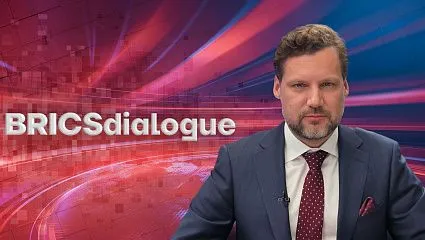
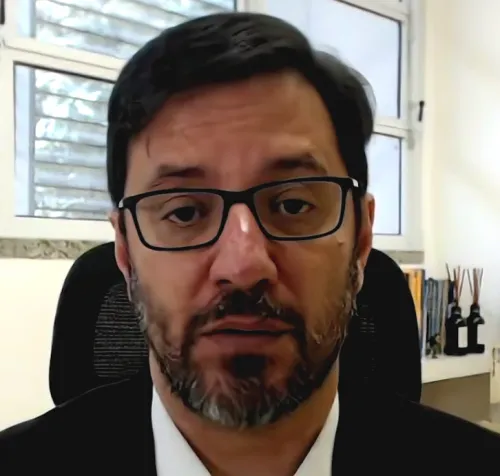
South Africa has proposed involving Russia, India and China in the large-scale renewal of Africa’s infrastructure. This was stated by Elias Monage, President of the Black Business Council and Chairman of the South African side of the Russia-South Africa Business Council, in the TV BRICS programme “BRICS Dialogue”.
“If we are then to do a huge project, for example, on rail infrastructure, we can then bring the rest of the continent to participate in the rail development and infrastructure for the continent together with the partners within the BRICS countries. Whether we then bring, for example, Russia rail, we then bring India, we then bring China,” Monage said.
He noted that South Africa’s main priorities are logistics and the creation of a transport hub, which would allow goods to move freely between countries across the continent. According to him, South Africa’s geographical position in the south, combined with its developed infrastructure, enables it to facilitate the movement of goods to other parts of Africa.
Monage also identified the main challenges facing BRICS countries. These include a lack of direct air connections within the block, such as flights between South Africa and Russia, the absence of a unified platform for standardisation and regulatory frameworks, the lack of a common currency, as well as the absence of a shared tariff system and protocols. “To trade different goods between countries, a common tariff classification system is needed,” he explained.
According to Monage, BRICS countries should address these challenges by focusing not on competition but on complementarity, coordinated action and cooperation. Due to their young populations, human capital is becoming an important advantage for the group’s countries, while education, professional training and skills transfer are becoming key priorities.
“We had a number of discussions, and we have shared lots of ideas with our counterparts in the continent. For example, Mozambique, where we had a mission from the South Africa and Russia delegation visiting Mozambique to look at specifically around the establishment of the assembly plant for the trucks,” the expert added.
In addition, South Africa is analysing the regulatory framework to establish exports of Russian poultry meat to South Africa and further across the continent. Discussions are also underway on creating an assembly plant jointly with a Russian vehicle manufacturer and one of South Africa’s state-owned enterprises. This would allow trucks and components based on Russian chassis to be assembled locally and then supplied to neighbouring countries.
Humanitarian cooperation is also developing. Russian People’s Artist Igor Butman has visited South Africa for two consecutive years, where he performed at one of the international jazz festivals. South Africa, in turn, sent artists to Sochi. At the same time, the countries are developing partnerships in education and increasing the number of students sent to Russia.
Monage concluded that South Africa today serves as a connecting link. The country is actively involving regional states in trade with Russia while building long-term cooperation in business, investment and humanitarian fields.
-
![]()
 Economy24.09.26Russia plans to increase coal production to 662 million tonnes by 2050
 -
![]()
 Economy23.09.26Iran sends largest trade delegation to Russia in decade
 -
![]()
 Economy23.09.26China strengthens grain supply chain to enhance food security from 2026 to 2030
 -
![]()
 Economy23.09.26Uganda’s export earnings rise 10.2% in July
 -
![]()
 Economy22.09.26Ethiopia aims to become world’s largest producer of Arabica coffee
 -
![]()
 Economy21.09.26Ethiopia and UAE expand cooperation in investment, trade, tourism and technology












-
![Maksim Reshetnikov]()
 Maksim ReshetnikovRussian Minister of Economic Development"Plan 2030 has created a strong foundation for the qualitative expansion of trade and economic ties. There are all grounds to believe that by the end of the decade, Russia–China trade will reach US$300 billion"
 -
![Ashok Mondal]() Ashok MondalNID Director"Signing this Memorandum of Understanding between the National Institute of Design (NID) and TV BRICS marks a pivotal milestone in advancing design diplomacy across the BRICS media space. This moment is especially significant as India hosts the 18th BRICS Summit, following India’s assumption of the BRICS chairship under the visionary leadership of Prime Minister Shri Narendra Modi. The partnership directly embodies his call to elevate Indian design standards through 'Design in India, Design for the World'. Through the global reach and broadcast capabilities of TV BRICS, we are excited to showcase the extraordinary visual storytelling, films, and design research of NID’s Film and Video Communication students to an international audience, while also welcoming and screening film works from BRICS network countries at NID Ahmedabad. This reciprocal exchange strengthens our shared commitment to educational, cultural, and artistic collaboration, fostering sustainable connections among global creative communities. NID Ahmedabad looks forward to leveraging this partnership to deepen cross-cultural dialogue, build international expert networks, and unlock transformative opportunities for filmmakers, researchers, and faculty across member nations"
Ashok MondalNID Director"Signing this Memorandum of Understanding between the National Institute of Design (NID) and TV BRICS marks a pivotal milestone in advancing design diplomacy across the BRICS media space. This moment is especially significant as India hosts the 18th BRICS Summit, following India’s assumption of the BRICS chairship under the visionary leadership of Prime Minister Shri Narendra Modi. The partnership directly embodies his call to elevate Indian design standards through 'Design in India, Design for the World'. Through the global reach and broadcast capabilities of TV BRICS, we are excited to showcase the extraordinary visual storytelling, films, and design research of NID’s Film and Video Communication students to an international audience, while also welcoming and screening film works from BRICS network countries at NID Ahmedabad. This reciprocal exchange strengthens our shared commitment to educational, cultural, and artistic collaboration, fostering sustainable connections among global creative communities. NID Ahmedabad looks forward to leveraging this partnership to deepen cross-cultural dialogue, build international expert networks, and unlock transformative opportunities for filmmakers, researchers, and faculty across member nations"


