















Kazakhstan hosts High-level International Conference “Sustainable Development in Eurasia”
Experts discussed ways to achieve the Sustainable Development Goals before and after 2030
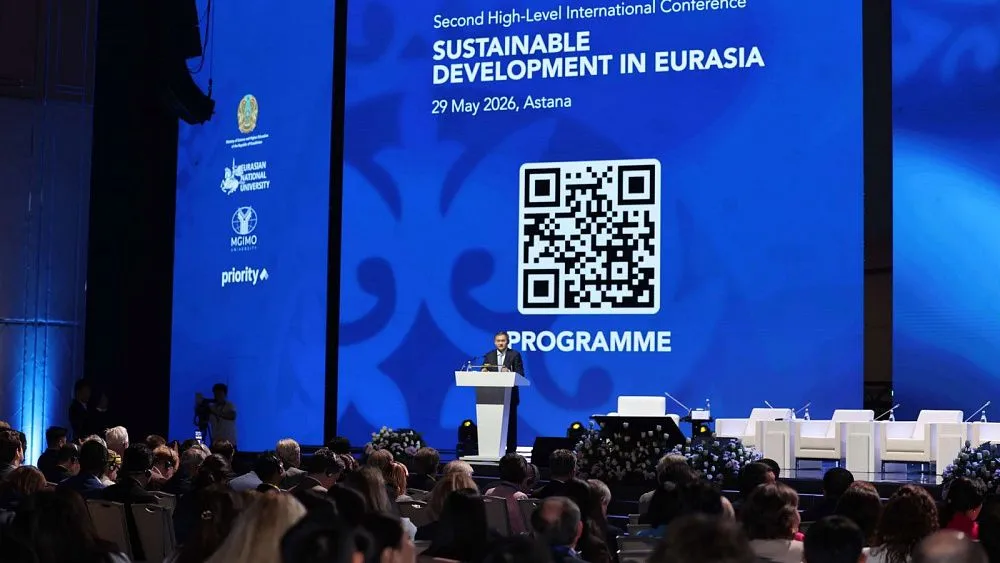
The Second High-level International Conference “Sustainable Development in Eurasia” was held in Astana at the initiative of President of Kazakhstan Kassym-Jomart Tokayev.
The conference brought together representatives of governments from different countries, scientists, economists and public figures involved in the Sustainable Development Goals (SDGs). In his welcoming address to the participants, the President of Kazakhstan noted that, amid the fragmentation of the global economy, climate change and the rapid development of digital technologies, the sustainable development paradigm implemented under the auspices of the United Nations (UN) remains a key factor of international stability and progress.
“A completely new approach is required to establish a rational balance between economic growth, social justice and environmental responsibility,” the address by Kassym-Jomart Tokayev stated, which was delivered by Sayasat Nurbek.
 Photo: 2nd High-level International Conference “Sustainable Development in Eurasia”
Welcoming the conference participants, MGIMO Rector, Academician Anatoly Torkunov, noted that the event has evolved from a bilateral Russian–Kazakh platform into a respected international forum bringing together experts from different regions of the world.


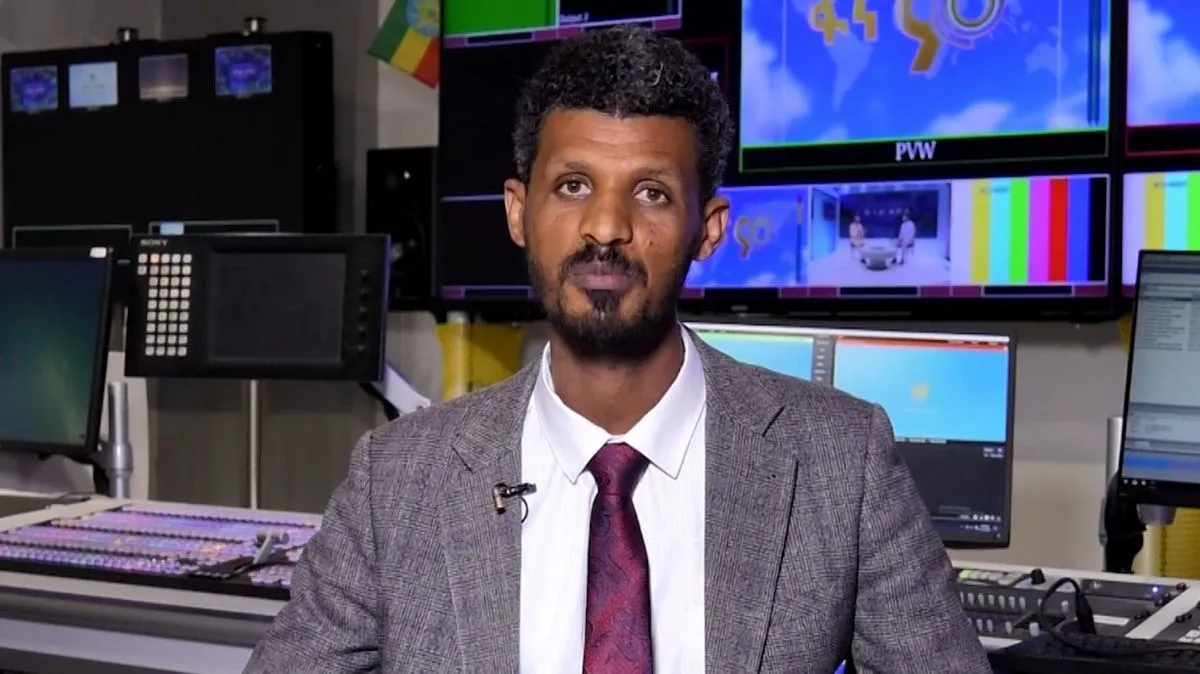
Kubayi Mikateko, Senior Research Fellow at the University of Johannesburg (South Africa), noted in a comment to TV BRICS the progress Kazakhstan has made towards implementing the SDGs, stating that the republic has achieved an advanced pace of development.
“In fact, Kazakhstan is one of the glowing stars, if you like, but even it has achieved only 40 per cent, according to recent statements, while the world average stands at 17 per cent. Yet we are about to reach 2030 in just four years. So it is clear that we are not going to achieve these goals, and there will have to be a reset,” the expert suggested.
Particular attention was given to energy-related issues, including the development of cross-border energy corridors, attracting investment in infrastructure, and establishing mechanisms for international cooperation in the implementation of energy projects. According to experts, efforts to ensure energy security have become increasingly intertwined with environmental objectives in recent years.
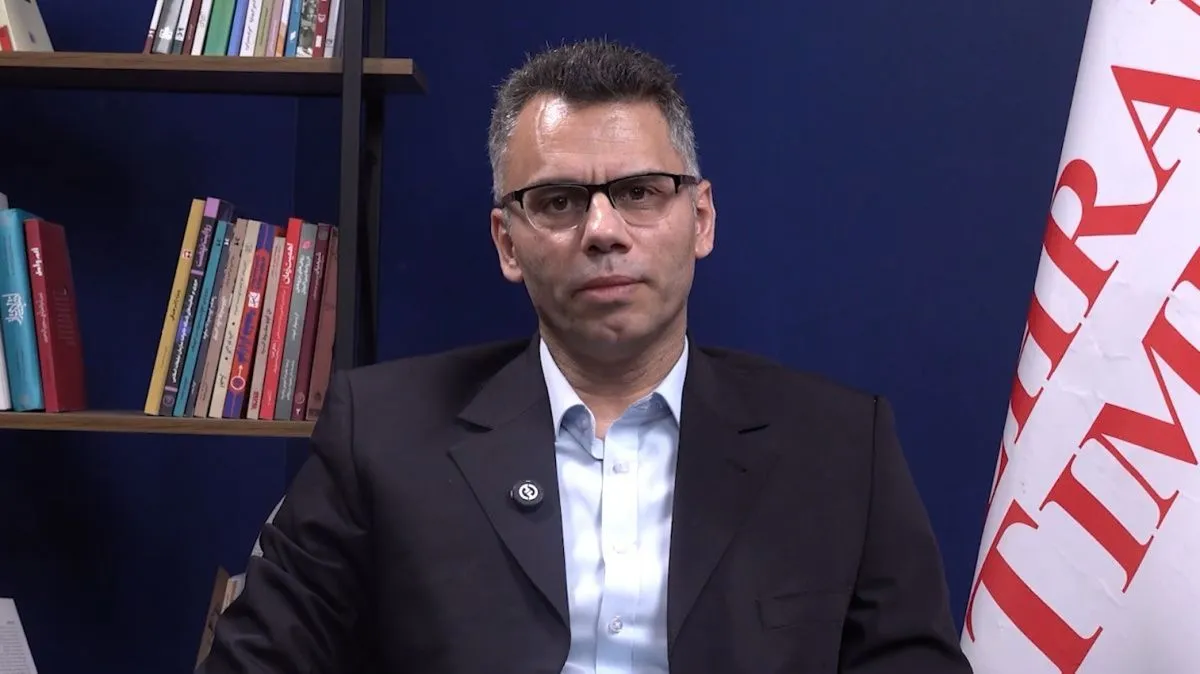
“The United Nations has recently achieved a number of important outcomes and results specifically for the environmental world. The latest Conference of the Parties on the climate convention, which was held in Rio de Janeiro, adopted an important set of outcomes, very practical outcomes. […] As we talk about the United Nations and its 193 member states, there are also new, or I would say more recent, coalitions of countries that share interests. These are helping advance international agendas. BRICS is one important group. Why? It's because it integrates not where the past of the economy is but where the future of the economy is,” said Jorge Laguna-Celis, Director responsible for the United Nations Environment Programme's (UNEP) One Planet Network, in an interview with TV BRICS.
 Photo: 2nd High-level International Conference “Sustainable Development in Eurasia”
Katarzyna Wawiernia, UNDP Resident Representative in Kazakhstan, drew attention to the fact that the post-2030 agenda should be more practice-orientated, with stronger financing mechanisms, the introduction of new partnership models and the development of regional cooperation, particularly across the Eurasian space.
Experts also discussed a new key factor in future development – artificial intelligence and digital technologies, which may become either a new driver of progress or, conversely, a new threat and source of inequality. In a comment to TV BRICS, Animesh Kumar, Associate Professor at the WTO Centre at the Indian Institute of Foreign Trade, highlighted two important aspects of SDG implementation.
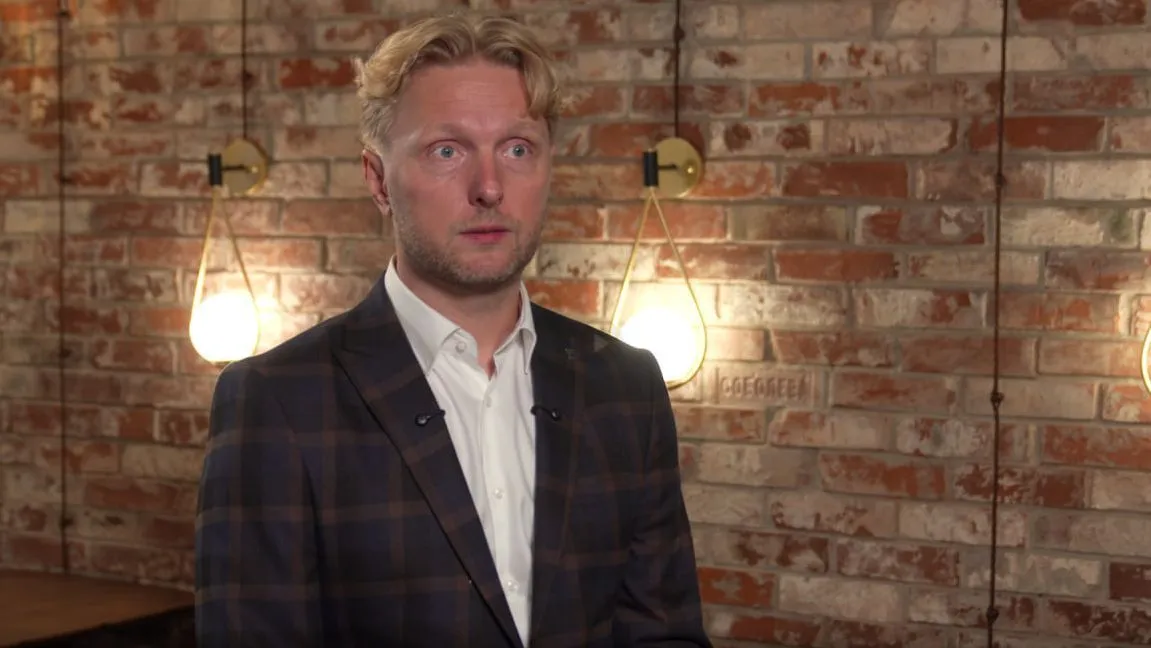
“I think for sustainable development, two things are really, really important. One is the model should be localised, depending on the country's actual status of development and their needs. So that flexibility should be there, along with adequate provision for funds. The second thing is to not underestimate the importance of digital infrastructure and AI. All the decisions that we take now should also consider the future changes that are going to happen in the technological field. So there should be a separate discussion on how to adopt those into the agenda,” Kumar stated.
The experts considered possible scenarios for transforming the SDG system: maintaining the universal model, concentrating on priority areas, or strengthening regional formats of cooperation followed by global coordination. They also discussed the expanding role of BRICS, the Shanghai Cooperation Organisation (SCO) and other regional groupings in shaping a new agenda, as well as how to strike a balance between technological progress and sustainable development.
The plenary session of the conference concluded with remarks by Jeffrey Sachs, Professor at Columbia University and President of the UN Sustainable Development Solutions Network. The professor expressed an idea that, in one form or another, had resonated throughout the conference: sustainable development requires regional cooperation and the pooling of efforts among states. The countries of Central Asia share common ecosystems, water resources, energy systems and transport corridors, making it clear that many major challenges require joint action at the regional level.
 Photo: 2nd High-level International Conference “Sustainable Development in Eurasia”
One of the practical outcomes of the conference was an agreement to continue the work of the emerging international expert community. The forum in Astana will become a regular platform for discussing sustainable development issues and preparing proposals for improving the global SDG system.
The conference was organised by the Ministry of Science and Higher Education of Kazakhstan, the L. N. Gumilyov Eurasian National University and the Moscow State Institute of International Relations (MGIMO) of the Russian Foreign Ministry, a partner of TV BRICS. The media network served as the international media partner of the event.
-
![]()

 Society09.09.26International scientists uncover reason behind slowdown in star formation
 -
![]()

 Society08.09.26Bolivian cinema joins TV BRICS media space
 -
![]() Society07.09.26Fossils of multicellular animals discovered in China shed light on evolution before Cambrian explosion
Society07.09.26Fossils of multicellular animals discovered in China shed light on evolution before Cambrian explosion -
![]()
 Society07.09.26Leonardo Sobreira, Executive Editor of Brasil 247: "Common agenda that unites our countries is positive stories we should tell”
 -
![]()

 Society07.09.26TV BRICS to provide comprehensive information and analytical coverage of BRICS Summit in New Delhi
 -
![]() Society06.09.26BRICS News Digest for the previous week
Society06.09.26BRICS News Digest for the previous week


















-
![Vladimir Putin]()
 Vladimir PutinPresident of Russia"We are developing mutual trade, which is growing; it increased by over 12 per cent last year. We have a joint commission working in this sphere. Our focus is on agriculture, shipbuilding, information technology and energy, including nuclear power. We have signed a free trade agreement between the Eurasian Economic Union and Indonesia. Jakarta is our reliable and old friend within ASEAN. We are working together at all international platforms, including the UN"
 -
![Vladimir Putin]() Vladimir PutinPresident of Russia"More and more Iranian students are choosing Russian education. We are very pleased about this. A great many future doctors are studying in Russia. In the 2025–2026 academic year, the number of Iranian students in Russia approached 10,000, with 802 of them studying at the expense of the Russian state budget"
Vladimir PutinPresident of Russia"More and more Iranian students are choosing Russian education. We are very pleased about this. A great many future doctors are studying in Russia. In the 2025–2026 academic year, the number of Iranian students in Russia approached 10,000, with 802 of them studying at the expense of the Russian state budget" -
![Xi Jinping]() Xi JinpingPresident of the People’s Republic of China"The foundation of our bilateral relations will only grow stronger, and we will confidently move forward to a better future. […] The striving of nations on our planet for peace, development, cooperation and mutual benefit remains unchanged. The vital mission of the Shanghai Cooperation Organisation is to maintain stability and promote the development of our region"
Xi JinpingPresident of the People’s Republic of China"The foundation of our bilateral relations will only grow stronger, and we will confidently move forward to a better future. […] The striving of nations on our planet for peace, development, cooperation and mutual benefit remains unchanged. The vital mission of the Shanghai Cooperation Organisation is to maintain stability and promote the development of our region" -
![Alisher Salomov]() Alisher SalomovAdviser to the Chairman of the National Committee for Ecology and Climate Change of the Republic of Uzbekistan"First and foremost, I would like to highlight the importance of this Central Asia–Russia initiative, because environmental problems know no borders, and only a shared understanding of these problems and the search for joint solutions can deliver positive results"
Alisher SalomovAdviser to the Chairman of the National Committee for Ecology and Climate Change of the Republic of Uzbekistan"First and foremost, I would like to highlight the importance of this Central Asia–Russia initiative, because environmental problems know no borders, and only a shared understanding of these problems and the search for joint solutions can deliver positive results" -
![Joao Paulo Capobianco]() Joao Paulo CapobiancoBrazilian Minister of the Environment and Climate Change"The BRICS countries have a very high level of responsibility because they share an important part of the world's biodiversity, landscapes, populations, food production and water resources. So, we have an opportunity to lead by example. We have our development bank, which can demonstrate and develop new ways of financing programmes. We can reduce the risks for private capital to invest in restoration and efforts to combat desertification"
Joao Paulo CapobiancoBrazilian Minister of the Environment and Climate Change"The BRICS countries have a very high level of responsibility because they share an important part of the world's biodiversity, landscapes, populations, food production and water resources. So, we have an opportunity to lead by example. We have our development bank, which can demonstrate and develop new ways of financing programmes. We can reduce the risks for private capital to invest in restoration and efforts to combat desertification"