















Participants presented national financing models, examples of public-private partnerships and initiatives to preserve ecosystems

The Ministerial dialogue on Innovative Financial Mechanisms for Healthy Land and Drought Resilience was held at the 17th session of the Conference of the Parties (COP17) to the United Nations Convention to Combat Desertification (UNCCD) in Ulaanbaatar. Delegates from UNCCD Parties, as well as leaders from government, business and civil society, are taking part.
Mongolia, as the host country, announced the launch of the Rangelands Flagship Initiative. It provides for the sustainable management and restoration of pastures; the creation of a global coalition on pastures and pastoralism; and the establishment of the Eurasian Centre for Climate-Resilient Rangelands in Mongolia.
Countries presented their approaches to financing land restoration. Participants discussed how to incorporate land-use and drought resilience issues into the programmes of multilateral development banks and institutional investors.
“At the World Bank Group, our approach focuses on two fundamental but also complementary priorities. One is about strengthening the land system. The other that is treating land as a productive capital asset,” said Guangzhe Chen, Vice President for the Planet Vice Presidency at the World Bank Group. According to him, the organisation has invested more than US$3 billion in 31 countries to establish land registration and cadastral systems, which is a fundamental prerequisite for effective land resource management.
China proposed viewing its path as a consistent transformation. Addressing the participants, Zhang Liming, Deputy Director of the National Forestry and Grassland Administration of the People's Republic of China, elaborated on three stages of this process.

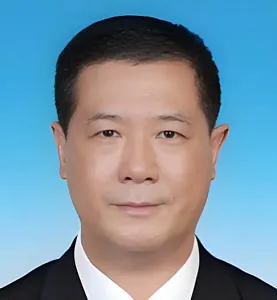
Brazilian Minister of the Environment and Climate Change Joao Paulo Capobianco told TV BRICS in an exclusive comment that the key objective of the dialogue is to strengthen the UNCCD and turn commitments into concrete action. According to him, financing remains one of the main gaps that needs to be addressed.
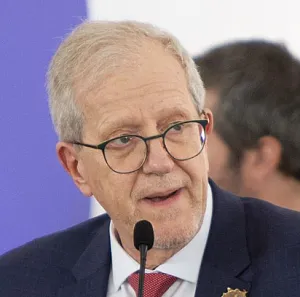
Deputy Minister of Forestry, Fisheries and the Environment of the Republic of South Africa Bernice Swarts spoke about the Expanded Public Works Programme – a large-scale South African government project in which public funds are directed towards the removal of invasive plants and land restoration, while participants gain not only employment but also new professional skills.

Indian Minister of State for Environment, Forest and Climate Change Bhupender Yadav said that the country's comprehensive green finance system directs funds towards adapting to the impacts of climate change and sustainable land use. India issues sovereign green bonds and implements a green credit programme: credits are awarded after five years of restoration work once a minimum canopy density of 40 per cent has been achieved. The compensatory afforestation regime directs payments for the diversion of forest land for other purposes towards afforestation and ecosystem restoration.
Special Presidential Representative of the Russian Federation for Climate and Water Resources Ruslan Edelgeriev drew his colleagues' attention to the fact that the success of any mechanism is measured not only in terms of money but also by the quality of governance.

During the dialogue, participants agreed to develop the Business4Land (B4L) platform, which connects consumption, production and finance through green value chains, environmental and social standards, as well as financial products focused on preserving natural capital.
COP17 is being held under the motto “Restoring Land. Restoring Hope”. The conference is taking place during the International Year of Rangelands and Pastoralists, proclaimed by the United Nations General Assembly at Mongolia's initiative.
The topic of land restoration will be further explored in a TV BRICS documentary project. On 26 August, the film “Earth. Lifelines” will premiere at COP17, concluding the media network's campaign in support of the United Nations Convention to Combat Desertification's Silk Road Caravan initiative. The film tells the story of successful practices in sustainable pasture management, biodiversity conservation and responsible water use through the example of three Russian regions: Dagestan, Kalmykia and the Astrakhan Region.
-
![]()
 Ecology19.08.26Iran builds genetic maps to protect endangered wildlife
 -
![]()
 Ecology18.08.26Expert: Egypt completes national drought management plan and prepares to attract private investment
 -
![]()
 Ecology13.08.26Indonesia launches plan to conserve elephant populations
 -
![]()
 Ecology11.08.26Belarus broadens pilot project to protect roads from wildlife
 -
![]()

 Ecology09.08.26Chinese scientists discover gigantic whale graveyard in Indian Ocean
 -
![]()
 Ecology09.08.26India launches conservation plan to protect elusive clouded leopard habitats























-
![Joao Paulo Capobianco]()
 Joao Paulo CapobiancoBrazilian Minister of the Environment and Climate Change"The BRICS countries have a very high level of responsibility because they share an important part of the world's biodiversity, landscapes, populations, food production and water resources. So, we have an opportunity to lead by example. We have our development bank, which can demonstrate and develop new ways of financing programmes. We can reduce the risks for private capital to invest in restoration and efforts to combat desertification"
 -
![Dilma Rousseff]() Dilma RousseffPresident of the New Development Bank"India’s BRICS Presidency this year gives special significance to our discussion. NDB stands ready to be a trusted partner in turning commitments on sustainability, clean energy, smart and resilient infrastructure into concrete results on the ground. […] For NDB, mobilising private capital is a strategic imperative. Created by the BRICS founding members, NDB is a bank of the Global South, for the Global South, mandated to mobilise resources for infrastructure and sustainable development"
Dilma RousseffPresident of the New Development Bank"India’s BRICS Presidency this year gives special significance to our discussion. NDB stands ready to be a trusted partner in turning commitments on sustainability, clean energy, smart and resilient infrastructure into concrete results on the ground. […] For NDB, mobilising private capital is a strategic imperative. Created by the BRICS founding members, NDB is a bank of the Global South, for the Global South, mandated to mobilise resources for infrastructure and sustainable development" -
![Sihasak Phuangketkeow]() Sihasak PhuangketkeowDeputy Prime Minister and Minister of Foreign Affairs of Thailand"BRICS can play a very important role in maintaining the free flow of trade and investment. The group can also be a vehicle for all of us to engage and to look at economic opportunities"
Sihasak PhuangketkeowDeputy Prime Minister and Minister of Foreign Affairs of Thailand"BRICS can play a very important role in maintaining the free flow of trade and investment. The group can also be a vehicle for all of us to engage and to look at economic opportunities"