


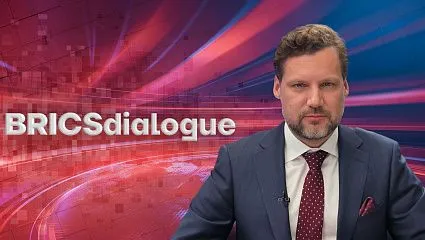












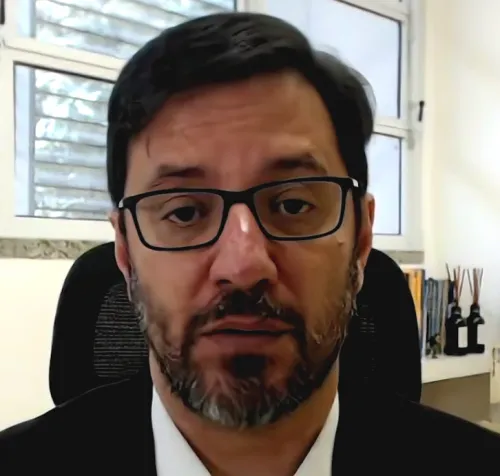
Oleg Preksin, member of the BRICS Business Council: creation of new international payment system is among the priorities of association
The economist spoke about the development of cooperation and prospects of integration of the group's countries in the financial sphere.

Oleg Preksin is Deputy Chairman of the Board of the Russian Financial and Banking Union, Vice-President of the Council of the Association of Banks of Russia, and a member of the Financial Sector Working Group of the BRICS Business Council. He graduated from the Moscow Finance Institute, worked in banking, analytical and administrative spheres in Russia and abroad, and held senior positions in domestic and foreign banks.
How would you characterise the BRICS countries' cooperation in the financial and economic sphere?
The main achievement in this area today is the establishment of the BRICS New Development Bank (NDB). It was established with a capital of US$100 billion, with paid-in capital of US$50 billion. The bank has a total loan portfolio of about US$30 billion. The main achievements of the BRICS in the financial and economic sphere also include the Contingent Reserve Arrangement Pool created to support the exchange rate of the BRICS countries' currencies. While in the case of the NDB the principle of equal participation works: each party had US$20 billion in the authorised capital, in the Contingent Reserve Arrangement the ratio was set taking into account the economic performance of the BRICS countries. The largest share is held by China, which accounts for US$41 billion out of US$100 billion of total capital. Russia, India, Brazil have US$18 billion each and South Africa has US$5 billion.
With which BRICS countries does Russia have a well-established system of settlements in national currencies, and where is there still work to be done?
The most productive cooperation in this area is with China, as the Russian and Chinese economies are complementary. It is also necessary to come to a harmonised system of multilateral settlements. Last year at the summit in Johannesburg, Brazilian President Luiz Inacio Lula da Silva proposed to develop a common unit of account, which he spoke about again during the summit in Kazan. It is worth noting that Brazil holds the BRICS presidency after Russia. Therefore, it is not excluded that we will have interesting news in this direction. One of the topics of our work with our colleagues is the BRICS Pay project, a scheme whereby settlements with the buyer and seller are made in national currencies. There are also plans to create a BRICS Bridge for settlements between the banks of the members of the association.
With which of the partners would it be most expedient to develop these systems?
We have already established close business relations with our partners from India through the BRICS Business Council. By the way, the Indian side is very actively promoting its national payment platform, which was mentioned by Indian Prime Minister Narendra Modi at the summit in Kazan. One of the solutions may be the transfer of national systems for joint use. The formation of a new international payment system is among the key areas of work of the BRICS Business Council. The first practical steps can also be taken in cooperation with the candidate BRICS partner countries, including colleagues in the Eurasian Economic Union (EAEU), where financial integration is identified as one of the most important areas of cooperation.
How quickly will the partner countries be able to join the work on the formation of new platforms and the system of mutual settlements?
Connection to this project will be multi-speed. It became noticeable after the BRICS expansion. Iran is integrating quite actively. Egypt is showing some activity. I believe that EAEU partners will be able to join the joint work quickly, as they already have certain agreements with some of the BRICS countries. In addition, there are issues that are equally relevant for the participants of both associations.
What measures should be taken to intensify international trade?
I would outline three directions. This is the expansion of interbank relations. The second important topic is the development of public-private partnership and co-financing. State participation can simplify both the raising of funds and the purchase of goods. At the same time, we are talking about supporting both export-oriented companies and importers. The third solution is to create commodity exchanges. In particular, at the summit in Kazan it was announced that it would be advisable to create a BRICS grain exchange. The countries of the association have the largest mineral reserves in the world. In addition to grain, it is possible to launch similar projects in the field of oil, metals and fertiliser trading.
How viable is it for the BRICS to issue their own currency? How long will it take to create it? What can it be backed by?
From a technical point of view, the issue of creating such an instrument is not so complicated. In any case, the path to a common BRICS currency will lie through the adoption of a common unit of account. Since one of the main proponents of its introduction is Lula da Silva, the emergence of a unit of account could happen quite quickly. I would like to emphasise that this decision does not limit the rights of national central banks, as the entire domestic payment apparatus and issuance remains under the control of the states. We are not talking about the elimination of Chinese yuan, Indian rupees, Brazilian reals and Russian roubles.
Photo: TV BRICS-
![]()

 Economy24.09.26ASEAN and Russia agree to strengthen trade and investment ties
 -
![]()

 Economy24.09.26New Development Bank approves funding for elevated corridor project in India
 -
![]()

 Economy24.09.26Expert: Russia, India and China can support large-scale infrastructure renewal in Africa
 -
![]() Economy24.09.26Russia plans to increase coal production to 662 million tonnes by 2050
Economy24.09.26Russia plans to increase coal production to 662 million tonnes by 2050 -
![]()
 Economy23.09.26Iran sends largest trade delegation to Russia in decade
 -
![]()
 Economy23.09.26China strengthens grain supply chain to enhance food security from 2026 to 2030










-
![Elias Monage]()
 Elias MonageChairman of the South African side of the Russia-South Africa Business Council"If we are then to do a huge project, for example, on rail infrastructure, we can then bring the rest of the continent to participate in the rail development and infrastructure for the continent together with the partners within the BRICS countries. Whether we then bring, for example, Russia rail, we then bring India, we then bring China"
 -
![Maksim Reshetnikov]() Maksim ReshetnikovRussian Minister of Economic Development"Plan 2030 has created a strong foundation for the qualitative expansion of trade and economic ties. There are all grounds to believe that by the end of the decade, Russia–China trade will reach US$300 billion"
Maksim ReshetnikovRussian Minister of Economic Development"Plan 2030 has created a strong foundation for the qualitative expansion of trade and economic ties. There are all grounds to believe that by the end of the decade, Russia–China trade will reach US$300 billion"


