















Scientists reconstruct Gondwana – supercontinent that explains changes on Earth 500 million years ago
Ancient fragments of the Earth’s crust have been found deep within the young mountains of Eurasia and other continents
-
![]()
Photo source: buradaki / iStock
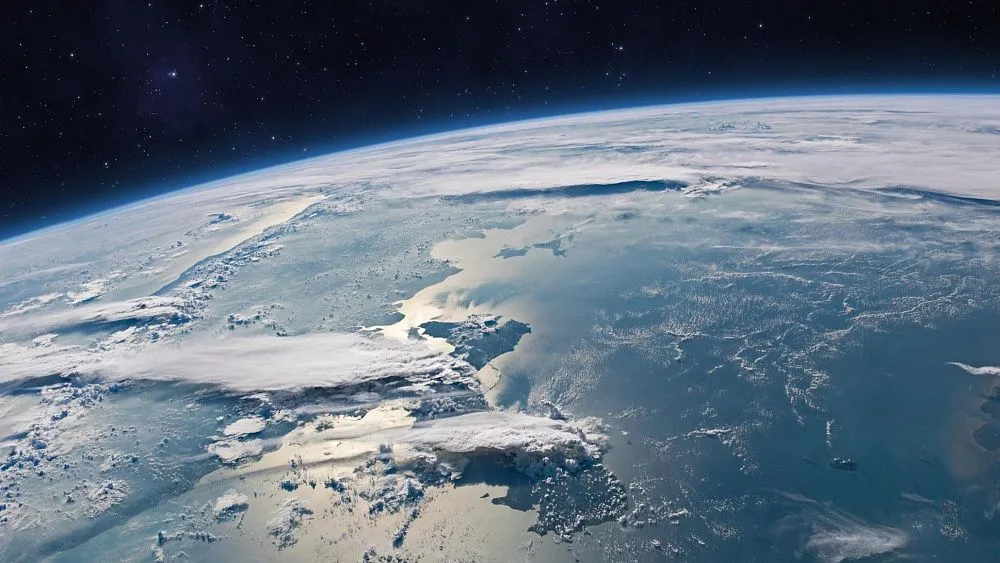
Chinese and international scientists have, for the first time, discovered numerous buried fragments of "lost continents" – parts of Gondwana – and reconstructed the "Greater Gondwana" supercontinent. According to Science and Technology Daily, a partner of TV BRICS.
The research was carried out by a team led by researcher Wang Tao from the Institute of Geology at the Chinese Academy of Geological Sciences. The scientists created a global database of igneous rocks and isotopes with geographical coordinates, drawing on the "Deep Time – Digital Earth" (DDE) programme. They developed technologies for extracting sample coordinates from ancient texts. The work is based on more than 25,000 neodymium isotope measurements from Asia, Central Europe, North America and Australia.
Isotopic mapping has revealed that numerous Precambrian fragments of the crust lie buried deep within the young orogenic belts. These are the "lost fragments" of Gondwana, which drifted, accreted and were buried following its breakup. Once "reassembled", Gondwana’s area increased to 80 per cent of the continental crust – exceeding the 75 per cent threshold. It thus ranked alongside Pangea and Rodinia.
"We used specialised technologies to extract coordinates and locations from ancient texts, extending our research from Asia to the whole world. [...] We named it 'Greater Gondwana', confirming that it was a true supercontinent," said Wang Tao.
The peaks of the formation and break-up of "Greater Gondwana" coincide with global changes that occurred 500 million years ago.
The transition period from the Ediacaran to the Cambrian (around 550–500 million years ago) is considered one of the most mysterious stages in Earth’s history. The planet experienced a shift in mantle dynamics, fluctuations in sea level and atmospheric composition, changes in the chemistry of seawater, and the mass emergence of multicellular animals – the beginning of the "Cambrian explosion of life".
Global changes are usually explained by cycles of supercontinent formation and break-up. By the classical definition, a supercontinent must cover at least 75 per cent of the area of the continental crust. Pangaea and Rodinia meet this criterion but did not exist 500 million years ago. Gondwana – the most likely candidate for that period – occupied only around 64 per cent according to traditional reconstructions and did not meet the criteria for a supercontinent.
The discovery came as a surprise: the team had initially been working on a database and the deep geology of the Asian continent.
-
![]()
 Technology17.09.26Kazakhstan scientists develop quantum model for oil production
 -
![]()
 Technology17.09.26Oman implements Arab world’s first liquefied hydrogen project
 -
![]()
 Technology17.09.26Brazil launches rocket carrying scientific platform set to return to Earth by parachute
 -
![]()
 Technology17.09.26Chinese scientists develop new material for arsenic removal from water
 -
![]() Technology16.09.26China launches satellites for global internet network from sea for first time
Technology16.09.26China launches satellites for global internet network from sea for first time -
![]()

 Technology16.09.26Egypt plans unified digital platform to link medical records across healthcare centres














-
![Ashok Mondal]()
 Ashok MondalNID Director"Signing this Memorandum of Understanding between the National Institute of Design (NID) and TV BRICS marks a pivotal milestone in advancing design diplomacy across the BRICS media space. This moment is especially significant as India hosts the 18th BRICS Summit, following India’s assumption of the BRICS chairship under the visionary leadership of Prime Minister Shri Narendra Modi. The partnership directly embodies his call to elevate Indian design standards through 'Design in India, Design for the World'. Through the global reach and broadcast capabilities of TV BRICS, we are excited to showcase the extraordinary visual storytelling, films, and design research of NID’s Film and Video Communication students to an international audience, while also welcoming and screening film works from BRICS network countries at NID Ahmedabad. This reciprocal exchange strengthens our shared commitment to educational, cultural, and artistic collaboration, fostering sustainable connections among global creative communities. NID Ahmedabad looks forward to leveraging this partnership to deepen cross-cultural dialogue, build international expert networks, and unlock transformative opportunities for filmmakers, researchers, and faculty across member nations"
 -
![Vladimir Putin]() Vladimir PutinPresident of Russia"We are developing mutual trade, which is growing; it increased by over 12 per cent last year. We have a joint commission working in this sphere. Our focus is on agriculture, shipbuilding, information technology and energy, including nuclear power. We have signed a free trade agreement between the Eurasian Economic Union and Indonesia. Jakarta is our reliable and old friend within ASEAN. We are working together at all international platforms, including the UN"
Vladimir PutinPresident of Russia"We are developing mutual trade, which is growing; it increased by over 12 per cent last year. We have a joint commission working in this sphere. Our focus is on agriculture, shipbuilding, information technology and energy, including nuclear power. We have signed a free trade agreement between the Eurasian Economic Union and Indonesia. Jakarta is our reliable and old friend within ASEAN. We are working together at all international platforms, including the UN" -
![Joao Paulo Capobianco]() Joao Paulo CapobiancoBrazilian Minister of the Environment and Climate Change"The BRICS countries have a very high level of responsibility because they share an important part of the world's biodiversity, landscapes, populations, food production and water resources. So, we have an opportunity to lead by example. We have our development bank, which can demonstrate and develop new ways of financing programmes. We can reduce the risks for private capital to invest in restoration and efforts to combat desertification"
Joao Paulo CapobiancoBrazilian Minister of the Environment and Climate Change"The BRICS countries have a very high level of responsibility because they share an important part of the world's biodiversity, landscapes, populations, food production and water resources. So, we have an opportunity to lead by example. We have our development bank, which can demonstrate and develop new ways of financing programmes. We can reduce the risks for private capital to invest in restoration and efforts to combat desertification" -
![Dilma Rousseff]() Dilma RousseffPresident of the New Development Bank"India’s BRICS Presidency this year gives special significance to our discussion. NDB stands ready to be a trusted partner in turning commitments on sustainability, clean energy, smart and resilient infrastructure into concrete results on the ground. […] For NDB, mobilising private capital is a strategic imperative. Created by the BRICS founding members, NDB is a bank of the Global South, for the Global South, mandated to mobilise resources for infrastructure and sustainable development"
Dilma RousseffPresident of the New Development Bank"India’s BRICS Presidency this year gives special significance to our discussion. NDB stands ready to be a trusted partner in turning commitments on sustainability, clean energy, smart and resilient infrastructure into concrete results on the ground. […] For NDB, mobilising private capital is a strategic imperative. Created by the BRICS founding members, NDB is a bank of the Global South, for the Global South, mandated to mobilise resources for infrastructure and sustainable development" -
![Sihasak Phuangketkeow]() Sihasak PhuangketkeowDeputy Prime Minister and Minister of Foreign Affairs of Thailand"BRICS can play a very important role in maintaining the free flow of trade and investment. The group can also be a vehicle for all of us to engage and to look at economic opportunities"
Sihasak PhuangketkeowDeputy Prime Minister and Minister of Foreign Affairs of Thailand"BRICS can play a very important role in maintaining the free flow of trade and investment. The group can also be a vehicle for all of us to engage and to look at economic opportunities"