















Participants of the BRICS International Futurological Forum emphasise the inevitability of multipolar world order
They expressed their views on what initiatives should be implemented in order to accelerate the development of the BRICS countries

The Russian State University for the Humanities (RSUH), a partner of TV BRICS, hosted the BRICS International Futurological Forum "Smart Civilisation: Horizontal Connections of BRICS Civil Society Organisations, Universities, and Innovative Companies: the Key to Shaping a Common Future".
The event lasted two days and was attended by more than 500 participants from 20 countries: employees of the Ministry of Science and Higher Education of the Russian Federation, experts, scientists, representatives of innovative companies, universities, non-profit organisations (NPOs), and non-governmental organisations (NGOs) from Russia, BRICS countries, the Middle East, and the post-Soviet space.
Andrey Loginov, acting rector of RSUH and co-chair of the forum, as well as guests from India, Brazil, Egypt, China, Iran, Bahrain, and the and the UAE, spoke at the opening of the forum.
"RSUH is implementing educational and research projects with almost all BRICS countries. Plans include two-degree Master's programmes with the Fluminense Federal University, Rio de Janeiro, and Rio Grande do Sul in Brazil; international postgraduate programmes with universities in Iran (for example, with Imam Sadiq University); and the preparation and publication of the Encyclopaedia on Orthodox Religion in Ethiopia with Addis Ababa University. It is planned to further develop expert and analytical communication channels with BRICS countries' universities for the exchange of ideas. BRICS needs its own infrastructure to unite humanitarian projects of the member countries," said Andrey Loginov.
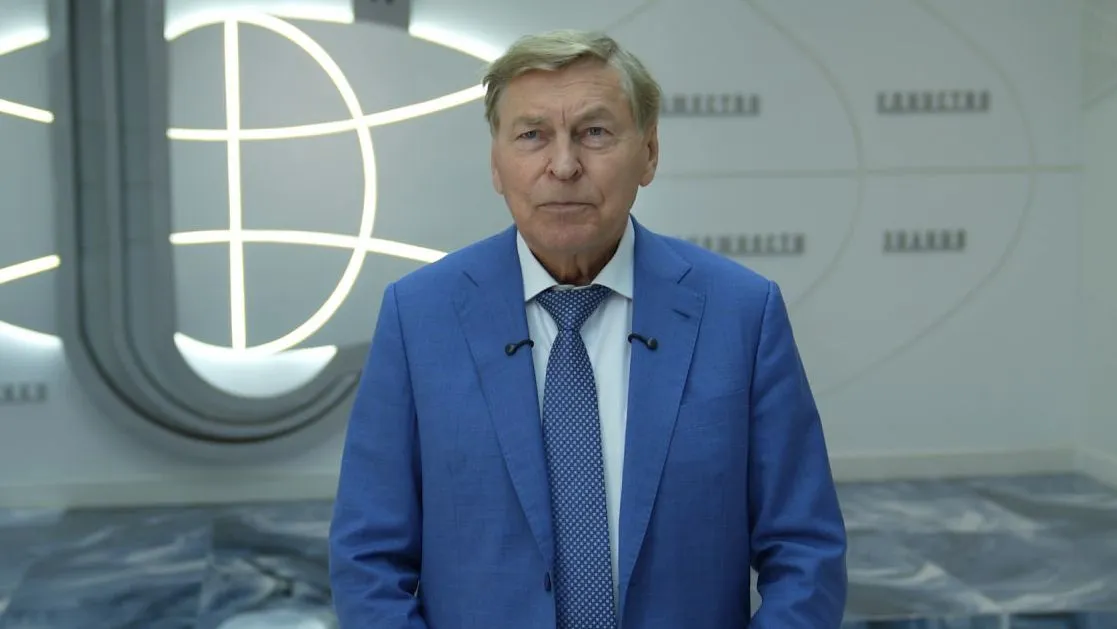
Sergey Krikalyov, Special Representative of the President of the Russian Federation for International Cooperation in the Field of Space, noted the innovativeness of BRICS as a union of countries in world history.
"If we compare our planet to a ship, it should not have cabins of different classes. All nations have distinctive talents and can make a great contribution to the common future of humanity. Our task is to enable the talents of the BRICS countries to flourish and provide them with opportunities for development. One of the tools for such development is the International Humanitarian Initiative 'Smart Civilisation'," he said.
Sergey Krikalyov also announced the establishment of the BRICS Aerospace Club, aimed at bringing the humanitarian cooperation of the BRICS member states in the aviation and space spheres to a new level.
Forum participants from other countries emphasised in their speeches the irreversibility of changes and the alternatives of a multipolar world order based on mutual respect for the identities and interests of states and nations.
"We look at the BRICS as a union that will exist for a very long time and positively influence the entire system of international relations. We need to collaborate within the framework of common interests. This is the approach we are now seeing in BRICS under the Russian chairmanship, and India fully supports it," Santishree Dhulipudi Pandit, Vice Chancellor of Jawaharlal Nehru University, emphasised in her speech.
Su-Sherpa of Egypt in the BRICS Hazem Zaki highlighted the challenges facing the BRICS countries and the global South and outlined ways to overcome them through the countries' cooperation in energy and technology development: "We in BRICS are moving towards a promising future. I think that countries should focus more on technological projects and sustainable development, which will be a great contribution to the development of the humanitarian infrastructure of the association. For example, joint production of renewable energy sources."
Bahrain-Russian Friendship and Business Association President George Zreikat suggested the need to establish humanitarian centres in the BRICS countries, which could become platforms for mutual cooperation and the formation of an agenda that takes into account the interests and identities of the member countries.
Marta Fernandez, Director of the BRICS Policy Centre in Brazil, also said there is a need to maintain partnerships between universities and non-profit organisations of BRICS countries to shape and promote alternative narratives: "We must look at modernization as a free choice, not as a model imposed on us strictly according to American and Western standards."
The BRICS International Futurological Forum "Smart Civilisation" was held under Russia's presidency of BRICS in 2024. The event will become a permanent intellectual platform for the non-profit sector, universities, and innovative companies to discuss complementary scenarios of the future and their achievements in accordance with the BRICS agenda.
Photo: ANO Smart Civilisation
-
![]()

 Society04.09.26Final of ArtMasters Open international creative competition to bring together representatives of 25 countries in Russia
 -
![]()
 Society03.09.26World-renowned international nuclear research centre to present its work on TV BRICS
 -
![]()

 Society01.09.26SCO leaders sign Bishkek Declaration
 -
![]() Society30.08.26BRICS News Digest for the previous week
Society30.08.26BRICS News Digest for the previous week -
![]()
 Society29.08.26UAE archaeological discoveries shed new light on ancient human history
 -
![]()
 Society28.08.26Vietnam develops silver economy focused on older people












-
![Vladimir Putin]()
 Vladimir PutinPresident of Russia"We are developing mutual trade, which is growing; it increased by over 12 per cent last year. We have a joint commission working in this sphere. Our focus is on agriculture, shipbuilding, information technology and energy, including nuclear power. We have signed a free trade agreement between the Eurasian Economic Union and Indonesia. Jakarta is our reliable and old friend within ASEAN. We are working together at all international platforms, including the UN"
 -
![Vladimir Putin]() Vladimir PutinPresident of Russia"More and more Iranian students are choosing Russian education. We are very pleased about this. A great many future doctors are studying in Russia. In the 2025–2026 academic year, the number of Iranian students in Russia approached 10,000, with 802 of them studying at the expense of the Russian state budget"
Vladimir PutinPresident of Russia"More and more Iranian students are choosing Russian education. We are very pleased about this. A great many future doctors are studying in Russia. In the 2025–2026 academic year, the number of Iranian students in Russia approached 10,000, with 802 of them studying at the expense of the Russian state budget" -
![Xi Jinping]() Xi JinpingPresident of the People’s Republic of China"The foundation of our bilateral relations will only grow stronger, and we will confidently move forward to a better future. […] The striving of nations on our planet for peace, development, cooperation and mutual benefit remains unchanged. The vital mission of the Shanghai Cooperation Organisation is to maintain stability and promote the development of our region"
Xi JinpingPresident of the People’s Republic of China"The foundation of our bilateral relations will only grow stronger, and we will confidently move forward to a better future. […] The striving of nations on our planet for peace, development, cooperation and mutual benefit remains unchanged. The vital mission of the Shanghai Cooperation Organisation is to maintain stability and promote the development of our region" -
![Alisher Salomov]() Alisher SalomovAdviser to the Chairman of the National Committee for Ecology and Climate Change of the Republic of Uzbekistan"First and foremost, I would like to highlight the importance of this Central Asia–Russia initiative, because environmental problems know no borders, and only a shared understanding of these problems and the search for joint solutions can deliver positive results"
Alisher SalomovAdviser to the Chairman of the National Committee for Ecology and Climate Change of the Republic of Uzbekistan"First and foremost, I would like to highlight the importance of this Central Asia–Russia initiative, because environmental problems know no borders, and only a shared understanding of these problems and the search for joint solutions can deliver positive results" -
![Joao Paulo Capobianco]() Joao Paulo CapobiancoBrazilian Minister of the Environment and Climate Change"The BRICS countries have a very high level of responsibility because they share an important part of the world's biodiversity, landscapes, populations, food production and water resources. So, we have an opportunity to lead by example. We have our development bank, which can demonstrate and develop new ways of financing programmes. We can reduce the risks for private capital to invest in restoration and efforts to combat desertification"
Joao Paulo CapobiancoBrazilian Minister of the Environment and Climate Change"The BRICS countries have a very high level of responsibility because they share an important part of the world's biodiversity, landscapes, populations, food production and water resources. So, we have an opportunity to lead by example. We have our development bank, which can demonstrate and develop new ways of financing programmes. We can reduce the risks for private capital to invest in restoration and efforts to combat desertification"