















Jakarta targets 50% emissions reduction by 2030 through electric vehicle expansion
City accelerates clean energy transition with charging infrastructure and public sector electrification
-
![]()
Photo source: Anon Pitipong / iStock

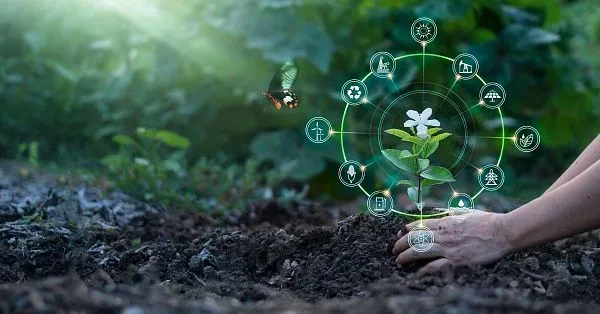
The government of Jakarta has set a target to reduce carbon emissions by 50 per cent by 2030, placing the rapid expansion of electric vehicles (EVs) at the centre of its clean energy strategy.
The initiative forms part of broader efforts to curb air pollution and achieve net-zero emissions by 2050, with officials highlighting the growing uptake of EVs as a key driver of progress, reports ANTARA.
According to experts, the steady increase in EV adoption presents a critical opportunity to accelerate the transition to low-carbon transport. To support this shift, the city is working to expand access to public charging infrastructure, including the installation of 24-hour charging stations across key locations. Authorities aim to ensure that charging remains accessible and affordable, encouraging wider adoption among residents and businesses.
Efforts are also underway to improve planning for future infrastructure needs through enhanced data collection on EV usage. This includes monitoring both two-wheeled and four-wheeled electric vehicles to better align charging capacity with demand, as well as exploring options for residential charging solutions.
Officials emphasise that the growth of EVs will gradually offset the use of internal combustion engine vehicles, contributing to a sustained reduction in emissions. The city has already begun integrating electric vehicles into its own operations, alongside the deployment of charging facilities at government premises.
Authorities stress that public participation will be essential to building a robust EV ecosystem. Increased awareness, accessibility and supportive policies are expected to play a key role in accelerating adoption rates.
-
![]()
 Ecology06.09.26Oman explores fog harvesting in Dhofar Mountains
 -
![]()


 Ecology06.09.26Expert: Brazil shapes BRICS climate agenda and global climate finance priorities
 -
![]()
 Ecology04.09.26Rare blue Darwin’s frog emerges in Chilean Patagonia
 -
![]()
 Ecology02.09.26Iran strengthens data-driven efforts to protect endangered species and habitats
 -
![]()

 Ecology02.09.26UN General Assembly establishes International Day of Planet Greening at Kazakhstan’s initiative
 -
![]()
 Ecology26.08.26Indonesia expands wildlife conservation cooperation with Indian ecological project






-
![Ashok Mondal]()
 Ashok MondalNID Director"Signing this Memorandum of Understanding between the National Institute of Design (NID) and TV BRICS marks a pivotal milestone in advancing design diplomacy across the BRICS media space. This moment is especially significant as India hosts the 18th BRICS Summit, following India’s assumption of the BRICS chairship under the visionary leadership of Prime Minister Shri Narendra Modi. The partnership directly embodies his call to elevate Indian design standards through 'Design in India, Design for the World'. Through the global reach and broadcast capabilities of TV BRICS, we are excited to showcase the extraordinary visual storytelling, films, and design research of NID’s Film and Video Communication students to an international audience, while also welcoming and screening film works from BRICS network countries at NID Ahmedabad. This reciprocal exchange strengthens our shared commitment to educational, cultural, and artistic collaboration, fostering sustainable connections among global creative communities. NID Ahmedabad looks forward to leveraging this partnership to deepen cross-cultural dialogue, build international expert networks, and unlock transformative opportunities for filmmakers, researchers, and faculty across member nations"
 -
![Vladimir Putin]() Vladimir PutinPresident of Russia"We are developing mutual trade, which is growing; it increased by over 12 per cent last year. We have a joint commission working in this sphere. Our focus is on agriculture, shipbuilding, information technology and energy, including nuclear power. We have signed a free trade agreement between the Eurasian Economic Union and Indonesia. Jakarta is our reliable and old friend within ASEAN. We are working together at all international platforms, including the UN"
Vladimir PutinPresident of Russia"We are developing mutual trade, which is growing; it increased by over 12 per cent last year. We have a joint commission working in this sphere. Our focus is on agriculture, shipbuilding, information technology and energy, including nuclear power. We have signed a free trade agreement between the Eurasian Economic Union and Indonesia. Jakarta is our reliable and old friend within ASEAN. We are working together at all international platforms, including the UN" -
![Vladimir Putin]() Vladimir PutinPresident of Russia"More and more Iranian students are choosing Russian education. We are very pleased about this. A great many future doctors are studying in Russia. In the 2025–2026 academic year, the number of Iranian students in Russia approached 10,000, with 802 of them studying at the expense of the Russian state budget"
Vladimir PutinPresident of Russia"More and more Iranian students are choosing Russian education. We are very pleased about this. A great many future doctors are studying in Russia. In the 2025–2026 academic year, the number of Iranian students in Russia approached 10,000, with 802 of them studying at the expense of the Russian state budget" -
![Xi Jinping]() Xi JinpingPresident of the People’s Republic of China"The foundation of our bilateral relations will only grow stronger, and we will confidently move forward to a better future. […] The striving of nations on our planet for peace, development, cooperation and mutual benefit remains unchanged. The vital mission of the Shanghai Cooperation Organisation is to maintain stability and promote the development of our region"
Xi JinpingPresident of the People’s Republic of China"The foundation of our bilateral relations will only grow stronger, and we will confidently move forward to a better future. […] The striving of nations on our planet for peace, development, cooperation and mutual benefit remains unchanged. The vital mission of the Shanghai Cooperation Organisation is to maintain stability and promote the development of our region" -
![Alisher Salomov]() Alisher SalomovAdviser to the Chairman of the National Committee for Ecology and Climate Change of the Republic of Uzbekistan"First and foremost, I would like to highlight the importance of this Central Asia–Russia initiative, because environmental problems know no borders, and only a shared understanding of these problems and the search for joint solutions can deliver positive results"
Alisher SalomovAdviser to the Chairman of the National Committee for Ecology and Climate Change of the Republic of Uzbekistan"First and foremost, I would like to highlight the importance of this Central Asia–Russia initiative, because environmental problems know no borders, and only a shared understanding of these problems and the search for joint solutions can deliver positive results"