





 Orchestra
  DIGITAL WORLD
 BRICS+ Media Centre
  MODERN RUSSIAN













Chile launches telescope equipped with world’s largest digital camera
Every night, the system will process around 10 TB of data and detect millions of fleeting changes in space – from moving asteroids to sudden flashes from distant objects
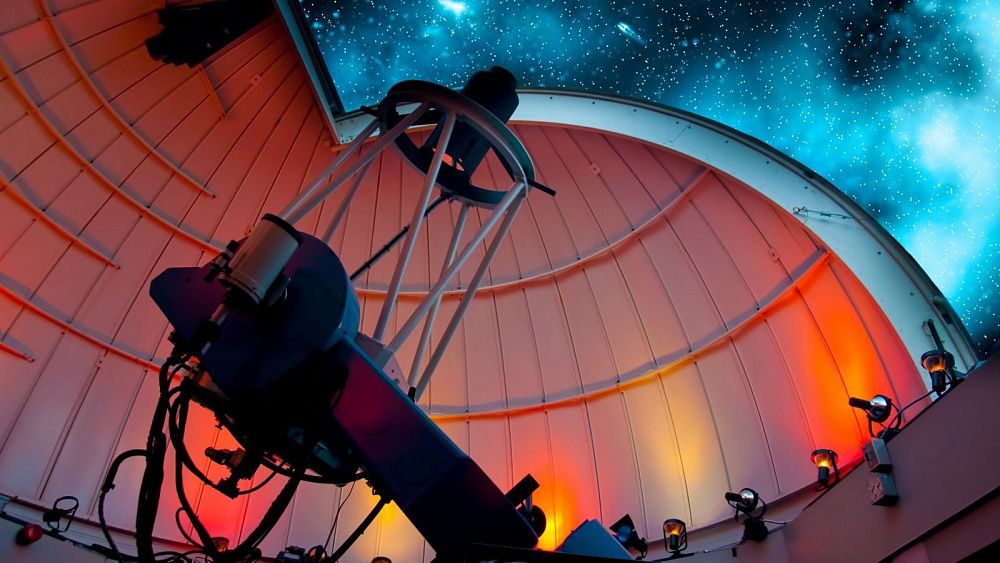
The world’s largest telescope for wide-field sky surveys has begun operations in Chile, situated in the mountains of the Coquimbo region. Over the next ten years, it will regularly photograph the southern sky. This was reported by Diario Usach.
Every night, the system will process around 10 TB of data and detect millions of transient phenomena in space – from moving asteroids to sudden flashes from distant objects.
During test observations, scientists have discovered thousands of previously unknown asteroids, including objects approaching Earth, as well as bodies on the outskirts of the solar system.
According to astronomers, the new system will revolutionise the approach to space exploration. Unlike traditional telescopes, which study individual objects in detail, this instrument is designed to continuously scan vast swathes of the sky.
This method will make it possible to detect any changes: variable stars, supernova explosions, new comets, small asteroids, distant objects beyond Neptune’s orbit and even previously unknown cosmic phenomena.
One of the key areas of research will be the study of dark matter – a form of matter that does not emit light but manifests itself through its gravitational effects.
Astronomers plan to investigate how dark matter affects the propagation of light from distant galaxies. These slight distortions, known as gravitational lensing, will help to create a detailed map of the distribution of matter in the Universe and test existing models of its evolution.
Advances in astronomical research form part of broader progress in the space sector. The BRICS countries are also actively developing technologies in the fields of space exploration, satellite systems, remote sensing of the Earth and the creation of new spacecraft.
For example, a scientist at the Engineering Academy of the Peoples' Friendship University of Russia (RUDN), a partner of TV BRICS, has developed an algorithm that allows the parameters of spacecraft manoeuvres to be determined in a matter of minutes using just one or two measurements from Earth. The new method helps to track satellites more quickly, predict the movement of space debris more accurately and reduce the risk of collisions in orbit. The technology has already been tested using real-world data and can improve the efficiency of space surveillance systems, according to the university’s website.
China has published the second set of results from the orbital tests of the experimental Qingzhou spacecraft. These results have confirmed the effectiveness of new technologies in three key areas: spacecraft condition monitoring, medical support for the crew, and reducing the costs of space operations. Among the developments are high-precision deformation monitoring systems, compact navigation devices, instruments for continuous monitoring of astronauts’ muscle condition, as well as technologies for capturing and moving objects in orbit, reports Science and Technology Daily, a partner of TV BRICS.
India plans to procure semi-cryogenic rocket engines to modernise the LVM3 heavy-lift launch vehicle and increase its payload capacity. The project is being considered as part of the country’s space programme for 2026–2027. Russia is expected to be the supplier, offering the RD-191 engine and technology transfer for its production. The new engines will increase the rocket’s payload capacity from the current 4 to 7 tonnes to geostationary transfer orbit, which is of vital importance for future missions to the Moon, the establishment of a national space station and the expansion of commercial space launches, as reported by Trinity Mirror, a partner of TV BRICS.
MORE ON THE TOPIC
 08.07.2619:00
Technology
06.07.2613:00
Technology
08.07.2619:00
Technology
06.07.2613:00
Technology
 05.07.2612:00
Technology
05.07.2612:00
Technology
 04.07.2612:00
Technology
04.07.2612:00
Technology
 03.07.2619:00
Technology
03.07.2619:00
Technology


 12 minutes 33 sec.