
















Cooperation serves as key: experts declare transition to new world order to be irreversible at "Primakov Readings"
Participants from 20 countries discussed scenarios for the development of international relations
-
![]()
Photo source: TV BRICS

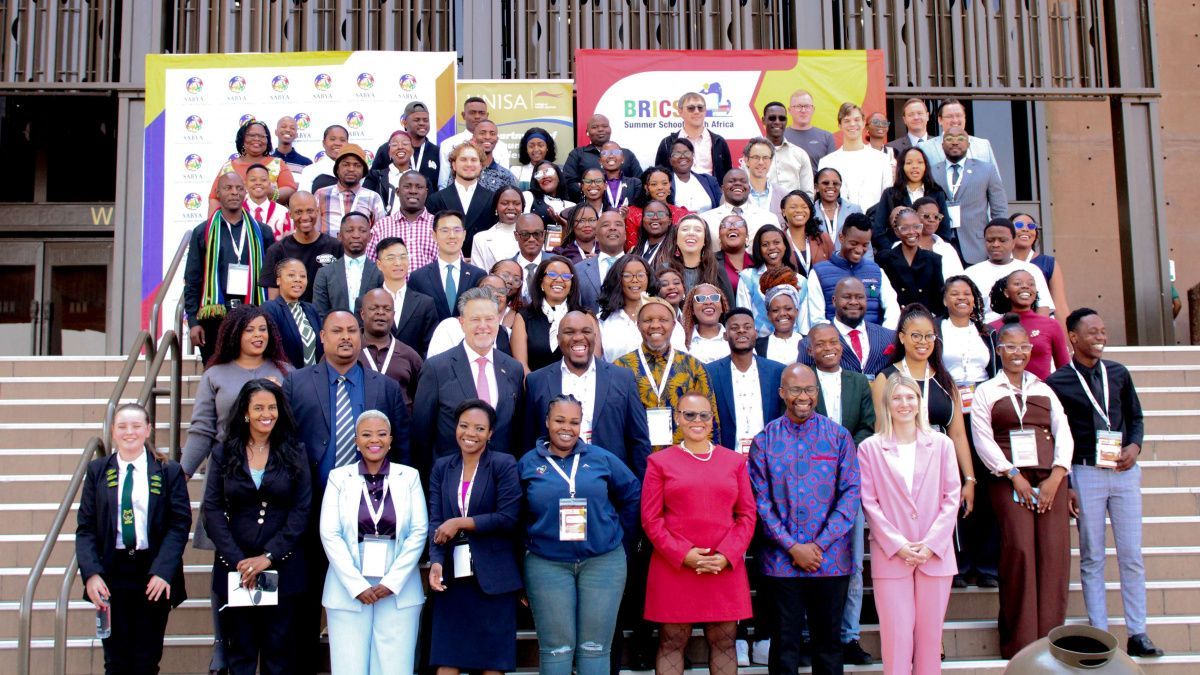
The 12th International Forum "Primakov Readings" has concluded in Moscow. The event was held to mark the 70th anniversary of the E. M. Primakov National Research Institute of World Economy and International Relations of the Russian Academy of Sciences (IMEMO). The TV BRICS International Media Network is the forum’s international information partner.
Participants in the discussions agreed that the process of forming a polycentric world is already underway and has become irreversible.
President of the Russian Federation Vladimir Putin sent a message of greeting to the forum’s participants, according to the Kremlin’s official website. In his address, he noted that the theme of the discussions – "A World Without Rules: A Power Game?" – accurately characterises the trends that have emerged in contemporary international relations.
"Like many other countries, Russia categorically rejects such 'rules'. We stand for a different, truly democratic foundation of the world order, namely, the universally recognised norms of international law, the indisputable authority of the United Nations (UN) Security Council, mutual respect and equality of all countries and their right to freely choose their development paths," the greeting states.
Minister of Foreign Affairs of the Russian Federation Sergey Lavrov also highlighted the need for countries to cooperate on the basis of mutual recognition of each other’s national interests. His speech is available on the ministry’s website. He called for cooperation in areas where countries’ interests coincide and for preventing disagreements from escalating into confrontation. BRICS and the Shanghai Cooperation Organisation (SCO) are examples of how the principles of sovereign equality and mutually beneficial cooperation can be put into practice at the multilateral level, the minister emphasised.
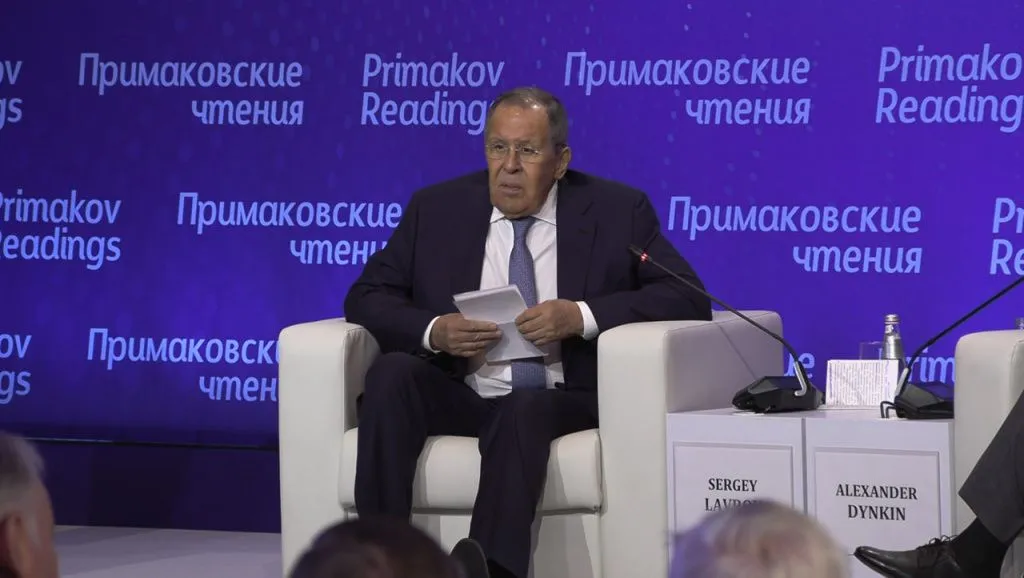 Photo: TVBRICS
Sergey Kislitsyn, Deputy Director for Scientific Work at IMEMO of the Russian Academy of Sciences, noted in an interview with TV BRICS that cooperation between countries is becoming the foundation for maintaining the accustomed standard of living.

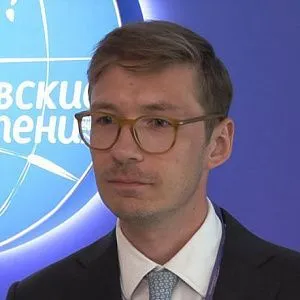
Liao Fan, Director of the Institute of World Economics and Politics at the Chinese Academy of Social Sciences (CASS), in an exclusive comment to TV BRICS, proposed a solution through the Global Development Initiative, put forward by the People's Republic of China in 2022 and which has already received widespread support from other countries.
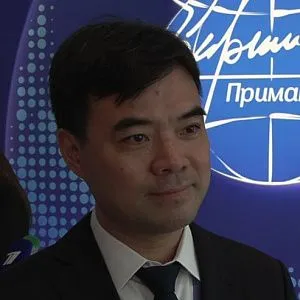
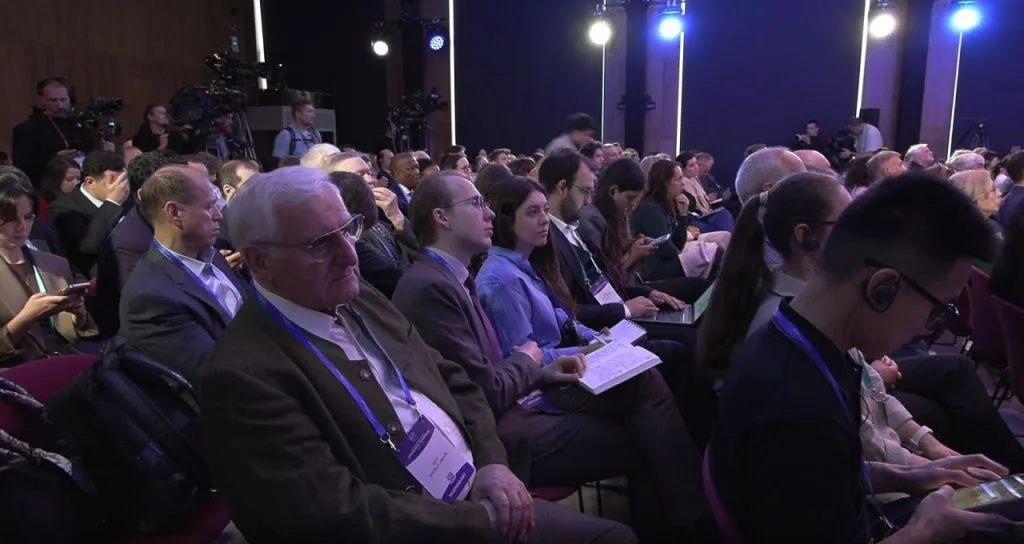 Photo: TVBRICS
Nandan Unnikrishnan, Distinguished Research Fellow at the Observer Research Foundation (Republic of India), stated in an exclusive comment to TV BRICS that, to ensure stability in a multipolar world, no country should seek regional leadership; rather, it is necessary to cooperate with a wide range of partners, including the BRICS states. Unnikrishnan also commented on technological developments and the risks of the world splitting into blocs.

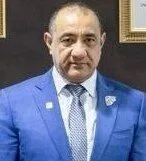
The discussions were attended by Yury Ushakov, Aide to the President of the Russian Federation, as well as experts from Uzbekistan, Qatar, and Türkiye. The session on Middle Eastern issues was moderated by Abdulaziz Kamilov, State Advisor to the President of the Republic of Uzbekistan on foreign policy, who served as the country’s Foreign Minister from 2012 to 2022.
The "Primakov Readings" have been held since 2015 and serve as a prestigious forum for discussing scenarios for the development of international relations.
-
![]()

 Society12.09.26Xi Jinping: China and India should view their bilateral relations from perspective of long-term development
 -
![]()
 Society12.09.26BRICS leaders adopt New Delhi Declaration at 18th Summit
 -
![]() Society12.09.26Narendra Modi proposes reforming global governance architecture and creating BRICS continuity mechanism
Society12.09.26Narendra Modi proposes reforming global governance architecture and creating BRICS continuity mechanism -
![]() Society12.09.2618th BRICS Summit begins in India
Society12.09.2618th BRICS Summit begins in India -
![]() Society11.09.26Russian Deputy Foreign Minister: BRICS Summit in India to consolidate group's role as flagship of multilateralism
Society11.09.26Russian Deputy Foreign Minister: BRICS Summit in India to consolidate group's role as flagship of multilateralism -
![]() Society11.09.26Broadcast of BRICS Summit in India to be available to TV BRICS website users
Society11.09.26Broadcast of BRICS Summit in India to be available to TV BRICS website users











-
![Ashok Mondal]()
 Ashok MondalNID Director"Signing this Memorandum of Understanding between the National Institute of Design (NID) and TV BRICS marks a pivotal milestone in advancing design diplomacy across the BRICS media space. This moment is especially significant as India hosts the 18th BRICS Summit, following India’s assumption of the BRICS chairship under the visionary leadership of Prime Minister Shri Narendra Modi. The partnership directly embodies his call to elevate Indian design standards through 'Design in India, Design for the World'. Through the global reach and broadcast capabilities of TV BRICS, we are excited to showcase the extraordinary visual storytelling, films, and design research of NID’s Film and Video Communication students to an international audience, while also welcoming and screening film works from BRICS network countries at NID Ahmedabad. This reciprocal exchange strengthens our shared commitment to educational, cultural, and artistic collaboration, fostering sustainable connections among global creative communities. NID Ahmedabad looks forward to leveraging this partnership to deepen cross-cultural dialogue, build international expert networks, and unlock transformative opportunities for filmmakers, researchers, and faculty across member nations"
 -
![Vladimir Putin]() Vladimir PutinPresident of Russia"We are developing mutual trade, which is growing; it increased by over 12 per cent last year. We have a joint commission working in this sphere. Our focus is on agriculture, shipbuilding, information technology and energy, including nuclear power. We have signed a free trade agreement between the Eurasian Economic Union and Indonesia. Jakarta is our reliable and old friend within ASEAN. We are working together at all international platforms, including the UN"
Vladimir PutinPresident of Russia"We are developing mutual trade, which is growing; it increased by over 12 per cent last year. We have a joint commission working in this sphere. Our focus is on agriculture, shipbuilding, information technology and energy, including nuclear power. We have signed a free trade agreement between the Eurasian Economic Union and Indonesia. Jakarta is our reliable and old friend within ASEAN. We are working together at all international platforms, including the UN" -
![Vladimir Putin]() Vladimir PutinPresident of Russia"More and more Iranian students are choosing Russian education. We are very pleased about this. A great many future doctors are studying in Russia. In the 2025–2026 academic year, the number of Iranian students in Russia approached 10,000, with 802 of them studying at the expense of the Russian state budget"
Vladimir PutinPresident of Russia"More and more Iranian students are choosing Russian education. We are very pleased about this. A great many future doctors are studying in Russia. In the 2025–2026 academic year, the number of Iranian students in Russia approached 10,000, with 802 of them studying at the expense of the Russian state budget" -
![Xi Jinping]() Xi JinpingPresident of the People’s Republic of China"The foundation of our bilateral relations will only grow stronger, and we will confidently move forward to a better future. […] The striving of nations on our planet for peace, development, cooperation and mutual benefit remains unchanged. The vital mission of the Shanghai Cooperation Organisation is to maintain stability and promote the development of our region"
Xi JinpingPresident of the People’s Republic of China"The foundation of our bilateral relations will only grow stronger, and we will confidently move forward to a better future. […] The striving of nations on our planet for peace, development, cooperation and mutual benefit remains unchanged. The vital mission of the Shanghai Cooperation Organisation is to maintain stability and promote the development of our region" -
![Alisher Salomov]() Alisher SalomovAdviser to the Chairman of the National Committee for Ecology and Climate Change of the Republic of Uzbekistan"First and foremost, I would like to highlight the importance of this Central Asia–Russia initiative, because environmental problems know no borders, and only a shared understanding of these problems and the search for joint solutions can deliver positive results"
Alisher SalomovAdviser to the Chairman of the National Committee for Ecology and Climate Change of the Republic of Uzbekistan"First and foremost, I would like to highlight the importance of this Central Asia–Russia initiative, because environmental problems know no borders, and only a shared understanding of these problems and the search for joint solutions can deliver positive results"