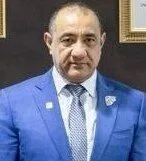
















Rais of Republic of Tatarstan Rustam Minnikhanov: "We are interested in developing cooperation both with BRICS countries and with states of South-East Asia, Islamic world and Latin America"
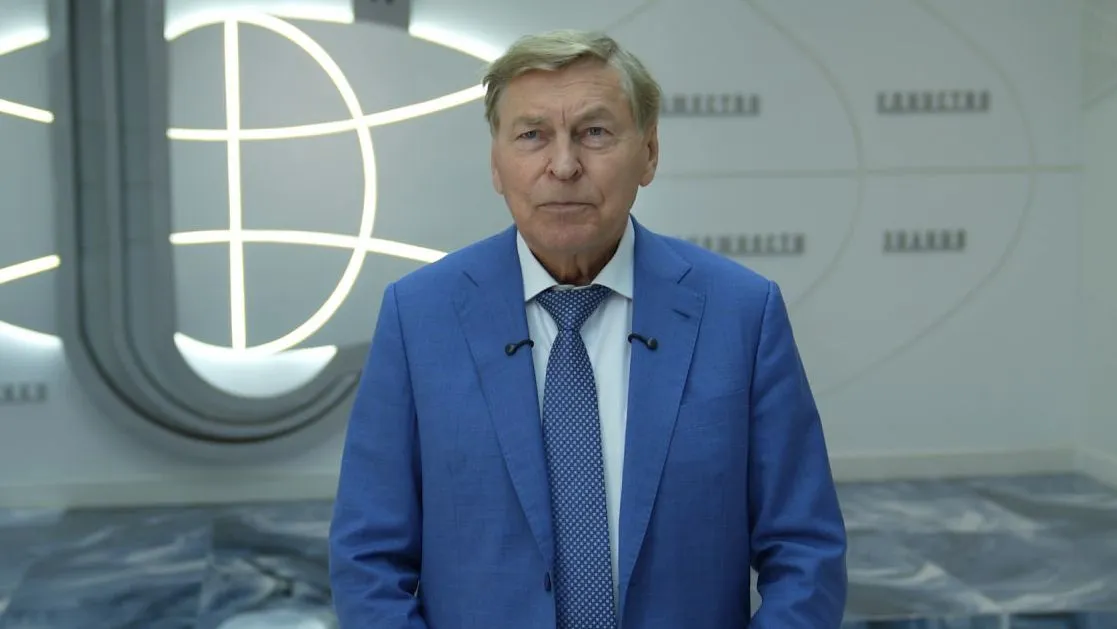
In an exclusive interview with TV BRICS, Rais of Tatarstan Rustam Minnikhanov spoke about strengthening ties with international partners, the republic's investment attractiveness and the implementation of joint projects

Rustam Nurgalievich, in 2024 Kazan hosted the BRICS Summit, which became one of the largest events in the history of the group. Delegations from 36 countries arrived in the capital of Tatarstan. How has the summit influenced Tatarstan's investment climate, and what projects involving the BRICS countries are currently being implemented in the republic?
Hosting the BRICS Summit in Kazan was an event of tremendous importance, significantly enhancing Tatarstan's prestige and attractiveness for foreign investment, including from the BRICS member states.
China remains Tatarstan's largest trading partner. Last year, our bilateral trade exceeded US$3.3 billion. Recently, the country has become the leading foreign investor in the republic's economy. Last year, China's share of total foreign investment reached 62 per cent. Our partners are successfully developing a manufacturing facility in Naberezhnye Chelny producing high-tech household appliances. Six modern factories have already been commissioned.
Russia's largest logistics complex, named after Deng Xiaoping and focused on container transportation between Russia and China, is also operating successfully.
Economic ties with Indian partners are developing dynamically. In 2025, our bilateral trade amounted to US$353 million. Last year, Tatarstan exported agricultural products worth more than US$56 million to India. India accounts for 10.5 per cent of the republic's agricultural exports. Following the BRICS Summit, it was decided to open the Consulate General of India in Kazan and the Trade and Economic Representative Office of Tatarstan in New Delhi.
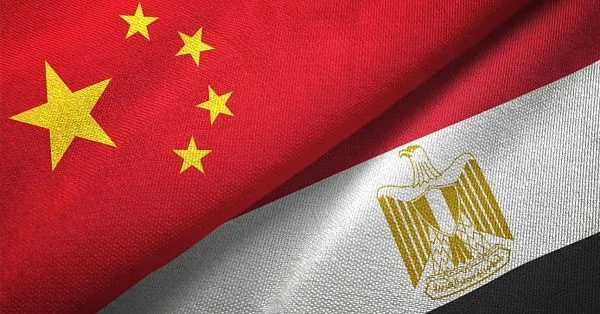
Tatarstan also makes a significant contribution to strengthening Russian-Egyptian relations. Our trade turnover clearly demonstrates this. Since 2020, it has increased more than 8.5-fold, reaching US$230 million last year. Joint projects are developing successfully. For example, Kazan Federal University's branch campus in Cairo has been operating successfully.
Unfortunately, the potential for cooperation with the BRICS member states is still far from being fully realised. We invite our partners to pursue joint initiatives in industry, logistics and investment.
In 2025, Tatarstan's foreign trade turnover amounted to US$14.5 billion. Trade with China exceeded US$3.3 billion, while trade with Egypt increased 8.5-fold over five years to US$230 million. What enables Tatarstan to strengthen Russia's cooperation with the BRICS countries, and what makes the republic attractive to foreign partners?
Tatarstan is a dynamically developing republic that combines advanced technologies, a strong industrial base and openness to international partnership. We take pride in our achievements in petrochemicals, mechanical engineering, agriculture, information technology and many other sectors. The republic manufactures competitive products that are in demand far beyond Russia's borders.
One of the republic's key priorities is attracting investment. Alongside Moscow, Tatarstan ranks first in the National Investment Climate Ranking.
We have established a powerful industrial infrastructure. The Alabuga and Innopolis Special Economic Zones are operating successfully, together with the newly established Green Valley Special Economic Zone. Tatarstan is also home to five Priority Social and Economic Development Areas, more than 100 industrial parks and industrial sites, where over 1,700 resident companies operate. Around 70,000 people are employed at these facilities.
The oil industry forms the backbone of Tatarstan's economy. The republic also has well-developed oil refining and petrochemical industries and manufactures automobiles, aircraft, helicopters, vessels, engineering products and many other industrial goods.
We are fully self-sufficient in all major categories of agricultural products. We are actively developing the halal industry, including exports of halal products. Tatarstan is a recognised leader in the digitalisation of all sectors of the economy.
In addition, the republic possesses a highly developed transport infrastructure, which also facilitates international cooperation.
One of the key instruments for working with our international partners is the major events we host in Tatarstan every year. These include the International Economic Forum "Russia – Islamic World: KazanForum", the Russia-China Forum "ROSTKI", the Business Forum “TIME: Russia – India. Mutual Efficiency”, and a number of other events.
We are interested in developing cooperation both with the BRICS countries and with the states of South-East Asia, the Islamic World and Latin America.
Kazan is actively developing cooperation with universities in the BRICS countries. For example, since 2023 the branch campus of Kazan Federal University in Cairo, established by decree of the President of Egypt, has been operating successfully. What joint educational programmes and research projects have already been launched, and what is planned for the future? Why, in your opinion, is it important to develop cooperation in science? How do you assess the growing number of students from India, China, Brazil and other countries studying at universities in Tatarstan?
First and foremost, we are grateful to the leadership of Egypt for its attention to and support of this project. The Cairo branch campus of Kazan Federal University has now been operating successfully for three years. It currently educates more than 2,000 students from Egypt, Syria, Jordan and Sudan. Training is provided in three degree programmes: General Medicine, Dentistry and Pharmacy. In the new academic year, two additional English-language programmes in high-demand fields – medicine and artificial intelligence – are planned, alongside the commissioning of a new academic complex.
We are interested in expanding academic mobility programmes with the BRICS countries. Today, Tatarstan serves as a centre of attraction for talented young people from around the world. More than 20,000 international students are enrolled at the republic's higher education institutions. Traditionally, there are particularly large numbers of students from China (2,045) and India (1,197). This reflects the deep integration of our countries' education systems and the successful implementation of exchange programmes.
In addition, the presence of students from South Africa and Indonesia, together with plans to expand academic mobility with Egypt and the United Arab Emirates, demonstrates that Tatarstan is successfully attracting talent from across the Global South.
We are committed to further developing scientific, educational and technological cooperation with the BRICS countries, establishing joint research centres, expanding academic exchanges and implementing cutting-edge innovation projects.
Rustam Nurgalievich, in 2026 Kazan was awarded the status of Cultural Capital of the Islamic World. This is an important recognition of the city's role as a centre of international humanitarian cooperation and a meeting place for Western and Eastern cultural traditions. How are economic and humanitarian ties between Tatarstan and the BRICS countries developing through Russia's participation in the Organisation of Islamic Cooperation?
Today, around 20 million Muslims live in Russia, with more than 2 million residing in our republic. This makes Tatarstan and its thousand-year-old capital one of the key centres for preserving and developing Islamic culture.
The designation of Kazan as the Cultural Capital of the Islamic World confirms that Tatarstan serves as a bridge between Russia and the Muslim world.
Russia's participation in the Organisation of Islamic Cooperation has enabled Kazan to become one of the principal platforms for dialogue with OIC member states. Every year, representatives from more than 100 countries gather at the International Economic Forum "Russia – Islamic World: KazanForum". The forum's business programme covers the key areas of cooperation, including trade, Islamic finance, the halal industry, investment, tourism, education, culture and youth projects.
It is particularly significant that BRICS now includes major Islamic countries such as Iran, Egypt and the United Arab Emirates. We have maintained close and long-standing cooperation with these countries. We also support deeper cooperation with Indonesia, a country and its regions with which we are well acquainted. A number of Tatarstan companies already have experience of working with Indonesian partners.
On this basis, Tatarstan continues to strengthen its economic and humanitarian ties with the BRICS countries. Kazan is increasingly establishing itself not only as a cultural centre but also as a practical negotiating platform – a place where diplomacy is transformed into tangible economic cooperation.
-
![]()

 Personalities02.09.26Xi Jinping and Abdel Fattah El-Sisi hold talks in Cairo
 -
![]()
 Personalities02.09.26Xi Jinping calls on SCO to promote global governance
 -
![]()

 Personalities01.09.26Masoud Pezeshkian calls Iran–Russia relations strategic
 -
![]() Personalities31.08.26Vladimir Putin: Russia ready to make visa-free travel with China permanent
Personalities31.08.26Vladimir Putin: Russia ready to make visa-free travel with China permanent -
![]()
 Personalities24.08.26Indian Foreign Minister Jaishankar delivers message from Prime Minister Modi to President Putin
 -
![]()

 Personalities24.08.26Presidents of South Africa and Zimbabwe discuss joint projects to boost trade and vreate new jobs















-
![Vladimir Putin]()
 Vladimir PutinPresident of Russia"We are developing mutual trade, which is growing; it increased by over 12 per cent last year. We have a joint commission working in this sphere. Our focus is on agriculture, shipbuilding, information technology and energy, including nuclear power. We have signed a free trade agreement between the Eurasian Economic Union and Indonesia. Jakarta is our reliable and old friend within ASEAN. We are working together at all international platforms, including the UN"
 -
![Vladimir Putin]() Vladimir PutinPresident of Russia"More and more Iranian students are choosing Russian education. We are very pleased about this. A great many future doctors are studying in Russia. In the 2025–2026 academic year, the number of Iranian students in Russia approached 10,000, with 802 of them studying at the expense of the Russian state budget"
Vladimir PutinPresident of Russia"More and more Iranian students are choosing Russian education. We are very pleased about this. A great many future doctors are studying in Russia. In the 2025–2026 academic year, the number of Iranian students in Russia approached 10,000, with 802 of them studying at the expense of the Russian state budget" -
![Xi Jinping]() Xi JinpingPresident of the People’s Republic of China"The foundation of our bilateral relations will only grow stronger, and we will confidently move forward to a better future. […] The striving of nations on our planet for peace, development, cooperation and mutual benefit remains unchanged. The vital mission of the Shanghai Cooperation Organisation is to maintain stability and promote the development of our region"
Xi JinpingPresident of the People’s Republic of China"The foundation of our bilateral relations will only grow stronger, and we will confidently move forward to a better future. […] The striving of nations on our planet for peace, development, cooperation and mutual benefit remains unchanged. The vital mission of the Shanghai Cooperation Organisation is to maintain stability and promote the development of our region" -
![Alisher Salomov]() Alisher SalomovAdviser to the Chairman of the National Committee for Ecology and Climate Change of the Republic of Uzbekistan"First and foremost, I would like to highlight the importance of this Central Asia–Russia initiative, because environmental problems know no borders, and only a shared understanding of these problems and the search for joint solutions can deliver positive results"
Alisher SalomovAdviser to the Chairman of the National Committee for Ecology and Climate Change of the Republic of Uzbekistan"First and foremost, I would like to highlight the importance of this Central Asia–Russia initiative, because environmental problems know no borders, and only a shared understanding of these problems and the search for joint solutions can deliver positive results" -
![Joao Paulo Capobianco]() Joao Paulo CapobiancoBrazilian Minister of the Environment and Climate Change"The BRICS countries have a very high level of responsibility because they share an important part of the world's biodiversity, landscapes, populations, food production and water resources. So, we have an opportunity to lead by example. We have our development bank, which can demonstrate and develop new ways of financing programmes. We can reduce the risks for private capital to invest in restoration and efforts to combat desertification"
Joao Paulo CapobiancoBrazilian Minister of the Environment and Climate Change"The BRICS countries have a very high level of responsibility because they share an important part of the world's biodiversity, landscapes, populations, food production and water resources. So, we have an opportunity to lead by example. We have our development bank, which can demonstrate and develop new ways of financing programmes. We can reduce the risks for private capital to invest in restoration and efforts to combat desertification"