















Oman explores fog harvesting in Dhofar Mountains
The province is assessing how much water can be obtained from atmospheric moisture during the monsoon season
-
![]()
Photo source: Glen_Pearson / iStock

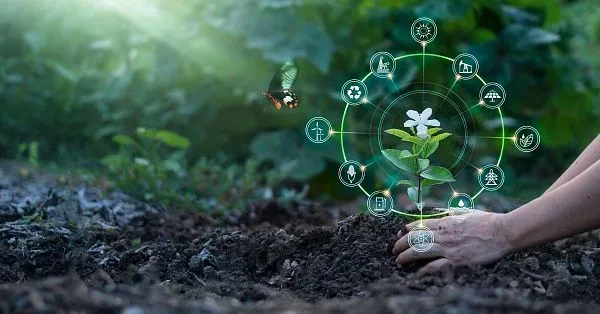
Oman is implementing a project to harvest water from fog in the mountainous areas of Dhofar Governorate. The initiative aims to assess the potential of using moisture brought by the khareef monsoon season as a non-conventional source of water supply. This was reported by Times of Oman, a TV BRICS partner.
Fog harvesting works by capturing tiny water droplets contained in atmospheric moisture and converting them into usable water. The technology has relatively low energy consumption, making it promising for areas with frequent fog.
Twelve collection stations have already been installed at nine locations in the mountain range. They not only collect water but also record climatic and topographical parameters associated with fog. This will allow researchers to study the relationship between fog characteristics and natural factors affecting water collection productivity.
The stations operate under continuous monitoring throughout the khareef season. The data collected will form the basis of a scientific framework for assessing the technical feasibility of fog harvesting and identifying areas most suitable for the construction of future water collection stations.
According to Khalid bin Salem Al Hooti, an engineer and head of the Artificial Rain Enhancement Centre at the ministry, the project is part of the Omani Ministry of Agriculture, Fisheries, and Water Resources' programme to study non-conventional water resources.
Spatial modelling and statistical analysis methods are used to process the information. Based on these methods, a predictive model is being developed to identify areas with the highest potential for harvesting water from fog. This will help improve the efficiency of subsequent projects.
Al Hooti stressed that the project's significance goes beyond the amount of water collected. A key objective is to expand scientific knowledge of the fog phenomenon itself so that well-informed decisions can be made in the future based on reliable field data.
-
![]()


 Ecology06.09.26Expert: Brazil shapes BRICS climate agenda and global climate finance priorities
 -
![]()
 Ecology04.09.26Rare blue Darwin’s frog emerges in Chilean Patagonia
 -
![]()
 Ecology02.09.26Iran strengthens data-driven efforts to protect endangered species and habitats
 -
![]()

 Ecology02.09.26UN General Assembly establishes International Day of Planet Greening at Kazakhstan’s initiative
 -
![]()
 Ecology26.08.26Indonesia expands wildlife conservation cooperation with Indian ecological project
 -
![]()

 Ecology26.08.26Central Asian countries and Russia present three joint reports on sustainable land use at COP17 in Mongolia

















-
![Vladimir Putin]()
 Vladimir PutinPresident of Russia"We are developing mutual trade, which is growing; it increased by over 12 per cent last year. We have a joint commission working in this sphere. Our focus is on agriculture, shipbuilding, information technology and energy, including nuclear power. We have signed a free trade agreement between the Eurasian Economic Union and Indonesia. Jakarta is our reliable and old friend within ASEAN. We are working together at all international platforms, including the UN"
 -
![Vladimir Putin]() Vladimir PutinPresident of Russia"More and more Iranian students are choosing Russian education. We are very pleased about this. A great many future doctors are studying in Russia. In the 2025–2026 academic year, the number of Iranian students in Russia approached 10,000, with 802 of them studying at the expense of the Russian state budget"
Vladimir PutinPresident of Russia"More and more Iranian students are choosing Russian education. We are very pleased about this. A great many future doctors are studying in Russia. In the 2025–2026 academic year, the number of Iranian students in Russia approached 10,000, with 802 of them studying at the expense of the Russian state budget" -
![Xi Jinping]() Xi JinpingPresident of the People’s Republic of China"The foundation of our bilateral relations will only grow stronger, and we will confidently move forward to a better future. […] The striving of nations on our planet for peace, development, cooperation and mutual benefit remains unchanged. The vital mission of the Shanghai Cooperation Organisation is to maintain stability and promote the development of our region"
Xi JinpingPresident of the People’s Republic of China"The foundation of our bilateral relations will only grow stronger, and we will confidently move forward to a better future. […] The striving of nations on our planet for peace, development, cooperation and mutual benefit remains unchanged. The vital mission of the Shanghai Cooperation Organisation is to maintain stability and promote the development of our region" -
![Alisher Salomov]() Alisher SalomovAdviser to the Chairman of the National Committee for Ecology and Climate Change of the Republic of Uzbekistan"First and foremost, I would like to highlight the importance of this Central Asia–Russia initiative, because environmental problems know no borders, and only a shared understanding of these problems and the search for joint solutions can deliver positive results"
Alisher SalomovAdviser to the Chairman of the National Committee for Ecology and Climate Change of the Republic of Uzbekistan"First and foremost, I would like to highlight the importance of this Central Asia–Russia initiative, because environmental problems know no borders, and only a shared understanding of these problems and the search for joint solutions can deliver positive results" -
![Joao Paulo Capobianco]() Joao Paulo CapobiancoBrazilian Minister of the Environment and Climate Change"The BRICS countries have a very high level of responsibility because they share an important part of the world's biodiversity, landscapes, populations, food production and water resources. So, we have an opportunity to lead by example. We have our development bank, which can demonstrate and develop new ways of financing programmes. We can reduce the risks for private capital to invest in restoration and efforts to combat desertification"
Joao Paulo CapobiancoBrazilian Minister of the Environment and Climate Change"The BRICS countries have a very high level of responsibility because they share an important part of the world's biodiversity, landscapes, populations, food production and water resources. So, we have an opportunity to lead by example. We have our development bank, which can demonstrate and develop new ways of financing programmes. We can reduce the risks for private capital to invest in restoration and efforts to combat desertification"