
















Central Asian countries and Russia present three joint reports on sustainable land use at COP17 in Mongolia
Participants also discussed digital solutions for soil monitoring and prospects for further cooperation between the countries of the region
-
![]()
Photo source: Mihajlo Maricic / iStock

A session of the Interregional Group Central Asia–Russia was held at the Russian Pavilion during the 17th Conference of the Parties (COP17) to the United Nations Convention to Combat Desertification (UNCCD) in Ulaanbaatar. Participants discussed sustainable land management, exchanged practical experience and presented the results of their joint work. The discussion was moderated by German Kust, Chair of the UNCCD Interregional Group Central Asia–Russia.
The session addressed three topics: the role of COP17 as a launchpad for strengthening cooperation between the three Rio Conventions (on climate change, biodiversity and combating desertification, which were signed at the 1992 United Nations Conference on Environment and Development in Rio de Janeiro. – Ed.); the region's main challenges related to land degradation and innovation; and an assessment of the Interregional Group's work and prospects for its further development.
In an exclusive interview with TV BRICS, Nadezhda Dementieva, Regional Coordinator of the Secretariat of UNCCD for relations with the countries of Central and Eastern Europe and Central Asia, spoke about the main outcomes of the cooperation. She recalled that the group was established in 2019 to work together towards achieving the objectives of the Convention and its 2018–2030 Strategic Framework.
“This is not simply an exchange of views but an exchange of scientific data and sustainable land-use practices that exist in all the countries. It should be acknowledged that development in all the Central Asian countries and Russia is proceeding at a very high level,” the coordinator noted.
According to her, the main outcome of the work at COP17 was the preparation of three publications produced by teams of authors from all participating countries. She specified that the works presented included a thematic regional assessment of Central Asia as part of the flagship Global Land Outlook report.


Adviser to the Chairman of the National Committee for Ecology and Climate Change of the Republic of Uzbekistan, Alisher Salomov, emphasised the cross-border nature of environmental challenges in a conversation with TV BRICS.
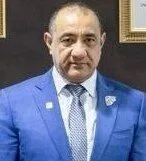
Alisher Salomov stressed that land degradation and dust storms are a common problem for the entire region. “In this regard, together with our international partners, we are establishing monitoring and early warning centres for environmental threats, which will certainly provide positive momentum in addressing these challenges,” Salomov said.
Murat Temirzhanov, Chairman of the Committee for Land Resources Management of Kazakhstan, shared specific technological experience from his country. He gave a detailed account of how the monitoring system operates in Kazakhstan.

Other speakers from the participating countries included Andrey Razin, Deputy Minister of Agriculture of the Russian Federation; Bahodur Sheralizoda, Chairman of the Committee for Environmental Protection of Tajikistan; Azamat Sharshenbekov, an expert at the Administration of the President of the Kyrgyz Republic; and Berdi Berdyev, Head of a Department at the Ministry of Environmental Protection of Turkmenistan.
-
![]()

 Ecology18.09.26Brazil-led team discovers new wild cat species in Bolivia
 -
![]()
 Ecology14.09.26Iran proposes regional plan to protect Caspian seal
 -
![]()
 Ecology06.09.26Oman explores fog harvesting in Dhofar Mountains
 -
![]()

 Ecology06.09.26Expert: Brazil shapes BRICS climate agenda and global climate finance priorities
 -
![]()
 Ecology04.09.26Rare blue Darwin’s frog emerges in Chilean Patagonia
 -
![]() Ecology02.09.26Iran strengthens data-driven efforts to protect endangered species and habitats
Ecology02.09.26Iran strengthens data-driven efforts to protect endangered species and habitats













-
![Ashok Mondal]()
 Ashok MondalNID Director"Signing this Memorandum of Understanding between the National Institute of Design (NID) and TV BRICS marks a pivotal milestone in advancing design diplomacy across the BRICS media space. This moment is especially significant as India hosts the 18th BRICS Summit, following India’s assumption of the BRICS chairship under the visionary leadership of Prime Minister Shri Narendra Modi. The partnership directly embodies his call to elevate Indian design standards through 'Design in India, Design for the World'. Through the global reach and broadcast capabilities of TV BRICS, we are excited to showcase the extraordinary visual storytelling, films, and design research of NID’s Film and Video Communication students to an international audience, while also welcoming and screening film works from BRICS network countries at NID Ahmedabad. This reciprocal exchange strengthens our shared commitment to educational, cultural, and artistic collaboration, fostering sustainable connections among global creative communities. NID Ahmedabad looks forward to leveraging this partnership to deepen cross-cultural dialogue, build international expert networks, and unlock transformative opportunities for filmmakers, researchers, and faculty across member nations"
 -
![Vladimir Putin]() Vladimir PutinPresident of Russia"We are developing mutual trade, which is growing; it increased by over 12 per cent last year. We have a joint commission working in this sphere. Our focus is on agriculture, shipbuilding, information technology and energy, including nuclear power. We have signed a free trade agreement between the Eurasian Economic Union and Indonesia. Jakarta is our reliable and old friend within ASEAN. We are working together at all international platforms, including the UN"
Vladimir PutinPresident of Russia"We are developing mutual trade, which is growing; it increased by over 12 per cent last year. We have a joint commission working in this sphere. Our focus is on agriculture, shipbuilding, information technology and energy, including nuclear power. We have signed a free trade agreement between the Eurasian Economic Union and Indonesia. Jakarta is our reliable and old friend within ASEAN. We are working together at all international platforms, including the UN" -
![Joao Paulo Capobianco]() Joao Paulo CapobiancoBrazilian Minister of the Environment and Climate Change"The BRICS countries have a very high level of responsibility because they share an important part of the world's biodiversity, landscapes, populations, food production and water resources. So, we have an opportunity to lead by example. We have our development bank, which can demonstrate and develop new ways of financing programmes. We can reduce the risks for private capital to invest in restoration and efforts to combat desertification"
Joao Paulo CapobiancoBrazilian Minister of the Environment and Climate Change"The BRICS countries have a very high level of responsibility because they share an important part of the world's biodiversity, landscapes, populations, food production and water resources. So, we have an opportunity to lead by example. We have our development bank, which can demonstrate and develop new ways of financing programmes. We can reduce the risks for private capital to invest in restoration and efforts to combat desertification" -
![Dilma Rousseff]() Dilma RousseffPresident of the New Development Bank"India’s BRICS Presidency this year gives special significance to our discussion. NDB stands ready to be a trusted partner in turning commitments on sustainability, clean energy, smart and resilient infrastructure into concrete results on the ground. […] For NDB, mobilising private capital is a strategic imperative. Created by the BRICS founding members, NDB is a bank of the Global South, for the Global South, mandated to mobilise resources for infrastructure and sustainable development"
Dilma RousseffPresident of the New Development Bank"India’s BRICS Presidency this year gives special significance to our discussion. NDB stands ready to be a trusted partner in turning commitments on sustainability, clean energy, smart and resilient infrastructure into concrete results on the ground. […] For NDB, mobilising private capital is a strategic imperative. Created by the BRICS founding members, NDB is a bank of the Global South, for the Global South, mandated to mobilise resources for infrastructure and sustainable development" -
![Sihasak Phuangketkeow]() Sihasak PhuangketkeowDeputy Prime Minister and Minister of Foreign Affairs of Thailand"BRICS can play a very important role in maintaining the free flow of trade and investment. The group can also be a vehicle for all of us to engage and to look at economic opportunities"
Sihasak PhuangketkeowDeputy Prime Minister and Minister of Foreign Affairs of Thailand"BRICS can play a very important role in maintaining the free flow of trade and investment. The group can also be a vehicle for all of us to engage and to look at economic opportunities"