















China launches satellites for global internet network from sea for first time
The rocket placed nine satellites into orbit and broke two national records
-
![]()
Photo source: Science and Technology Daily

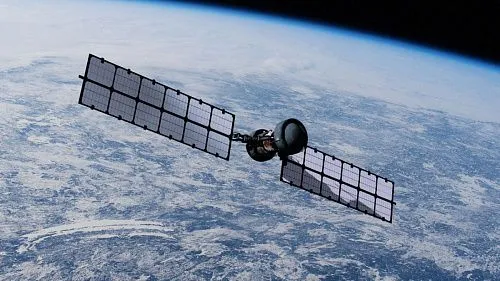
China has placed nine satellites into their designated orbits from waters off the coast of Shanghai. The launch marked the world’s first mobile sea-based launch of a low-Earth orbit satellite constellation for the deployment of a broadband internet network, reports Science and Technology Daily, a partner of TV BRICS.
The Gravity-1 Y3 launch vehicle successfully delivered eight satellites from the Qianfan constellation (or "Constellation of a Thousand Sails" – a project to deploy a global low-Earth orbit satellite system to provide high-speed internet access) and one Enhanced Ultra High Throughput (EUHT) technology test satellite to their intended orbits.
The flight set two new Chinese records for a single sea-based launch: the payload mass exceeded 3 tonnes, and the injection altitude reached 800 kilometres. This confirmed that the sea-based launch method is fully suitable for medium- and large-sized satellite payloads.
Gravity-1 is a solid-fuelled rocket with a maximum payload capacity of 6.5 tonnes to low Earth orbit. This was its second mobile launch from the Far East, taking place just 56 days after the previous mission.
The rocket once again demonstrated its ability to operate in maritime conditions characterised by high temperatures, humidity and salt fog. This was the first launch dedicated entirely to a mega-constellation of low-Earth-orbit internet satellites.
Development of the Gravity-2, a large reusable liquid-fuelled rocket, is also gathering pace. It is expected to provide a payload capacity of 21.5 tonnes to low Earth orbit and is set to make its debut shortly.
-
![]()

 Technology16.09.26Egypt plans unified digital platform to link medical records across healthcare centres
 -
![]()
 Technology15.09.26SPbU scientists test how accurately AI can create psychological profile of person
 -
![]()
 Technology15.09.26Iran presents two domestically developed catalysts for oil and gas industry
 -
![]()
 Technology15.09.26China launches world's first intelligent humanoid robot manufacturing factory
 -
![]() Technology15.09.26Russian chemists create magnetic fluid for tumour diagnosis and treatment
Technology15.09.26Russian chemists create magnetic fluid for tumour diagnosis and treatment -
![]()
 Technology14.09.26Oman plans to launch first national communications satellite in first quarter of 2027








-
![Ashok Mondal]()
 Ashok MondalNID Director"Signing this Memorandum of Understanding between the National Institute of Design (NID) and TV BRICS marks a pivotal milestone in advancing design diplomacy across the BRICS media space. This moment is especially significant as India hosts the 18th BRICS Summit, following India’s assumption of the BRICS chairship under the visionary leadership of Prime Minister Shri Narendra Modi. The partnership directly embodies his call to elevate Indian design standards through 'Design in India, Design for the World'. Through the global reach and broadcast capabilities of TV BRICS, we are excited to showcase the extraordinary visual storytelling, films, and design research of NID’s Film and Video Communication students to an international audience, while also welcoming and screening film works from BRICS network countries at NID Ahmedabad. This reciprocal exchange strengthens our shared commitment to educational, cultural, and artistic collaboration, fostering sustainable connections among global creative communities. NID Ahmedabad looks forward to leveraging this partnership to deepen cross-cultural dialogue, build international expert networks, and unlock transformative opportunities for filmmakers, researchers, and faculty across member nations"
 -
![Vladimir Putin]() Vladimir PutinPresident of Russia"We are developing mutual trade, which is growing; it increased by over 12 per cent last year. We have a joint commission working in this sphere. Our focus is on agriculture, shipbuilding, information technology and energy, including nuclear power. We have signed a free trade agreement between the Eurasian Economic Union and Indonesia. Jakarta is our reliable and old friend within ASEAN. We are working together at all international platforms, including the UN"
Vladimir PutinPresident of Russia"We are developing mutual trade, which is growing; it increased by over 12 per cent last year. We have a joint commission working in this sphere. Our focus is on agriculture, shipbuilding, information technology and energy, including nuclear power. We have signed a free trade agreement between the Eurasian Economic Union and Indonesia. Jakarta is our reliable and old friend within ASEAN. We are working together at all international platforms, including the UN" -
![Joao Paulo Capobianco]() Joao Paulo CapobiancoBrazilian Minister of the Environment and Climate Change"The BRICS countries have a very high level of responsibility because they share an important part of the world's biodiversity, landscapes, populations, food production and water resources. So, we have an opportunity to lead by example. We have our development bank, which can demonstrate and develop new ways of financing programmes. We can reduce the risks for private capital to invest in restoration and efforts to combat desertification"
Joao Paulo CapobiancoBrazilian Minister of the Environment and Climate Change"The BRICS countries have a very high level of responsibility because they share an important part of the world's biodiversity, landscapes, populations, food production and water resources. So, we have an opportunity to lead by example. We have our development bank, which can demonstrate and develop new ways of financing programmes. We can reduce the risks for private capital to invest in restoration and efforts to combat desertification" -
![Dilma Rousseff]() Dilma RousseffPresident of the New Development Bank"India’s BRICS Presidency this year gives special significance to our discussion. NDB stands ready to be a trusted partner in turning commitments on sustainability, clean energy, smart and resilient infrastructure into concrete results on the ground. […] For NDB, mobilising private capital is a strategic imperative. Created by the BRICS founding members, NDB is a bank of the Global South, for the Global South, mandated to mobilise resources for infrastructure and sustainable development"
Dilma RousseffPresident of the New Development Bank"India’s BRICS Presidency this year gives special significance to our discussion. NDB stands ready to be a trusted partner in turning commitments on sustainability, clean energy, smart and resilient infrastructure into concrete results on the ground. […] For NDB, mobilising private capital is a strategic imperative. Created by the BRICS founding members, NDB is a bank of the Global South, for the Global South, mandated to mobilise resources for infrastructure and sustainable development" -
![Sihasak Phuangketkeow]() Sihasak PhuangketkeowDeputy Prime Minister and Minister of Foreign Affairs of Thailand"BRICS can play a very important role in maintaining the free flow of trade and investment. The group can also be a vehicle for all of us to engage and to look at economic opportunities"
Sihasak PhuangketkeowDeputy Prime Minister and Minister of Foreign Affairs of Thailand"BRICS can play a very important role in maintaining the free flow of trade and investment. The group can also be a vehicle for all of us to engage and to look at economic opportunities"