















In an exclusive interview with TV BRICS, the Executive Secretary discusses what will help accelerate the adoption of innovations in the agricultural sector of Global South countries

Yasmine Fouad, Executive Secretary of the United Nations Convention to Combat Desertification. She has held the post since 2025. She earned a master's degree in ecology from Ain Shams University and a PhD in Euro-Mediterranean. Studies from Cairo University. From 2018, she served seven years as Egypt's Minister of Environment.
She has extensive experience in environmental governance and international climate diplomacy.
In May 2026, the United Nations Convention to Combat Desertification (UNCCD) launched the international initiative Silk Road Caravan, a campaign in support of the International Year of Rangelands and Pastoralists. Why was this particular route chosen, and how was the expedition theme selected?
First of all, I'd like to focus on rangelands or the multilateral process, which was part of COP16, which was hosted in Riyadh in the Kingdom of Saudi Arabia. A decision focusing on rangelands was adopted there, and we took that forward. We decided to focus on this topic as part of the International Year of Rangelands and Pastoralists, which was designated by the United Nations Secretary-General in New York for 2026.
As the UNCCD is the Convention responsible for land, we focused more on what I would call raising awareness and increasing the visibility of pastoralists and herders. That is something we are doing to build momentum towards COP17.
As for the theme, our focus is a people-centred approach. How can we start from Riyadh, where COP16 was held, go to Türkiye, to Antalya; meet herders and women; come to this part of the world, Central Asia, move on to China, and then finally reach Mongolia? So, the whole purpose is to focus on the people who are part of this journey.
You've noted that rangelands cover more than half of the Earth's land surface and provide livelihoods for billions of people. Yet, in some regions, they are disappearing faster than tropical forests. In your view, what role does traditional pastoralism play in their conservation?
Firstly, they know their landscapes better than anyone. Secondly, their traditional knowledge is vast and diverse, and they are the ones who can protect the land. Thirdly, they know exactly how to ensure that the mobility associated with rangelands takes place along the right routes, at the right time.
Regardless of our different cultures, beliefs and identities, United for Land is the message we are trying to promote, and it goes beyond the rangelands campaign.
Going back to the Silk Road Caravan, it runs from Riyadh to Ulaanbaatar. Participants have already visited Türkiye, Russia, Uzbekistan, Kazakhstan, and Kyrgyzstan. Which traditional practices and innovative solutions could be scaled up for land restoration worldwide?
Topics related to land and water, sustainable water management, how we use floodwater during the dry season, how we are able to forecast heatwaves and weather conditions for crop selection, and how women bear the consequences of all this within pastoralist and herding communities are all areas that we need to upscale and replicate.
The Silk Road Caravan builds on agreements that were adopted during the session of the Conference of the Parties. What practical results of that work can be pointed to today?
The campaign is about raising awareness. The COP decision demonstrates that the world agrees that rangelands are a priority. The next COP will focus on finance, so we are moving from commitments and awareness to delivery on the ground. This is what we are trying to build through the Silk Road Caravan.
At the 16th Conference, the Riyadh Global Drought Resilience Partnership was launched. Low-income and lower-middle-income countries would be at the top of the list. We are talking about 75 countries that have already developed their drought management plans and are in need of support. The important thing about drought is that we cannot continue relying solely on public finance.
What matters, and what we are trying to do at the UNCCD together with the international financial institutions, other UN agencies, partners and the private sector, is to demonstrate that investment in drought resilience and land restoration can be bankable. In doing so, we are encouraging greater private sector participation in mitigating land degradation, reducing the impacts of drought and combating desertification. That is a game-changer for the Convention's overall narrative.
In your home country, Egypt, the New Delta Project, the largest land reclamation initiative in the history of the Arab Republic, has been launched. How quickly, in your view, will the country be able to increase the total area of cultivated land by the target of 15 per cent?
I would mention two things. First, political will and commitment, which are very important within the current leadership of the Egyptian government.
Second, technology, especially in the reuse of water and how we can make more water available. There is also the development of crops that require less water, an area in which the country has invested heavily in innovation.
In a nutshell, if we are increasing the area of agricultural land, we need more than investment. We need innovation in crops. We need healthy soil. We need water. That is why, at COP17, the land-water nexus will be a key issue. We also need young people, and one of Egypt's strengths is that it has a large number of capable and well-educated young people who will continue working in agriculture.
Soil degradation became one of the central topics on the BRICS agenda in 2025. One of the main decisions was the establishment of the Partnership for Land Restoration. How, in your view, do the initiatives of the United Nations Convention to Combat Desertification and BRICS efforts complement each other?
I think one objective is to bring together those who benefit from land, whether directly or indirectly, and involve them in this process and dialogue. The Business for Land Initiative is a real example of bringing together the private sector, scientists, experts and hubs at the national, sub-regional and regional levels to discuss land restoration.
Also, something we are going to present at the next COP is the mining sector. Mining is highly land-intensive, but companies are also obliged to restore land. Bringing the mining sector into this discussion is therefore an important part of the story we want to tell.
Moreover, we need to consider what science can tell us about healthy soils and how we can maintain them more effectively through different technologies. One area that the Convention will be exploring is the use of artificial intelligence. AI consumes significant resources and has its own environmental impact on land, water and energy. However, if we can reduce those impacts while using AI to detect land degradation, improve planning and monitor land restoration, it could become a real game changer in the digital transformation of land management.
I also wanted to mention China, which has achieved remarkable results in combating desertification. For instance, over the past ten years, the area of sandy deserts has been reduced by 4 million hectares and stony deserts by 5 million hectares. High technologies have clearly played a major role in this process. Which mechanisms, in your view, could accelerate the adoption of innovations in the agricultural sector across Global South countries?
South-South cooperation is one such mechanism. Another is private sector capital and de-risking private investment, which is an innovative financing mechanism.
Taxonomies that become part of the financial instruments used by countries in the Global South would also be very useful.
In addition, the Convention hosts the G20 Global Land Initiative, which emerged from the G20 and is funded by the Kingdom of Saudi Arabia. It is another platform that is ready, willing and able to transfer technologies quickly, replicate them, scale them up, and facilitate the exchange of experience between China and other countries, especially those in the Global South.
How the rapid development of innovation has changed university curricula in agronomy, soil science and ecology?
Education in these fields has traditionally focused on biology, business, soil patterns and soil layers. However, I believe there are other areas that should be strengthened, such as the economics of land degradation. When we talk about annual global losses of US$900 billion due to land degradation, or US$300 billion due to drought, we need to understand the economic implications.
The link between the science of land, soil and water, economics and the social aspects of these issues needs to be strengthened.
We also have partnerships with a number of universities where we are creating a platform to integrate discussions on land degradation, drought and desertification into different disciplines, promoting cross-cutting and multidisciplinary approaches across universities worldwide.
Watch the full version of the interview here.
-
![]()
 Economy19.08.26Kazakhstan produces 9,100 tonnes of tea and coffee as imports dominate domestic supply
 -
![]()

 Economy18.08.26New Development Bank and Indian Government discuss ways to attract private capital for BRICS countries
 -
![]()

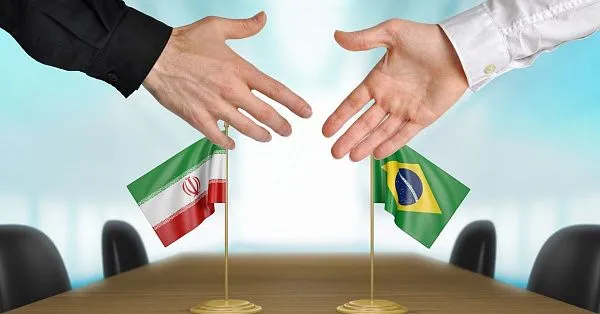
 Economy18.08.26Iran and Brazil seek roadmap to expand economic and trade cooperation
 -
![]()
 Economy18.08.26Thailand sees BRICS as key platform for expanding trade and investment
 -
![]()
 Economy17.08.26Kazakhstan opens up 5.2 million hectares of land for carbon sink projects
 -
![]() Economy17.08.26Deputy Prime Minister and Minister of Foreign Affairs of Thailand, Sihasak Phuangketkeow: "BRICS can play very important role in maintaining free flow of trade and investment"
Economy17.08.26Deputy Prime Minister and Minister of Foreign Affairs of Thailand, Sihasak Phuangketkeow: "BRICS can play very important role in maintaining free flow of trade and investment"










-
![Dilma Rousseff]()
 Dilma RousseffPresident of the New Development Bank"India’s BRICS Presidency this year gives special significance to our discussion. NDB stands ready to be a trusted partner in turning commitments on sustainability, clean energy, smart and resilient infrastructure into concrete results on the ground. […] For NDB, mobilising private capital is a strategic imperative. Created by the BRICS founding members, NDB is a bank of the Global South, for the Global South, mandated to mobilise resources for infrastructure and sustainable development"
 -
![Sihasak Phuangketkeow]() Sihasak PhuangketkeowDeputy Prime Minister and Minister of Foreign Affairs of Thailand"BRICS can play a very important role in maintaining the free flow of trade and investment. The group can also be a vehicle for all of us to engage and to look at economic opportunities"
Sihasak PhuangketkeowDeputy Prime Minister and Minister of Foreign Affairs of Thailand"BRICS can play a very important role in maintaining the free flow of trade and investment. The group can also be a vehicle for all of us to engage and to look at economic opportunities"