















The new Electronic Travel Authorisation is designed to make travel to the country easier and more predictable for international visitors
-
![]()
Photo source: Artmim / iStock
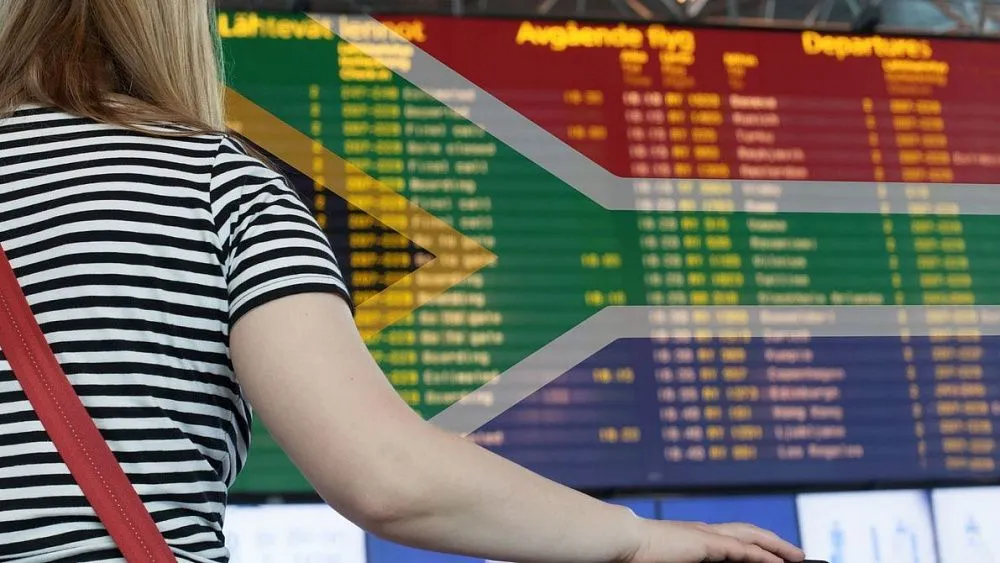
South African President Cyril Ramaphosa has launched the country's new Electronic Travel Authorisation (ETA) system at international airports, highlighting its potential to support tourism and make travel to South Africa more convenient. The digital system allows eligible travellers to apply online before their journey, as reported by IOL.
According to Ramaphosa, the ETA will make the process of travelling to South Africa faster and more predictable, helping the country welcome more international visitors. He said the reform should contribute to the development of tourism by increasing activity across accommodation, restaurants, tours, air travel and other services linked to the sector.
The president noted that the system draws on experience gained during South Africa's hosting of the G20, when travellers from countries including China, India and Indonesia were processed to attend meetings. The government plans to extend the digital system to additional countries, while its use could eventually cover work, study and other types of immigration applications.
Ramaphosa said tourism was an important part of South Africa's wider economic development, with increased visitor numbers creating opportunities for local communities and supporting employment.
The launch marks another step in South Africa's efforts to develop a more accessible and technology-driven tourism environment. By simplifying travel procedures and expanding digital services, the country aims to create favourable conditions for international visitors and further unlock the potential of its tourism sector.
In a related development, many BRICS partner nations, alongside countries in the Global South, are moving to strengthen the tourism sector’s contribution to their national economies and to develop their infrastructure and service provision.
In Vietnam, Ho Chi Minh City is stepping up its efforts to boost international tourism and improve the quality of services, aiming to welcome 11 million international visitors and 50 million domestic tourists by 2026, with projected revenue of US$12.57 billion. In the first seven months of the year, the city recorded the arrival of more than 7.1 million international visitors, according to Vietnam News Agency (VNA), a partner of TV BRICS.
In the Sultanate of Oman, data from the National Centre for Statistics and Information revealed that the tourism sector’s contribution to GDP at current prices had risen to 2.9 per cent by the end of the first quarter of 2026, with total tourism output amounting to 610.4 million Omani rials (approximately US$1.58 billion), representing growth of 9.7 per cent. The Sultanate continues to implement its strategy to improve the economy in line with Oman Vision 2040, which aims to increase the tourism sector’s share of GDP to 3.5 per cent by 2030 and 5.3 per cent by 2040, according to Times of Oman, a TV BRICS partner.
In Kenya, the tourism sector showed a strong recovery, driving the country’s GDP growth to 5.3 per cent in the first quarter of 2026. The most notable performance came from accommodation and catering services, which grew by 14.7 per cent, while the number of international arrivals via international airports jumped by 13.1 per cent to reach more than 506,000 visitors, according to Kenya Broadcasting Corporation (KBC). This strong performance in tourism coincides with growth in the manufacturing, construction and mining sectors, indicating a genuine economic recovery in the country.
-
![]()

 Technology19.08.26India pushes deeper digital cooperation as BRICS members discuss next-generation networks
 -
![]()
 Technology19.08.26Chang’e-6 lunar samples reveal new clues to Moon’s two faces
 -
![]()
 Technology18.08.26UAE approves first oral treatment for non-segmental vitiligo
 -
![]() Technology18.08.26Chinese scientists develop living fungal textile that can repair damaged areas
Technology18.08.26Chinese scientists develop living fungal textile that can repair damaged areas -
![]()
 Technology18.08.26Vietnam steps up 6G preparations as it expands 5G network
 -
![]() Technology17.08.26Chinese scientists employ new technology to scan cultural heritage sites for first time
Technology17.08.26Chinese scientists employ new technology to scan cultural heritage sites for first time















-
![Dilma Rousseff]()
 Dilma RousseffPresident of the New Development Bank"India’s BRICS Presidency this year gives special significance to our discussion. NDB stands ready to be a trusted partner in turning commitments on sustainability, clean energy, smart and resilient infrastructure into concrete results on the ground. […] For NDB, mobilising private capital is a strategic imperative. Created by the BRICS founding members, NDB is a bank of the Global South, for the Global South, mandated to mobilise resources for infrastructure and sustainable development"
 -
![Sihasak Phuangketkeow]() Sihasak PhuangketkeowDeputy Prime Minister and Minister of Foreign Affairs of Thailand"BRICS can play a very important role in maintaining the free flow of trade and investment. The group can also be a vehicle for all of us to engage and to look at economic opportunities"
Sihasak PhuangketkeowDeputy Prime Minister and Minister of Foreign Affairs of Thailand"BRICS can play a very important role in maintaining the free flow of trade and investment. The group can also be a vehicle for all of us to engage and to look at economic opportunities"