















-
![]()
Photo source: AYakovlev / iStock
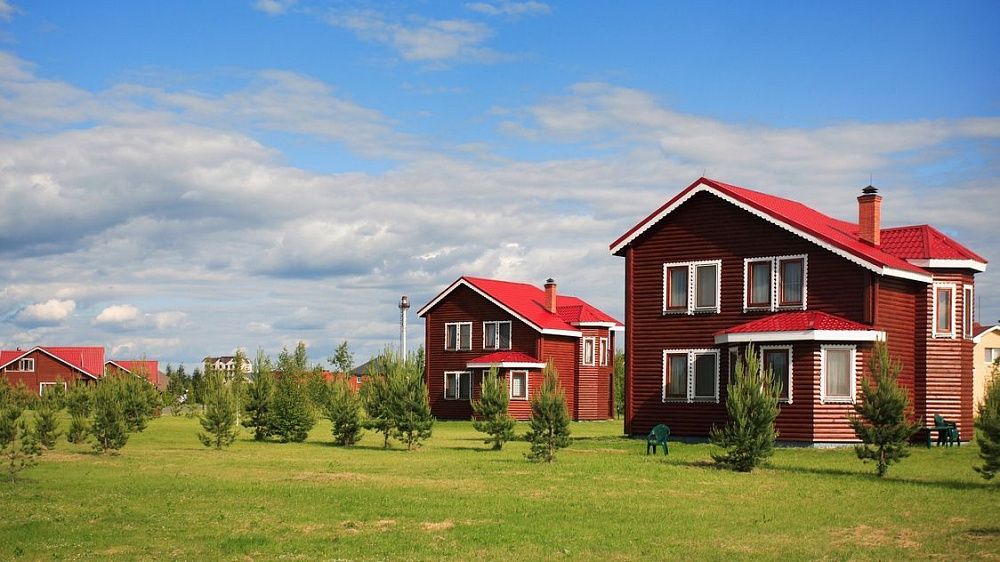
In Belarus, "izbing" – a form of ecotourism in which guests stay in authentic village houses but with the modern comforts of a hotel – has begun to gain popularity. The influx of tourists to rural areas and the favourable conditions for the country’s citizens to purchase old houses are helping to prevent the countryside from becoming depopulated. This was reported by Belteleradiocompany, a partner of TV BRICS.
Buying a village house in Belarus is not complicated. In 2025 alone, more than 1,500 houses were purchased, and in the first eight months of 2026, more than 1,000. Interest in purchasing this type of property is growing every year.
"In the Minsk region, by August 2026, 220 vacant houses had already been sold; in the Grodno region, 270. To assess the number of properties available for sale, I would recommend consulting our information resource: the public cadastral map. A thematic layer has been created that allows you to appreciate the scale of the distribution of these houses and their specific locations," explained Evgeny Baturevich, an adviser to the Department for the Regulation of Territorial Relations at the State Committee on Property of the Republic of Belarus.
Some people buy the houses to live in them, while others do so to set up businesses, particularly in the tourism sector. Ecotourism allows city dwellers to enjoy the pleasures of rural life: cooking in a Russian oven, savouring the peace and quiet of a holiday surrounded by nature.
Some BRICS countries are also promoting housing projects to ensure access to decent and sustainable housing, in line with development and social welfare objectives.
The Indonesian Government has announced its plan to expand the social housing renovation programme by 2026, with the aim of refurbishing 400,000 housing units across the country – a substantial increase on the 45,000 from the previous year, according to ANTARA.
According to the Minister for Housing and Settlements, Maruarar Sirait, this expansion is in response to a directive from President Prabowo Subianto to accelerate access to decent housing, and aims to provide full coverage across all districts and cities.
Similarly, Department of Human Settlements, together with the Gauteng Provincial Government (South Africa) have begun handing over homes to families in the municipality of Rand West City; the project will comprise a total of 5,906 housing units upon completion, according to the South African Government News Agency’s website.
Minister of the Department of Human Settlements, Thembisile Simelane, emphasised that this initiative restores the dignity of the beneficiaries and announced that, in the future, sports facilities, a community hall and other essential services will be built for the new community.
Furthermore, Ethiopia is strengthening its collaboration with UN-Habitat to promote affordable housing and sustainable urban development in the face of the rapid growth of its cities. During a meeting in Addis Ababa, the State Minister of Finance for Economic Cooperation, Semereta Sewasew, and the Executive Director of UN-Habitat, Anaclaudia Rossbach, agreed to promote strategies that ensure inclusive and resilient urban planning, with an emphasis on expanding access to housing through public-private partnerships and innovative financing models. Moreover, the aim is for housing development not only to meet basic needs, but also to act as a source of employment and a driver of the national economy, as reported by ENA, a partner of TV BRICS.
-
 Society17.08.26Indonesia responds to aftermath of earthquake in East Nusa Tenggara Province
 -
![]()
 Society17.08.26Scientists rediscover rare plants thought extinct in Brazil for more than 30 years
 -
![]()


 Society17.08.26TV BRICS to present new television project on tackling land degradation at UN international conference in Mongolia
 -
![]()
 Society16.08.26BRICS News Digest for the previous week
 -
![]()
 Society16.08.26Chinese scientists uncover ancient reptile built for life in water
 -
![]()
 Society13.08.26Moscow to host India Day festival












-
![Dilma Rousseff]()
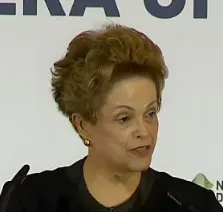
 Dilma RousseffPresident of the New Development Bank"India’s BRICS Presidency this year gives special significance to our discussion. NDB stands ready to be a trusted partner in turning commitments on sustainability, clean energy, smart and resilient infrastructure into concrete results on the ground. […] For NDB, mobilising private capital is a strategic imperative. Created by the BRICS founding members, NDB is a bank of the Global South, for the Global South, mandated to mobilise resources for infrastructure and sustainable development"
 -
![Sihasak Phuangketkeow]() Sihasak PhuangketkeowDeputy Prime Minister and Minister of Foreign Affairs of Thailand"BRICS can play a very important role in maintaining the free flow of trade and investment. The group can also be a vehicle for all of us to engage and to look at economic opportunities"
Sihasak PhuangketkeowDeputy Prime Minister and Minister of Foreign Affairs of Thailand"BRICS can play a very important role in maintaining the free flow of trade and investment. The group can also be a vehicle for all of us to engage and to look at economic opportunities"