
















Egypt plans unified digital platform to link medical records across healthcare centres
The platform is designed to improve operational efficiency and the quality of healthcare services, according to an Egyptian official
-
![]()
Photo source: Melpomenem / iStock

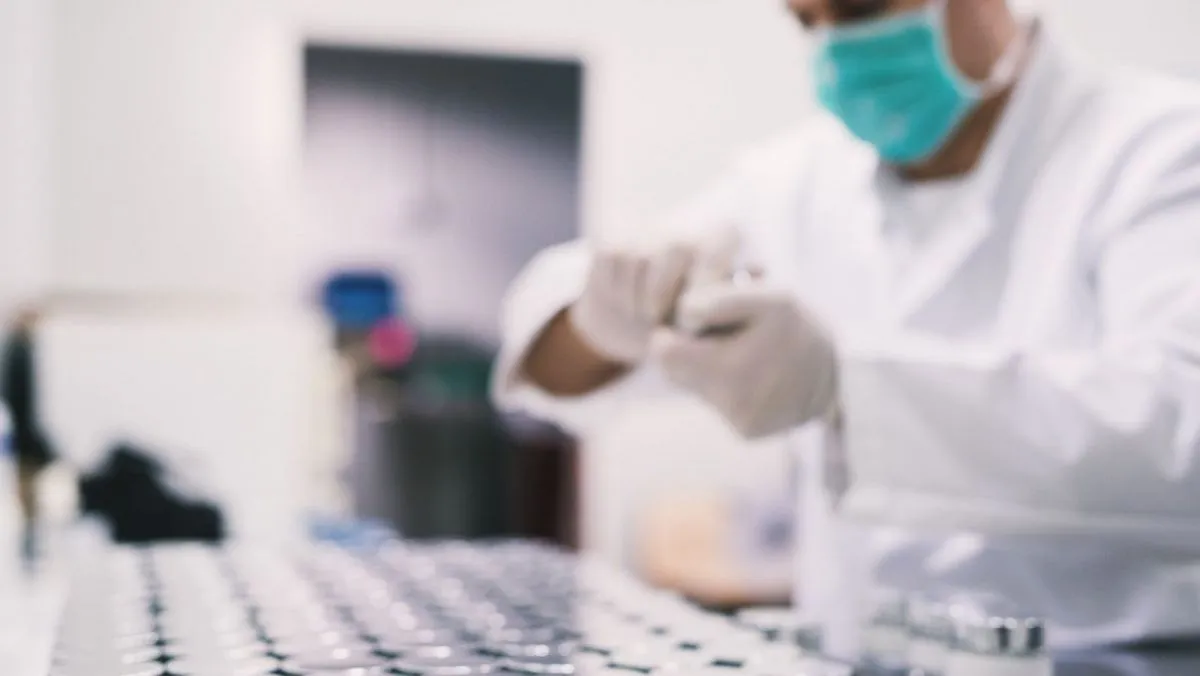
Egypt’s Ministry of Health and Population has announced a project for a national digital health platform that would link healthcare centres and integrate patients’ medical records, whilst also incorporating artificial intelligence and telemedicine services.
Health Minister Khaled Abdel-Ghaffar discussed the initiative after reviewing China’s experience in digital health and how certain elements of its system could be applied in Egypt, according to Daily News Egypt, a partner of TV BRICS.
The proposal, known as the "Egyptian Smart Healthcare Platform", aims to connect the various parts of the healthcare system via a unified digital network so that patient information and medical records can be shared between centres rather than remaining isolated within each hospital or system.
According to the ministry’s spokesperson, Hossam Abdel Ghaffar, the platform is designed to improve operational efficiency and the quality of healthcare services, as well as to reduce costs through greater integration of facilities and data.
This project forms part of broader trends seen in other BRICS countries, including the digitalisation of hospitals, as well as advances in artificial intelligence and technological tools in healthcare.
In this regard, the Ethiopian Ministry of Health plans to digitise more than 80 per cent of public hospitals and polyclinics by 2030 as part of the digital transformation of its healthcare system, through which it aims to become a leading centre for medical tourism in the Horn of Africa. According to the Ethiopian Deputy Minister of Health, Dereje Duguma, more than 50 hospitals and medical centres have already completely moved away from paper-based workflows and are using digital systems to store medical records and provide healthcare, as reported by ENA, a partner of TV BRICS.
During the 2026 Regional Conference on the Impact of Artificial Intelligence in Madhya Pradesh, India, an AI-powered digital twin of the human body was unveiled, capable of detecting diseases and aiding in preventive diagnoses – a development that attracted the attention of researchers, doctors and technology experts. According to ANI, a TV BRICS partner, the robot was developed by the Indian Institute of Technology (IIT) Indore and is designed to mimic basic human functions such as breathing and blinking whilst analysing disease patterns within the body.
Meanwhile, in Brazil, the public health system’s first smart intensive care unit (ICU) has begun operating, having been inaugurated at the Clementino Fraga Filho University Hospital in Rio de Janeiro, as reported by Agência Brasil.
The unit is equipped with artificial intelligence and advanced digital technologies that optimise the monitoring of patients’ conditions, enable the cross-checking of information from all medical equipment, alert doctors in advance to a possible deterioration in a patient’s condition, and help prioritise care by automatically displaying the most important information in the patient’s electronic health record.
-
![]()
 Technology15.09.26SPbU scientists test how accurately AI can create psychological profile of person
 -
![]()
 Technology15.09.26Iran presents two domestically developed catalysts for oil and gas industry
 -
![]()
 Technology15.09.26China launches world's first intelligent humanoid robot manufacturing factory
 -
![]() Technology15.09.26Russian chemists create magnetic fluid for tumour diagnosis and treatment
Technology15.09.26Russian chemists create magnetic fluid for tumour diagnosis and treatment -
![]()
 Technology14.09.26Oman plans to launch first national communications satellite in first quarter of 2027
 -
![]()
 Technology13.09.26India to increase data centre capacity fivefold over next five years











-
![Ashok Mondal]()
 Ashok MondalNID Director"Signing this Memorandum of Understanding between the National Institute of Design (NID) and TV BRICS marks a pivotal milestone in advancing design diplomacy across the BRICS media space. This moment is especially significant as India hosts the 18th BRICS Summit, following India’s assumption of the BRICS chairship under the visionary leadership of Prime Minister Shri Narendra Modi. The partnership directly embodies his call to elevate Indian design standards through 'Design in India, Design for the World'. Through the global reach and broadcast capabilities of TV BRICS, we are excited to showcase the extraordinary visual storytelling, films, and design research of NID’s Film and Video Communication students to an international audience, while also welcoming and screening film works from BRICS network countries at NID Ahmedabad. This reciprocal exchange strengthens our shared commitment to educational, cultural, and artistic collaboration, fostering sustainable connections among global creative communities. NID Ahmedabad looks forward to leveraging this partnership to deepen cross-cultural dialogue, build international expert networks, and unlock transformative opportunities for filmmakers, researchers, and faculty across member nations"
 -
![Vladimir Putin]() Vladimir PutinPresident of Russia"We are developing mutual trade, which is growing; it increased by over 12 per cent last year. We have a joint commission working in this sphere. Our focus is on agriculture, shipbuilding, information technology and energy, including nuclear power. We have signed a free trade agreement between the Eurasian Economic Union and Indonesia. Jakarta is our reliable and old friend within ASEAN. We are working together at all international platforms, including the UN"
Vladimir PutinPresident of Russia"We are developing mutual trade, which is growing; it increased by over 12 per cent last year. We have a joint commission working in this sphere. Our focus is on agriculture, shipbuilding, information technology and energy, including nuclear power. We have signed a free trade agreement between the Eurasian Economic Union and Indonesia. Jakarta is our reliable and old friend within ASEAN. We are working together at all international platforms, including the UN" -
![Joao Paulo Capobianco]() Joao Paulo CapobiancoBrazilian Minister of the Environment and Climate Change"The BRICS countries have a very high level of responsibility because they share an important part of the world's biodiversity, landscapes, populations, food production and water resources. So, we have an opportunity to lead by example. We have our development bank, which can demonstrate and develop new ways of financing programmes. We can reduce the risks for private capital to invest in restoration and efforts to combat desertification"
Joao Paulo CapobiancoBrazilian Minister of the Environment and Climate Change"The BRICS countries have a very high level of responsibility because they share an important part of the world's biodiversity, landscapes, populations, food production and water resources. So, we have an opportunity to lead by example. We have our development bank, which can demonstrate and develop new ways of financing programmes. We can reduce the risks for private capital to invest in restoration and efforts to combat desertification" -
![Dilma Rousseff]() Dilma RousseffPresident of the New Development Bank"India’s BRICS Presidency this year gives special significance to our discussion. NDB stands ready to be a trusted partner in turning commitments on sustainability, clean energy, smart and resilient infrastructure into concrete results on the ground. […] For NDB, mobilising private capital is a strategic imperative. Created by the BRICS founding members, NDB is a bank of the Global South, for the Global South, mandated to mobilise resources for infrastructure and sustainable development"
Dilma RousseffPresident of the New Development Bank"India’s BRICS Presidency this year gives special significance to our discussion. NDB stands ready to be a trusted partner in turning commitments on sustainability, clean energy, smart and resilient infrastructure into concrete results on the ground. […] For NDB, mobilising private capital is a strategic imperative. Created by the BRICS founding members, NDB is a bank of the Global South, for the Global South, mandated to mobilise resources for infrastructure and sustainable development" -
![Sihasak Phuangketkeow]() Sihasak PhuangketkeowDeputy Prime Minister and Minister of Foreign Affairs of Thailand"BRICS can play a very important role in maintaining the free flow of trade and investment. The group can also be a vehicle for all of us to engage and to look at economic opportunities"
Sihasak PhuangketkeowDeputy Prime Minister and Minister of Foreign Affairs of Thailand"BRICS can play a very important role in maintaining the free flow of trade and investment. The group can also be a vehicle for all of us to engage and to look at economic opportunities"