
















Russian scientists discover new mechanism for energy transfer in ocean
Waves play an important role in transporting energy over vast distances
-
![]()
Photo source: irabell / iStock
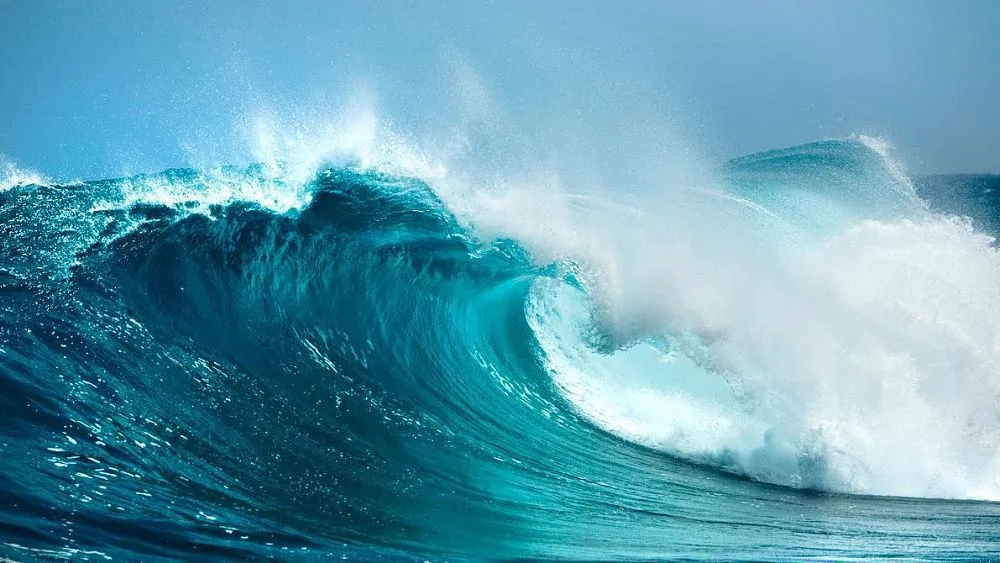
Oceanologists from Saint Petersburg State University (SPbU), as part of a group of Russian researchers, have identified previously unknown mechanisms for the propagation of Rossby waves – flows of water in the ocean formed under the influence of the Earth's rotation. The discovery will help improve forecasts of ocean processes and provide a better understanding of the formation of eddies and the interaction of currents with the seabed topography, according to the website of the university, a partner of TV BRICS.
Rossby waves are also known as planetary waves and giant meanders in ocean currents. They play an important role in ocean circulation and the transport of energy over vast distances and affect the planet's climate.
The scientists managed to identify points where energy transfer stops and the trajectories of water movement change. The researchers also discovered an asymmetry in the dynamics of wave processes originating from western and eastern coastal currents. According to Tatyana Belonenko, Professor at SPbU, waves originating from eastern currents are approximately ten times longer than those from western currents.
As part of the research, the scientists used comprehensive mathematical models and computer simulations.
The findings change the understanding of how energy is transported in the ocean. Understanding the new mechanism of Rossby wave propagation could improve the accuracy of predicting the movement of seawater.
-
![]()
 Technology01.09.26Iranian researchers develop dual-purpose electrodes for renewable energy storage
 -
![]()

 Technology31.08.26Vietnam targets ASEAN’s top three in artificial intelligence by 2030
 -
![]()
 Technology29.08.26China completes world’s largest-diameter underwater shield tunnel
 -
![]()

 Technology29.08.26Kazakhstan develops drought-resistant and salt-tolerant new barley variety
 -
![]() Technology28.08.26Iranian researchers develop light-sensitive hydrogel system for breast cancer treatment
Technology28.08.26Iranian researchers develop light-sensitive hydrogel system for breast cancer treatment -
![]()
 Technology28.08.26Russian scientists identify plants with potential for treating diabetes












-
![Vladimir Putin]()
 Vladimir PutinPresident of Russia"We are developing mutual trade, which is growing; it increased by over 12 per cent last year. We have a joint commission working in this sphere. Our focus is on agriculture, shipbuilding, information technology and energy, including nuclear power. We have signed a free trade agreement between the Eurasian Economic Union and Indonesia. Jakarta is our reliable and old friend within ASEAN. We are working together at all international platforms, including the UN"
 -
![Vladimir Putin]() Vladimir PutinPresident of Russia"More and more Iranian students are choosing Russian education. We are very pleased about this. A great many future doctors are studying in Russia. In the 2025–2026 academic year, the number of Iranian students in Russia approached 10,000, with 802 of them studying at the expense of the Russian state budget"
Vladimir PutinPresident of Russia"More and more Iranian students are choosing Russian education. We are very pleased about this. A great many future doctors are studying in Russia. In the 2025–2026 academic year, the number of Iranian students in Russia approached 10,000, with 802 of them studying at the expense of the Russian state budget" -
![Xi Jinping]() Xi JinpingPresident of the People’s Republic of China"The foundation of our bilateral relations will only grow stronger, and we will confidently move forward to a better future. […] The striving of nations on our planet for peace, development, cooperation and mutual benefit remains unchanged. The vital mission of the Shanghai Cooperation Organisation is to maintain stability and promote the development of our region"
Xi JinpingPresident of the People’s Republic of China"The foundation of our bilateral relations will only grow stronger, and we will confidently move forward to a better future. […] The striving of nations on our planet for peace, development, cooperation and mutual benefit remains unchanged. The vital mission of the Shanghai Cooperation Organisation is to maintain stability and promote the development of our region" -
![Alisher Salomov]() Alisher SalomovAdviser to the Chairman of the National Committee for Ecology and Climate Change of the Republic of Uzbekistan"First and foremost, I would like to highlight the importance of this Central Asia–Russia initiative, because environmental problems know no borders, and only a shared understanding of these problems and the search for joint solutions can deliver positive results"
Alisher SalomovAdviser to the Chairman of the National Committee for Ecology and Climate Change of the Republic of Uzbekistan"First and foremost, I would like to highlight the importance of this Central Asia–Russia initiative, because environmental problems know no borders, and only a shared understanding of these problems and the search for joint solutions can deliver positive results" -
![Joao Paulo Capobianco]() Joao Paulo CapobiancoBrazilian Minister of the Environment and Climate Change"The BRICS countries have a very high level of responsibility because they share an important part of the world's biodiversity, landscapes, populations, food production and water resources. So, we have an opportunity to lead by example. We have our development bank, which can demonstrate and develop new ways of financing programmes. We can reduce the risks for private capital to invest in restoration and efforts to combat desertification"
Joao Paulo CapobiancoBrazilian Minister of the Environment and Climate Change"The BRICS countries have a very high level of responsibility because they share an important part of the world's biodiversity, landscapes, populations, food production and water resources. So, we have an opportunity to lead by example. We have our development bank, which can demonstrate and develop new ways of financing programmes. We can reduce the risks for private capital to invest in restoration and efforts to combat desertification"