















Vietnam targets ASEAN’s top three in artificial intelligence by 2030
National strategy sets a goals for AI-driven economic growth, workforce development and public-sector transformation as Hanoi seeks greater technological autonomy
-
![]()
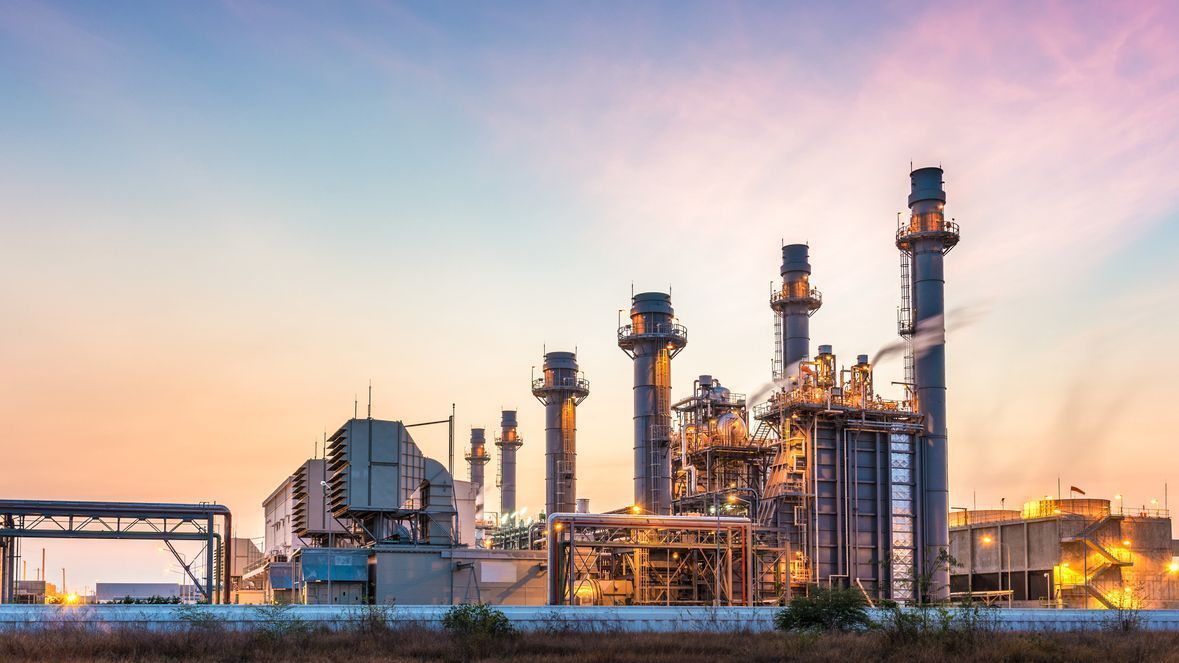
Photo source: metamorworks / iStock

Vietnam is aiming to become one of the three leading artificial intelligence (AI) economies in ASEAN by 2030, with AI expected to contribute around 6 per cent of gross domestic product and exports of AI products, services and solutions reaching approximately US$5 billion.
The targets form part of Vietnam’s National AI Strategy to 2045, which sets out a broader shift from developing and applying AI towards using the technology as a driver of national economic and social transformation. This is reported by VNA, a partner of TV BRICS.
By 2030, Vietnam aims to have 60 per cent of businesses using AI to improve efficiency, while civil servants are expected to use AI in their work on a weekly basis. The strategy also envisages 60 per cent of administrative decisions being supported by data and AI, alongside a 30 per cent improvement in satisfaction with AI-supported public services.
The government plans to extend AI deployment across the public sector, with ministries, agencies and local authorities expected to develop implementation plans. Online public services and administrative procedures are also targeted for AI support.
Investment is another key component of the plan. Annual overall investment in AI is expected to reach between 1 and 1.5 per cent of GDP, while priority datasets will be digitised, standardised, cleaned and prepared for AI applications.
The strategy places particular emphasis on developing a domestic AI workforce. Vietnam aims to train 10,000 highly qualified AI specialists and 50,000 university-educated professionals with AI application skills by 2030. A further 500,000 workers are expected to receive practical AI training, while 10 million trained workers will acquire basic AI skills.
The Ministry of Science and Technology will coordinate implementation across sectors, while government agencies and local authorities will develop individual plans and mobilise resources. Businesses, research organisations and educational institutions will also be involved in delivering the strategy.
Vietnam's longer-term ambition is to enter Asia’s top 10 for AI research, development and technological mastery by 2045. Under this vision, AI would become a foundational platform for the country's government, economy and society.
-
![]()
 Technology29.08.26China completes world’s largest-diameter underwater shield tunnel
 -
![]()

 Technology29.08.26Kazakhstan develops drought-resistant and salt-tolerant new barley variety
 -
![]()
 Technology28.08.26Iranian researchers develop light-sensitive hydrogel system for breast cancer treatment
 -
![]()
 Technology28.08.26BRICS inventions: from AI to clean energy
 -
![]()
 Technology27.08.26Russian scientists design algorithm for synchronising devices without GPS or server
 -
![]() Technology27.08.26Iranian researchers develop bacterial "transistors" to enable intelligent plant systems
Technology27.08.26Iranian researchers develop bacterial "transistors" to enable intelligent plant systems






















-
![Alisher Salomov]()
 Alisher SalomovAdviser to the Chairman of the National Committee for Ecology and Climate Change of the Republic of Uzbekistan"First and foremost, I would like to highlight the importance of this Central Asia–Russia initiative, because environmental problems know no borders, and only a shared understanding of these problems and the search for joint solutions can deliver positive results"
 -
![Joao Paulo Capobianco]() Joao Paulo CapobiancoBrazilian Minister of the Environment and Climate Change"The BRICS countries have a very high level of responsibility because they share an important part of the world's biodiversity, landscapes, populations, food production and water resources. So, we have an opportunity to lead by example. We have our development bank, which can demonstrate and develop new ways of financing programmes. We can reduce the risks for private capital to invest in restoration and efforts to combat desertification"
Joao Paulo CapobiancoBrazilian Minister of the Environment and Climate Change"The BRICS countries have a very high level of responsibility because they share an important part of the world's biodiversity, landscapes, populations, food production and water resources. So, we have an opportunity to lead by example. We have our development bank, which can demonstrate and develop new ways of financing programmes. We can reduce the risks for private capital to invest in restoration and efforts to combat desertification" -
![Dilma Rousseff]() Dilma RousseffPresident of the New Development Bank"India’s BRICS Presidency this year gives special significance to our discussion. NDB stands ready to be a trusted partner in turning commitments on sustainability, clean energy, smart and resilient infrastructure into concrete results on the ground. […] For NDB, mobilising private capital is a strategic imperative. Created by the BRICS founding members, NDB is a bank of the Global South, for the Global South, mandated to mobilise resources for infrastructure and sustainable development"
Dilma RousseffPresident of the New Development Bank"India’s BRICS Presidency this year gives special significance to our discussion. NDB stands ready to be a trusted partner in turning commitments on sustainability, clean energy, smart and resilient infrastructure into concrete results on the ground. […] For NDB, mobilising private capital is a strategic imperative. Created by the BRICS founding members, NDB is a bank of the Global South, for the Global South, mandated to mobilise resources for infrastructure and sustainable development" -
![Sihasak Phuangketkeow]() Sihasak PhuangketkeowDeputy Prime Minister and Minister of Foreign Affairs of Thailand"BRICS can play a very important role in maintaining the free flow of trade and investment. The group can also be a vehicle for all of us to engage and to look at economic opportunities"
Sihasak PhuangketkeowDeputy Prime Minister and Minister of Foreign Affairs of Thailand"BRICS can play a very important role in maintaining the free flow of trade and investment. The group can also be a vehicle for all of us to engage and to look at economic opportunities"