















The new method will be in demand in the Internet of Things, industrial automation, and robotics
-
![]()
Photo source: metamorworks / iStock

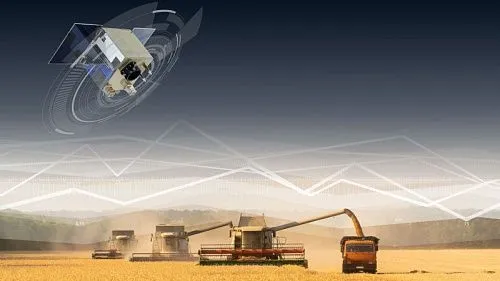
Researchers at the Centre for Artificial Intelligence at St. Petersburg State University (SPbU), a partner of TV BRICS, have proposed a new synchronisation algorithm that will enable electronic devices to coordinate their operation without a central time source and prevent the logical clock from rolling back. This development could enhance the reliability of sensor networks, industrial systems, robotic systems and space technology. This was reported on the website of the university.
In distributed systems, such as sensor networks or groups of robots, each node uses its own hardware clock. These may start at different times and gradually drift apart due to manufacturing tolerances and temperature changes. Such desynchronisation can interfere with the coordinated operation of the devices.
Traditionally, a single source of precise time or a master node is used for synchronisation. However, this approach is not always feasible: the signal may be unavailable in underground utility networks, in densely built-up urban areas or in space, and the master node may lose connection or fail.
Researchers from St. Petersburg State University and their colleagues have proposed using the maximum logical time in the network as a reference. This takes the form of a software counter that determines the order of events. To eliminate errors caused by data transmission, the scientists adapted an algorithm widely used in machine learning. They also discovered that the efficiency of data exchange depends not only on information processing algorithms, but also on the regulation of signal transmission power.
The proposed approach makes it possible to reduce the energy consumption of devices, maintain network functionality when individual nodes fail, and ensure computational accuracy. This development can be utilised in the creation of distributed systems for the Internet of Things, industrial automation and robotics.
-
![]()

 Technology27.08.26Iranian researchers develop bacterial "transistors" to enable intelligent plant systems
 -
![]()
 Technology27.08.26Russian students create smart AI voice recorder with on-device data processing
 -
![]()
 Technology26.08.26AI talent demand rises in China as graduate recruitment expands
 -
![]() Technology26.08.26China increases number of electric vehicle charging stations across country
Technology26.08.26China increases number of electric vehicle charging stations across country -
![]()
 Technology25.08.26Dubai reduces oil and fat testing time from two hours to two minutes
 -
![]() Technology25.08.26Iran develops device for more accurate monitoring of anaesthetic depth
Technology25.08.26Iran develops device for more accurate monitoring of anaesthetic depth




























-
![Alisher Salomov]()
 Alisher SalomovAdviser to the Chairman of the National Committee for Ecology and Climate Change of the Republic of Uzbekistan"First and foremost, I would like to highlight the importance of this Central Asia–Russia initiative, because environmental problems know no borders, and only a shared understanding of these problems and the search for joint solutions can deliver positive results"
 -
![Joao Paulo Capobianco]() Joao Paulo CapobiancoBrazilian Minister of the Environment and Climate Change"The BRICS countries have a very high level of responsibility because they share an important part of the world's biodiversity, landscapes, populations, food production and water resources. So, we have an opportunity to lead by example. We have our development bank, which can demonstrate and develop new ways of financing programmes. We can reduce the risks for private capital to invest in restoration and efforts to combat desertification"
Joao Paulo CapobiancoBrazilian Minister of the Environment and Climate Change"The BRICS countries have a very high level of responsibility because they share an important part of the world's biodiversity, landscapes, populations, food production and water resources. So, we have an opportunity to lead by example. We have our development bank, which can demonstrate and develop new ways of financing programmes. We can reduce the risks for private capital to invest in restoration and efforts to combat desertification" -
![Dilma Rousseff]() Dilma RousseffPresident of the New Development Bank"India’s BRICS Presidency this year gives special significance to our discussion. NDB stands ready to be a trusted partner in turning commitments on sustainability, clean energy, smart and resilient infrastructure into concrete results on the ground. […] For NDB, mobilising private capital is a strategic imperative. Created by the BRICS founding members, NDB is a bank of the Global South, for the Global South, mandated to mobilise resources for infrastructure and sustainable development"
Dilma RousseffPresident of the New Development Bank"India’s BRICS Presidency this year gives special significance to our discussion. NDB stands ready to be a trusted partner in turning commitments on sustainability, clean energy, smart and resilient infrastructure into concrete results on the ground. […] For NDB, mobilising private capital is a strategic imperative. Created by the BRICS founding members, NDB is a bank of the Global South, for the Global South, mandated to mobilise resources for infrastructure and sustainable development" -
![Sihasak Phuangketkeow]() Sihasak PhuangketkeowDeputy Prime Minister and Minister of Foreign Affairs of Thailand"BRICS can play a very important role in maintaining the free flow of trade and investment. The group can also be a vehicle for all of us to engage and to look at economic opportunities"
Sihasak PhuangketkeowDeputy Prime Minister and Minister of Foreign Affairs of Thailand"BRICS can play a very important role in maintaining the free flow of trade and investment. The group can also be a vehicle for all of us to engage and to look at economic opportunities"