















Planet’s food factory: how Brazil is transforming global agricultural trade and trade within BRICS
How do climate and advanced agriculture make Brazil a leading food supplier? Where do record volumes of soya, meat, coffee and sugar go? Read the TV BRICS article
-
![]()
Photo source: Diego Sene / iStock

Agricultural giant
Brazil is a leading player in global agribusiness. Vast agricultural lands and a climate ideally suited to farming. All of this makes the country the “planet’s food factory”. Today, Brazil is the world’s largest exporter of soya and an important supplier of meat, coffee, sugar and other products. The country’s membership of BRICS ensures food security and creates the basis for developing internal trade mechanisms, such as the BRICS Grain Exchange.
“At present, Brazil is one of the leading players in global agribusiness. The development of highly productive tropical agriculture has made the country one of the largest exporters of products such as soya, coffee and maize. The state plays a key role in ensuring global food security and in the trade balances of a number of countries around the world,” Daniel Vitor, Head of the BRICS+ Relations Advisory Council at the Latin American Observatory of Energy Geopolitics, told TV BRICS.
As a major supplier of agricultural products, Brazil acts as a guarantor of stability for the group’s densely populated countries and even helps promote the idea of settlements in national currencies. However, despite all its advantages, Brazilian agricultural trade has its weak points. Less-than-ideal logistics, the country’s enormous size and insufficient processing capacity make agriculture and the economy as a whole more vulnerable. Nevertheless, solutions to these problems do exist and could even be implemented in the near future.
Soya, coffee and beef
Brazil is sometimes called the second “homeland of coffee” and the undisputed global leader in coffee bean production. The country has held this title for a century and a half. However, when looking at Brazilian export statistics, soya beans, rather than coffee, take the top spot.
“Brazil is the world’s largest exporter of soya. Soya beans and products made from them account for around 17 per cent of the country’s total exports. In May 2026, soya shipments reached 14.83 million tonnes,” notes Mikhail Khachaturyan, Associate Professor at the Department of Strategic and Innovative Development at the Financial University under the Government of the Russian Federation.
China is the main buyer of Brazilian soya. However, its share of total exports has recently fallen from 74 to 69 per cent, although actual shipments have remained almost unchanged, the expert says. Brazil has also increased shipments to Türkiye (by 0.8 million tonnes, to 2.06 million tonnes), Thailand (by 0.5 million tonnes, to 1.69 million tonnes) and Pakistan (by 0.4 million tonnes, to 1.35 million tonnes).
Another important component of Brazilian exports is meat. Brazil is expected to set a record for total meat exports in 2026, including beef, pork and poultry. Meat production is forecast to reach around 33.38 million tonnes in 2026, of which 11.3 million tonnes will be beef. Its exports could reach 4.35 million tonnes, which would be an eight-year record, experts note.
Brazil’s national pride is picanha, a steak cut from the top of the rump with a thick strip of fat that produces an incredible aroma when grilled. However, it is not only premium cuts of marbled beef that successfully reach global markets. Pork exports are expected to increase by 6.1 per cent in 2026 compared with 2025, reaching 1.58 million tonnes, Mikhail Khachaturyan emphasises. For example, pork shipments to Russia in May 2026 increased almost ninefold year on year.
Brazil also remains one of the world’s leading producers and exporters of coffee and the largest exporter of sugar cane and its processed products. In addition, Brazil accounts for around 27 per cent of global maize supplies. In 2025–2026, export volumes amounted to approximately 34–35 million tonnes.
 Photo: kupicoo /
iStock
Photo: kupicoo /
iStock
Transport and logistics
China has recently become the main importer of Brazilian products. This primarily concerns soya, meat and sugar. According to data from the Secretariat for Foreign Trade and International Relations (formerly part of Brazil’s Ministry of Economy), cited in an interview with TV BRICS by Daniel Vitor, Head of the BRICS+ Relations Advisory Council at the Latin American Observatory of Energy Geopolitics, between January and December 2024, China imported approximately US$67.8 billion worth of goods from Brazil, exceeding the value of imports from the next three countries combined.
Rapidly growing demand requires the creation of a nationwide logistics supply chain that should include storage infrastructure, a transport system and seaports for shipping products abroad. At present, road transport forms the backbone of logistics. According to experts, it accounts for approximately 60 per cent of all freight traffic in the country. Export corridors connect production areas with international markets.
For example, Brazil’s new agricultural frontier – the rapidly growing agricultural region of MATOPIBA, comprising the states of Maranhao, Tocantins, Piaui and Bahia – is connected by road transport corridors to the main ports of Santos in Sao Paulo, the ports of the Northern Arc and Paranagua in the state of Parana.
As for soya and maize produced in Brazil’s Central-West Region, a significant proportion of the output is transported by road to rail and waterway terminals and then sent to the ports of Itaqui, Santarem and Barcarena or to traditional ports such as Santos and Paranagua. Coffee supply chains, with production concentrated mainly in the states of Minas Gerais and Espírito Santo, most often rely on road transport to the ports of Santos and Rio de Janeiro, which handle a significant share of the exports of this product.
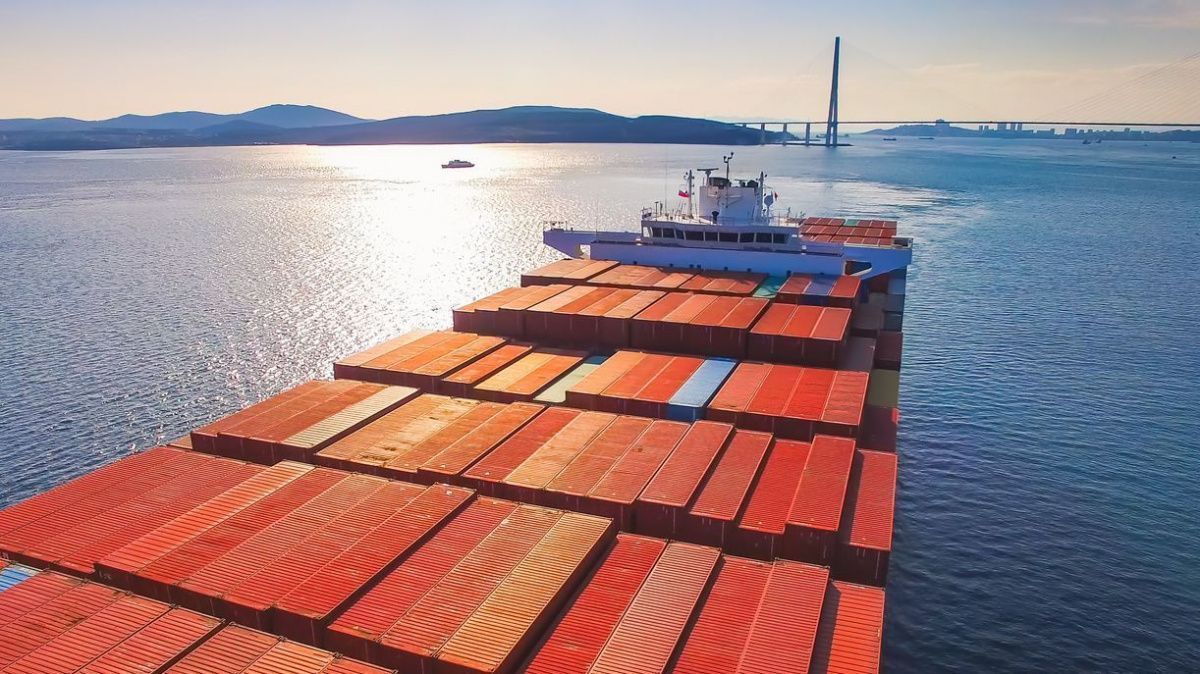
The cargo is then shipped across the Atlantic Ocean – the main maritime route for Brazil’s foreign trade.
The logistics of exporting agricultural products from Brazil is a multi-stage process requiring careful planning and consideration of geographical, climatic and administrative factors and, as experts have particularly frequently pointed out recently, improvement and significant expansion of the existing infrastructure. Eloisa Cristina Silva Fernandes, an expert at the BRICS Youth Energy Agency, believes that warehouse capacity and the development of transport corridors remain critical issues for Brazil.
“In recent years, logistics optimisation projects, such as the North–South Railway, the Ferrogrão grain railway and the expansion of the Northern Arc (ports in the Amazon Delta and on the Atlantic coast of Brazil’s North-Eastern Region – Ed.), reflect a shift towards investment in railways, waterways and port terminals. All of this is aimed at reducing logistics costs and enhancing the international competitiveness of Brazilian agricultural trade,” she stated.
 Photo: Joao Bento da Silva /
iStock
Photo: Joao Bento da Silva /
iStock
Trade relations with BRICS countries
For BRICS countries, such a major participant in the agricultural market as Brazil is an important trading partner.
“Over 30 per cent of its total exports go to the BRICS partners,” states Guillermo Miguel Rocafort Perez, Professor of the Faculty of Economic, Business and Communication Sciences at the European University of Madrid.
China is Brazil’s key partner within the group and has long remained the largest importer of Brazilian agricultural products. In 2025, Brazil exported US$55.3 billion worth of agricultural products to China. In 2022, China and Brazil updated their phytosanitary control protocols, opening the Chinese market to Brazilian maize and consolidating Brazil’s status as a leading supplier of agricultural crops.
India is also an important partner and promising market for Brazil. In 2024, India signed long-term agreements with Brazil to import pulses. Russia, meanwhile, is a source of fertilisers for Brazil, which are critically important for maintaining agricultural productivity, particularly in the cultivation of soya, maize and coffee. At the same time, Brazil exports soya beans, meat, coffee and other products to Russia.
Brazil’s agricultural trade with other Global South countries is also developing actively, including with the UAE, Saudi Arabia, Egypt, Pakistan, Bangladesh, Mexico and the Philippines.
“In this sense, relations between BRICS countries and Global South countries in Brazilian agricultural trade are characterised by a stable flow of trade. Emerging markets in Asia and Africa are growing rapidly, highlighting the shift in Brazil’s trade axis,” says Daniel Vitor, Head of the BRICS+ Relations Advisory Council at the Latin American Observatory of Energy Geopolitics.
Strengthening China’s position as its main trading partner, the expert believes, as well as opening new diversification markets in Asia, the Middle East and Africa, is an important strategy for reducing Brazil’s dependence on major buyers and mitigating economic risks.
Old problems and new solutions
Although the achievements in agricultural production and trade are evident, Brazilian exports continue to face significant challenges. The first is the volatility of international prices and exchange-rate instability. All this is compounded by trade barriers imposed by some countries. At the same time, tariffs and sanitary regulations in different countries require constant diplomatic negotiations.
In this respect, developing cooperation within BRICS could help resolve these problems in the future. This is partly because the group’s member countries are constantly working to simplify trade procedures, develop infrastructure and strengthen cooperation in agricultural technologies. In addition, the creation of a BRICS grain exchange, followed later by a commodity exchange, could contribute to the development of trade in national currencies.
 Photo: Biserka Stojanovic /
iStock
Photo: Biserka Stojanovic /
iStock
Another important problem facing Brazil’s agricultural sector, and the country’s economy as a whole, which experts are increasingly highlighting, is the predominance of raw commodities in exports. According to 2024 data, raw commodities accounted for 77 per cent of Brazil’s exports to BRICS countries.
“This is related to several factors, such as the low level of processing. Brazil specialises in exporting unprocessed goods (soya, coffee, sugar, meat, etc.), which makes it vulnerable to fluctuations in global commodity prices,” notes Mikhail Khachaturyan, Associate Professor at the Department of Strategic and Innovative Development at the Financial University under the Government of the Russian Federation.
This often results in Brazil purchasing finished products instead of developing its own processing industry, while continuing to depend on commodity exports as a source of revenue.
The condition of roads, which account for more than 60 per cent of freight transport, remains a separate issue. According to specialists, all this requires a comprehensive set of measures: from developing infrastructure, including modernising ports and building railways, to technological innovation, involving the introduction of digital solutions for cargo tracking, warehouse automation and the use of blockchain to optimise customs procedures. Experts from different countries believe that such measures should go hand in hand with government support programmes, the simplification of regulatory instruments and, of course, diversification of markets.
“Modernising its logistics and transportation network is essential as an investment in the future to consolidate sustainable growth. To achieve this, it is crucial to implement stable policies that invest long-term in a modern economic structure, improving public finances and consolidating economic growth, within a framework of intensified trade relations within the BRICS group,” concludes Guillermo Miguel Rocafort Perez, Professor at the Faculty of Economics, Business and Communication Sciences at the European University of Madrid.
Article prepared by Svetlana Khristoforova.
-
![]()

 Economy13.09.26China and Egypt deepen cooperation in renewable energy
 -
![]()
 Economy13.09.26Belarus ranks among leaders in achieving sustainable development goals
 -
![]()

 Economy13.09.26BRICS Summit in New Delhi outlines new mechanisms for cooperation in technology, security and economy
 -
![]()
 Economy13.09.26Brazilian Foreign Minister: BRICS prioritises integration of new members and stronger dialogue with partners
 -
![]()
 Economy12.09.26Kyrgyzstan records fastest economic growth in Central Asia
 -
![]() Economy12.09.26Finance to be key topic at BRICS Summit as countries discuss payment system integration and trade in national currencies
Economy12.09.26Finance to be key topic at BRICS Summit as countries discuss payment system integration and trade in national currencies






-
![Ashok Mondal]()
 Ashok MondalNID Director"Signing this Memorandum of Understanding between the National Institute of Design (NID) and TV BRICS marks a pivotal milestone in advancing design diplomacy across the BRICS media space. This moment is especially significant as India hosts the 18th BRICS Summit, following India’s assumption of the BRICS chairship under the visionary leadership of Prime Minister Shri Narendra Modi. The partnership directly embodies his call to elevate Indian design standards through 'Design in India, Design for the World'. Through the global reach and broadcast capabilities of TV BRICS, we are excited to showcase the extraordinary visual storytelling, films, and design research of NID’s Film and Video Communication students to an international audience, while also welcoming and screening film works from BRICS network countries at NID Ahmedabad. This reciprocal exchange strengthens our shared commitment to educational, cultural, and artistic collaboration, fostering sustainable connections among global creative communities. NID Ahmedabad looks forward to leveraging this partnership to deepen cross-cultural dialogue, build international expert networks, and unlock transformative opportunities for filmmakers, researchers, and faculty across member nations"
 -
![Vladimir Putin]() Vladimir PutinPresident of Russia"We are developing mutual trade, which is growing; it increased by over 12 per cent last year. We have a joint commission working in this sphere. Our focus is on agriculture, shipbuilding, information technology and energy, including nuclear power. We have signed a free trade agreement between the Eurasian Economic Union and Indonesia. Jakarta is our reliable and old friend within ASEAN. We are working together at all international platforms, including the UN"
Vladimir PutinPresident of Russia"We are developing mutual trade, which is growing; it increased by over 12 per cent last year. We have a joint commission working in this sphere. Our focus is on agriculture, shipbuilding, information technology and energy, including nuclear power. We have signed a free trade agreement between the Eurasian Economic Union and Indonesia. Jakarta is our reliable and old friend within ASEAN. We are working together at all international platforms, including the UN" -
![Vladimir Putin]() Vladimir PutinPresident of Russia"More and more Iranian students are choosing Russian education. We are very pleased about this. A great many future doctors are studying in Russia. In the 2025–2026 academic year, the number of Iranian students in Russia approached 10,000, with 802 of them studying at the expense of the Russian state budget"
Vladimir PutinPresident of Russia"More and more Iranian students are choosing Russian education. We are very pleased about this. A great many future doctors are studying in Russia. In the 2025–2026 academic year, the number of Iranian students in Russia approached 10,000, with 802 of them studying at the expense of the Russian state budget" -
![Xi Jinping]() Xi JinpingPresident of the People’s Republic of China"The foundation of our bilateral relations will only grow stronger, and we will confidently move forward to a better future. […] The striving of nations on our planet for peace, development, cooperation and mutual benefit remains unchanged. The vital mission of the Shanghai Cooperation Organisation is to maintain stability and promote the development of our region"
Xi JinpingPresident of the People’s Republic of China"The foundation of our bilateral relations will only grow stronger, and we will confidently move forward to a better future. […] The striving of nations on our planet for peace, development, cooperation and mutual benefit remains unchanged. The vital mission of the Shanghai Cooperation Organisation is to maintain stability and promote the development of our region" -
![Alisher Salomov]() Alisher SalomovAdviser to the Chairman of the National Committee for Ecology and Climate Change of the Republic of Uzbekistan"First and foremost, I would like to highlight the importance of this Central Asia–Russia initiative, because environmental problems know no borders, and only a shared understanding of these problems and the search for joint solutions can deliver positive results"
Alisher SalomovAdviser to the Chairman of the National Committee for Ecology and Climate Change of the Republic of Uzbekistan"First and foremost, I would like to highlight the importance of this Central Asia–Russia initiative, because environmental problems know no borders, and only a shared understanding of these problems and the search for joint solutions can deliver positive results"