
















BRICS Summer School in South Africa highlights youth participation and knowledge cooperation
Two-day programme in Pretoria focused on youth agency, knowledge democracy and greater participation in shaping the Global South’s future
-
![]()
Photo source: SABYA
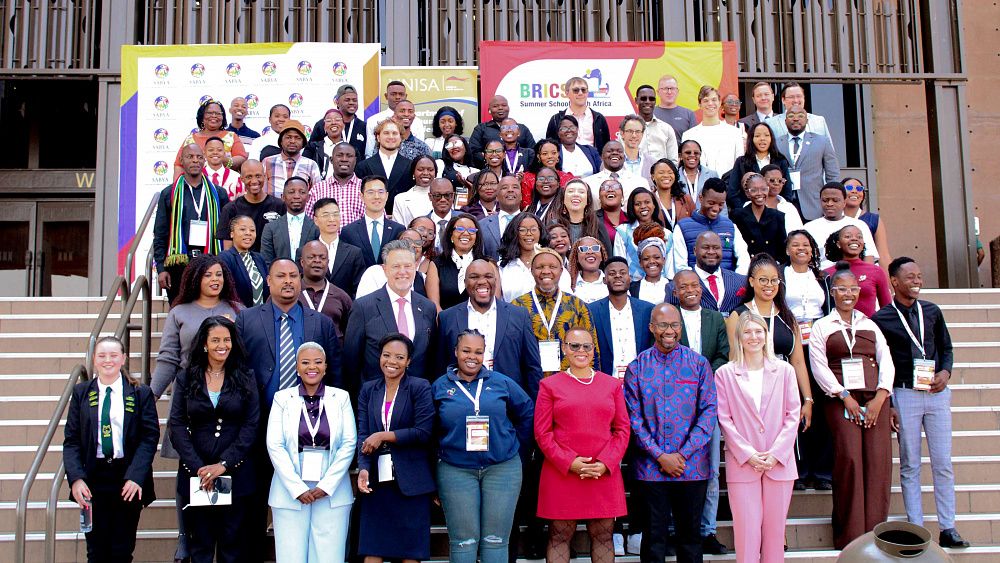
The 5th BRICS Summer School South Africa 2026, organised by South African BRICS Youth Association (SABYA) and the University of South Africa (UNISA), concluded in Pretoria, bringing together representatives of academia, government, business and youth to discuss the future of BRICS and opportunities for greater participation across the Global South.
The Summer School focused on youth agency, knowledge production, inclusive development and the role of education in strengthening cooperation among BRICS countries. A key outcome of the programme was a broader understanding of BRICS as not only an intergovernmental platform but also a people-to-people space where young people, academics, business representatives and civil society can contribute to shaping the group's future.
The discussions highlighted the importance of making BRICS-related opportunities more accessible to young people. Education, skills development, scholarships, economic opportunities and cultural exchange were identified as practical areas through which youth can engage with the BRICS agenda.
The role of universities in strengthening knowledge cooperation across the Global South was also highlighted. Speakers called for knowledge and research from Africa, Asia, South America and the Middle East to play a greater role in defining global approaches to development and education.
South Africa's BRICS Presidency provided an important context for the discussions. Ben Joubert, South African BRICS Sous-Sherpa at the Department of International Relations and Cooperation, highlighted youth, education and humanitarian cooperation among the country's priorities.
“BRICS has become one of the key pillars of the emerging multipolar international system; strengthening the youth, educational and humanitarian dimensions of BRICS is among our top priorities,” he stated.
Koketjo Tsebe, Programme Director of the 5th BRICS Summer School, framed the programme as a space for dialogue built around shared ideas and relationships. She highlighted the people-to-people dimension of BRICS and stressed the importance of participants collectively producing knowledge rather than simply receiving it. Tsebe also underlined the significance of BRICS' expansion for South Africa.
“It is fulfilling to see we are now sitting at the ten full members of BRICS, which indicates the significance of BRICS, more particularly to South Africa,” she said.
The Summer School concluded with a focus on young people as active participants in shaping development across the Global South. As one of the central messages of the programme, youth were encouraged not simply to prepare for the future but to contribute to building it through knowledge, innovation and cooperation.
-
![]()
 Education04.09.26BRICS countries seek to conclude single agreement on recognition of diplomas and academic degrees
 -
![]()
 Education04.09.26Ethiopia prepares to integrate artificial intelligence into core curriculum
 -
![]()

 Education03.09.26Indonesia and Saudi Arabia expand higher education and scholarship cooperation
 -
![]()

 Education01.09.26Russia to increase scholarships for Tunisian students and cover their tuition and living expenses
 -
![]()


 Education27.08.26Egypt expands education outreach in Nigeria to attract international students
 -
![]()
 Education18.08.26Iranian students win four awards at 2026 International Olympiad in Informatics















-
![Vladimir Putin]()
 Vladimir PutinPresident of Russia"We are developing mutual trade, which is growing; it increased by over 12 per cent last year. We have a joint commission working in this sphere. Our focus is on agriculture, shipbuilding, information technology and energy, including nuclear power. We have signed a free trade agreement between the Eurasian Economic Union and Indonesia. Jakarta is our reliable and old friend within ASEAN. We are working together at all international platforms, including the UN"
 -
![Vladimir Putin]() Vladimir PutinPresident of Russia"More and more Iranian students are choosing Russian education. We are very pleased about this. A great many future doctors are studying in Russia. In the 2025–2026 academic year, the number of Iranian students in Russia approached 10,000, with 802 of them studying at the expense of the Russian state budget"
Vladimir PutinPresident of Russia"More and more Iranian students are choosing Russian education. We are very pleased about this. A great many future doctors are studying in Russia. In the 2025–2026 academic year, the number of Iranian students in Russia approached 10,000, with 802 of them studying at the expense of the Russian state budget" -
![Xi Jinping]() Xi JinpingPresident of the People’s Republic of China"The foundation of our bilateral relations will only grow stronger, and we will confidently move forward to a better future. […] The striving of nations on our planet for peace, development, cooperation and mutual benefit remains unchanged. The vital mission of the Shanghai Cooperation Organisation is to maintain stability and promote the development of our region"
Xi JinpingPresident of the People’s Republic of China"The foundation of our bilateral relations will only grow stronger, and we will confidently move forward to a better future. […] The striving of nations on our planet for peace, development, cooperation and mutual benefit remains unchanged. The vital mission of the Shanghai Cooperation Organisation is to maintain stability and promote the development of our region" -
![Alisher Salomov]() Alisher SalomovAdviser to the Chairman of the National Committee for Ecology and Climate Change of the Republic of Uzbekistan"First and foremost, I would like to highlight the importance of this Central Asia–Russia initiative, because environmental problems know no borders, and only a shared understanding of these problems and the search for joint solutions can deliver positive results"
Alisher SalomovAdviser to the Chairman of the National Committee for Ecology and Climate Change of the Republic of Uzbekistan"First and foremost, I would like to highlight the importance of this Central Asia–Russia initiative, because environmental problems know no borders, and only a shared understanding of these problems and the search for joint solutions can deliver positive results" -
![Joao Paulo Capobianco]() Joao Paulo CapobiancoBrazilian Minister of the Environment and Climate Change"The BRICS countries have a very high level of responsibility because they share an important part of the world's biodiversity, landscapes, populations, food production and water resources. So, we have an opportunity to lead by example. We have our development bank, which can demonstrate and develop new ways of financing programmes. We can reduce the risks for private capital to invest in restoration and efforts to combat desertification"
Joao Paulo CapobiancoBrazilian Minister of the Environment and Climate Change"The BRICS countries have a very high level of responsibility because they share an important part of the world's biodiversity, landscapes, populations, food production and water resources. So, we have an opportunity to lead by example. We have our development bank, which can demonstrate and develop new ways of financing programmes. We can reduce the risks for private capital to invest in restoration and efforts to combat desertification"