
















Fossils of multicellular animals discovered in China shed light on evolution before Cambrian explosion
The discovery provides new evidence about the early evolution of animals and the origins of vertebrates
-
![]()
Photo source: semnic / iStock
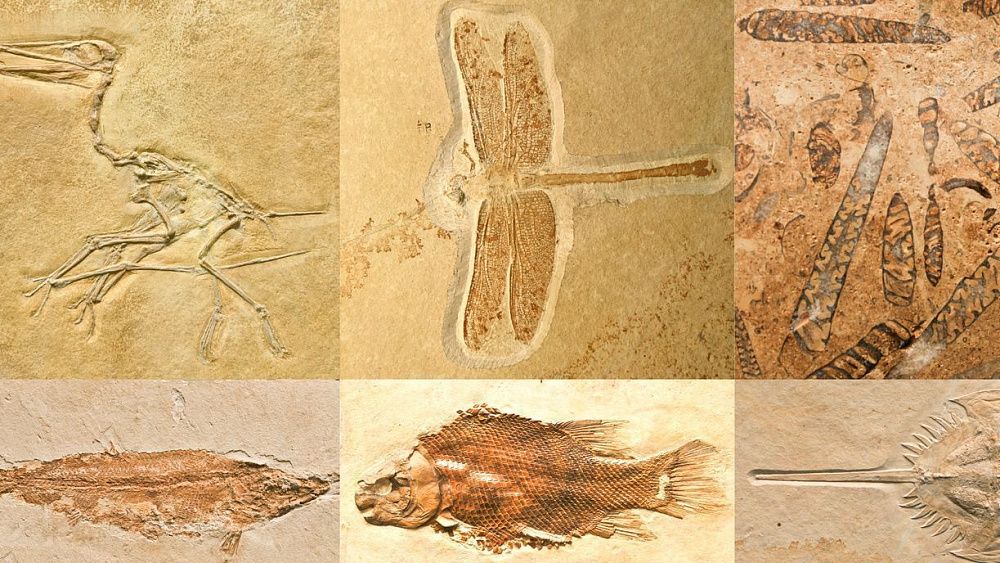
A team of Chinese scientists has discovered exceptionally well-preserved fossils of multicellular animals in Ediacaran strata in eastern Yunnan Province. The discovery indicates that complex animal communities already existed in the oceans long before the so-called Cambrian explosion, according to Xinhua News Agency, a TV BRICS partner.
Using advanced imaging techniques, the scientists identified numerous early life forms, including worm-like creatures considered to be among the earliest animals with bilateral symmetry. These organisms already had basic structures, such as a head and digestive tract, and were capable of moving freely.
The researchers also found fossils of deuterostomes, a group that would later give rise to chordates, including vertebrates. Their similarity to fossils from well-known Cambrian sites suggests that these groups were already present during the Ediacaran.
The discovery could help resolve one of the major mysteries of evolutionary biology, known as the “Darwinian dilemma”. According to Cong Peiyun, a researcher at Yunnan University, the new fossils support the hypothesis that this apparently sudden emergence could be due to an incomplete fossil record.
Eastern Yunnan is one of the world's leading centres for research into the transition between the Ediacaran and Cambrian periods. Chinese scientists have been conducting fieldwork in the region since 2017 and have discovered numerous new sites and specimens.
Palaeontological research has also made significant advances in other BRICS countries.
For example, in Brazil, a team of Brazilian and international researchers identified a new species of fossil fish, Leolepis matogrossensis, dating back around 254 million years. The specimen was discovered in Mato Grosso State, near the Araguainha crater, and is notable for its exceptional state of preservation, according to Metrópoles, a TV BRICS partner.
The species belongs to the ancient actinopterygians, the group to which around 96 per cent of today's bony fish, including tuna, salmon and cod, belong. Researchers believe the animal lived in an ancient megalake when South America and Africa were part of the supercontinent Gondwana. The fossil provides information about ecosystems that existed shortly before the major mass extinction that occurred around 252 million years ago.
In Egypt, meanwhile, researchers from Cairo University have discovered a significant concentration of shark fossils in Abu Tartur in the Western Desert. According to Sada El-Balad, a TV BRICS partner, the remains, which are more than 70 million years old, belong to seven species from five genera.
The fossils were found in layers of the Duwi Formation, which were covered by a warm, nutrient-rich sea during the Late Cretaceous. The assemblage of remains reveals the existence of a diverse marine ecosystem inhabited by small fish, medium-sized predators and large sharks. Some Scapanorhynchus specimens may have reached around 6.7 metres in length.
-
![]()

 Society07.09.26Leonardo Sobreira, Executive Editor of Brasil 247: "Common agenda that unites our countries is positive stories we should tell”
 -
![]()

 Society07.09.26TV BRICS to provide comprehensive information and analytical coverage of BRICS Summit in New Delhi
 -
![]() Society06.09.26BRICS News Digest for the previous week
Society06.09.26BRICS News Digest for the previous week -
![]()
 Society04.09.26Final of ArtMasters Open international creative competition to bring together representatives of 25 countries in Russia
 -
![]() Society03.09.26World-renowned international nuclear research centre to present its work on TV BRICS
Society03.09.26World-renowned international nuclear research centre to present its work on TV BRICS -
![]()

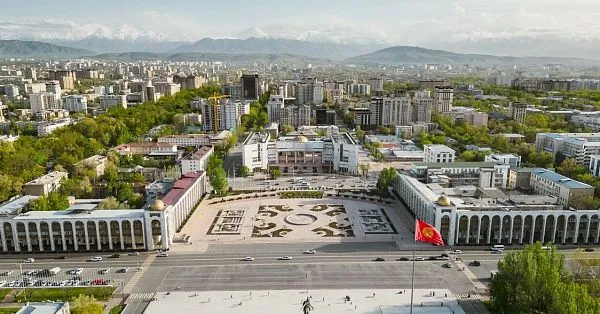
 Society01.09.26SCO leaders sign Bishkek Declaration

















-
![Vladimir Putin]()
 Vladimir PutinPresident of Russia"We are developing mutual trade, which is growing; it increased by over 12 per cent last year. We have a joint commission working in this sphere. Our focus is on agriculture, shipbuilding, information technology and energy, including nuclear power. We have signed a free trade agreement between the Eurasian Economic Union and Indonesia. Jakarta is our reliable and old friend within ASEAN. We are working together at all international platforms, including the UN"
 -
![Vladimir Putin]() Vladimir PutinPresident of Russia"More and more Iranian students are choosing Russian education. We are very pleased about this. A great many future doctors are studying in Russia. In the 2025–2026 academic year, the number of Iranian students in Russia approached 10,000, with 802 of them studying at the expense of the Russian state budget"
Vladimir PutinPresident of Russia"More and more Iranian students are choosing Russian education. We are very pleased about this. A great many future doctors are studying in Russia. In the 2025–2026 academic year, the number of Iranian students in Russia approached 10,000, with 802 of them studying at the expense of the Russian state budget" -
![Xi Jinping]() Xi JinpingPresident of the People’s Republic of China"The foundation of our bilateral relations will only grow stronger, and we will confidently move forward to a better future. […] The striving of nations on our planet for peace, development, cooperation and mutual benefit remains unchanged. The vital mission of the Shanghai Cooperation Organisation is to maintain stability and promote the development of our region"
Xi JinpingPresident of the People’s Republic of China"The foundation of our bilateral relations will only grow stronger, and we will confidently move forward to a better future. […] The striving of nations on our planet for peace, development, cooperation and mutual benefit remains unchanged. The vital mission of the Shanghai Cooperation Organisation is to maintain stability and promote the development of our region" -
![Alisher Salomov]() Alisher SalomovAdviser to the Chairman of the National Committee for Ecology and Climate Change of the Republic of Uzbekistan"First and foremost, I would like to highlight the importance of this Central Asia–Russia initiative, because environmental problems know no borders, and only a shared understanding of these problems and the search for joint solutions can deliver positive results"
Alisher SalomovAdviser to the Chairman of the National Committee for Ecology and Climate Change of the Republic of Uzbekistan"First and foremost, I would like to highlight the importance of this Central Asia–Russia initiative, because environmental problems know no borders, and only a shared understanding of these problems and the search for joint solutions can deliver positive results" -
![Joao Paulo Capobianco]() Joao Paulo CapobiancoBrazilian Minister of the Environment and Climate Change"The BRICS countries have a very high level of responsibility because they share an important part of the world's biodiversity, landscapes, populations, food production and water resources. So, we have an opportunity to lead by example. We have our development bank, which can demonstrate and develop new ways of financing programmes. We can reduce the risks for private capital to invest in restoration and efforts to combat desertification"
Joao Paulo CapobiancoBrazilian Minister of the Environment and Climate Change"The BRICS countries have a very high level of responsibility because they share an important part of the world's biodiversity, landscapes, populations, food production and water resources. So, we have an opportunity to lead by example. We have our development bank, which can demonstrate and develop new ways of financing programmes. We can reduce the risks for private capital to invest in restoration and efforts to combat desertification"