
















India to build 100 new airports over next 10 years
The expansion under the modified UDAN scheme aims to strengthen regional air connectivity and bring aviation infrastructure closer to smaller cities and towns
-
![]()
Photo source: XavierMarchant / iStock

India will build 100 new airports over the next 10 years as part of an expansion of regional air connectivity, Civil Aviation Minister Kinjarapu Rammohan Naidu has said.
The proposed expansion will be carried out under the modified UDAN regional connectivity scheme, approved for implementation from 2026-27 to 2035-36, as reported by Trinity Mirror, a TV BRICS partner. The programme aims to strengthen connectivity in underserved and unserved regions.
Naidu said the number of airports in India had increased from 74 in 2014 to 166, reflecting the expansion of aviation infrastructure and rising demand for air travel.
The next phase will involve developing 100 additional airports over the coming decade. The modified UDAN scheme also envisages the development of modern helipads and support for a large number of regional aerodromes.
The Government aims to create a more sustainable regional aviation ecosystem alongside the construction of new airport facilities. The scheme provides financial support to improve the viability of regional routes and airports and encourage airlines to operate services to destinations where commercial operations may otherwise be difficult.
Improved air connectivity is expected to support tourism, trade, and investment in smaller cities, as well as access to healthcare and emergency services in remote and hilly regions.
-
![]()
 Economy05.09.26Oman's net electricity generation increased by almost 5% in January–July 2026
 -
![]()

 Economy05.09.26Expert: BRICS plays growing role in shaping multipolar world
 -
![]()
 Economy04.09.26BRICS can provide additional platform for investment and economic growth
 -
![]()
 Economy04.09.26Brazil’s beauty market set to reach US$27.3 billion in 2026 amid technology growth
 -
![]()
 Economy04.09.26Expert: knowledge sharing can strengthen impact of New Development Bank projects in BRICS countries
 -
![]()

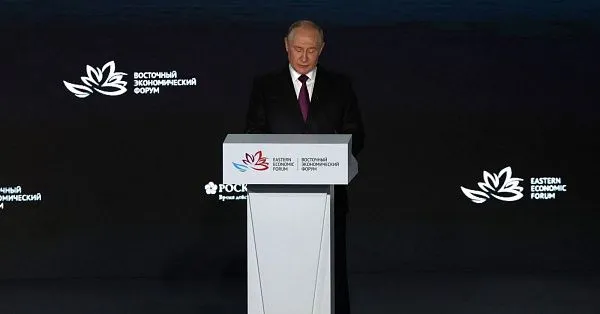
 Economy03.09.26Vladimir Putin highlights role of Asia-Pacific region in global economy















-
![Vladimir Putin]()
 Vladimir PutinPresident of Russia"We are developing mutual trade, which is growing; it increased by over 12 per cent last year. We have a joint commission working in this sphere. Our focus is on agriculture, shipbuilding, information technology and energy, including nuclear power. We have signed a free trade agreement between the Eurasian Economic Union and Indonesia. Jakarta is our reliable and old friend within ASEAN. We are working together at all international platforms, including the UN"
 -
![Vladimir Putin]() Vladimir PutinPresident of Russia"More and more Iranian students are choosing Russian education. We are very pleased about this. A great many future doctors are studying in Russia. In the 2025–2026 academic year, the number of Iranian students in Russia approached 10,000, with 802 of them studying at the expense of the Russian state budget"
Vladimir PutinPresident of Russia"More and more Iranian students are choosing Russian education. We are very pleased about this. A great many future doctors are studying in Russia. In the 2025–2026 academic year, the number of Iranian students in Russia approached 10,000, with 802 of them studying at the expense of the Russian state budget" -
![Xi Jinping]() Xi JinpingPresident of the People’s Republic of China"The foundation of our bilateral relations will only grow stronger, and we will confidently move forward to a better future. […] The striving of nations on our planet for peace, development, cooperation and mutual benefit remains unchanged. The vital mission of the Shanghai Cooperation Organisation is to maintain stability and promote the development of our region"
Xi JinpingPresident of the People’s Republic of China"The foundation of our bilateral relations will only grow stronger, and we will confidently move forward to a better future. […] The striving of nations on our planet for peace, development, cooperation and mutual benefit remains unchanged. The vital mission of the Shanghai Cooperation Organisation is to maintain stability and promote the development of our region" -
![Alisher Salomov]() Alisher SalomovAdviser to the Chairman of the National Committee for Ecology and Climate Change of the Republic of Uzbekistan"First and foremost, I would like to highlight the importance of this Central Asia–Russia initiative, because environmental problems know no borders, and only a shared understanding of these problems and the search for joint solutions can deliver positive results"
Alisher SalomovAdviser to the Chairman of the National Committee for Ecology and Climate Change of the Republic of Uzbekistan"First and foremost, I would like to highlight the importance of this Central Asia–Russia initiative, because environmental problems know no borders, and only a shared understanding of these problems and the search for joint solutions can deliver positive results" -
![Joao Paulo Capobianco]() Joao Paulo CapobiancoBrazilian Minister of the Environment and Climate Change"The BRICS countries have a very high level of responsibility because they share an important part of the world's biodiversity, landscapes, populations, food production and water resources. So, we have an opportunity to lead by example. We have our development bank, which can demonstrate and develop new ways of financing programmes. We can reduce the risks for private capital to invest in restoration and efforts to combat desertification"
Joao Paulo CapobiancoBrazilian Minister of the Environment and Climate Change"The BRICS countries have a very high level of responsibility because they share an important part of the world's biodiversity, landscapes, populations, food production and water resources. So, we have an opportunity to lead by example. We have our development bank, which can demonstrate and develop new ways of financing programmes. We can reduce the risks for private capital to invest in restoration and efforts to combat desertification"