















BRICS Business Council calls for stronger practical business cooperation
Participants in the BRICS Business Council meeting presented the results of work under India's Chairship and outlined priorities for the future
-
![]()
Photo source: TV BRICS
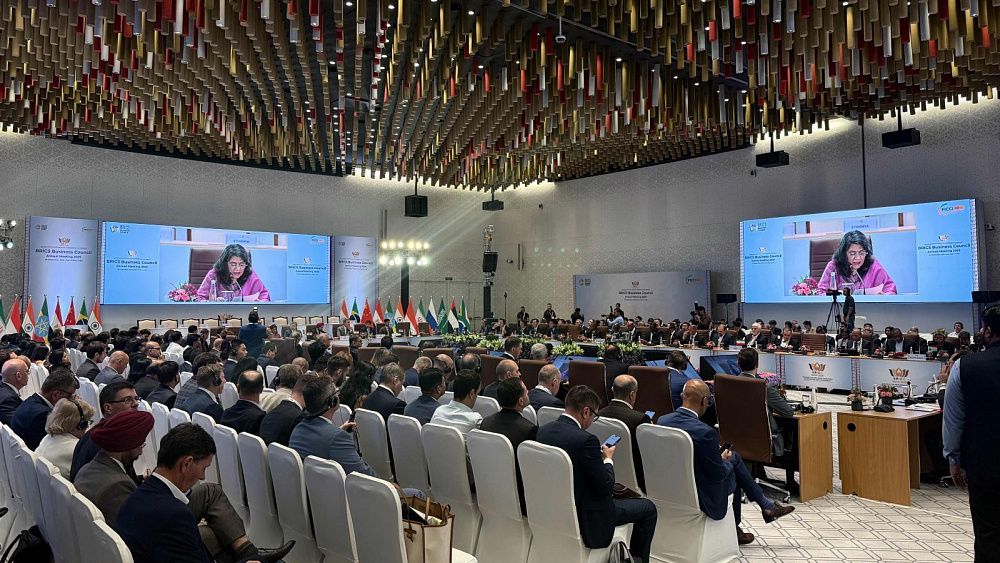
A meeting of the BRICS Business Council was held in New Delhi. Participants reviewed the results of work under India's Chairship, approved the annual report and identified areas for further cooperation. The document will be presented to the leaders of the member states at the BRICS Summit on 13 September.
Chair of the Indian Chapter of the BRICS Business Council Jai Shroff noted that throughout the year, the working groups addressed issues related to strengthening trade and investment, supply chain resilience, and the application of technology, as well as cooperation in infrastructure, agriculture, energy, finance, aviation and industry.
“For me, the most useful outcome of these years has been the better understanding of the capabilities that exist across our countries. There has been a great deal we can offer one another. We have large markets, natural resources, and manufacturing capabilities. We have strong technology businesses, financial institutions, and research capabilities. And across our countries, there is a tremendous entrepreneurial energy. The question is how we connect these strengths,” he noted.
According to Shroff, BRICS countries do not need to create identical systems and approaches. Instead, they should identify areas of genuine business interest and develop concrete initiatives.
“We can identify areas where there is a clear business case for cooperation and make it easier for our companies to work together. India's chairmanship has been guided by the 'Building for Resilience, Innovation, Cooperation and Sustainability'. These are broad ideas for business. They are actually quite practical,” he noted.
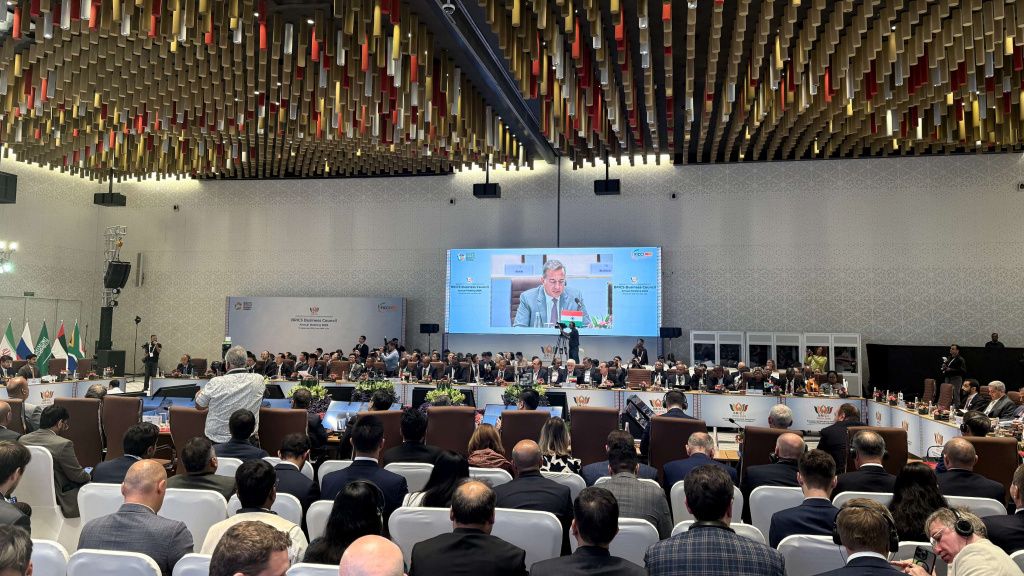 Photo source: TV BRICS
Chair of the Chinese Chapter of the BRICS Business Council Liao Lin proposed four areas for the group's future work. He noted that in 2026, the national chapters worked closely together, while the working groups implemented all the proposals presented at the mid-term meeting, making it possible to prepare the annual report.
He identified the implementation of the outcomes of India's BRICS Chairship and the development of trade and economic cooperation as the first area.
“We should consolidate at the policy level the consensus reached by the leaders of BRICS countries, ensure alignment with the forthcoming ‘BRICS Economic Partnership Strategy 2030’ and new priorities, make full use of the Council's role as a bridge, consolidate the efforts of the BRICS business communities and promote deeper trade and economic cooperation,” Liao Lin said.
Other areas he identified included developing new sources of economic growth through innovation, artificial intelligence and green development, strengthening production chains, expanding investment and increasing the use of national currencies in settlements.
“It is necessary to steadily expand the ‘Greater BRICS Cooperation' ecosystem, deepen dialogue both within the group and with external partners, share BRICS development opportunities with countries of the Global South, and jointly respond to challenges,” he added.
Chair of the Russian Chapter of the BRICS Business Council Andrey Guryev noted that the priorities of India's Chairship – resilience, innovation, cooperation and sustainability – are already being reflected in digital projects, green energy and food security. However, barriers to fully realising the grouping's potential remain: differing regulatory rules and customs procedures, as well as differences in product certification requirements.
He stressed that existing obstacles need to be removed in order to unlock the group's potential. “Until these obstacles are removed, joint projects will continue to lose efficiency,” Guryev said.
According to him, the Russian Chapter of the Council has prepared proposals in nine areas and called for a focus on the most advanced initiatives while expanding the participation of small and medium-sized enterprises.
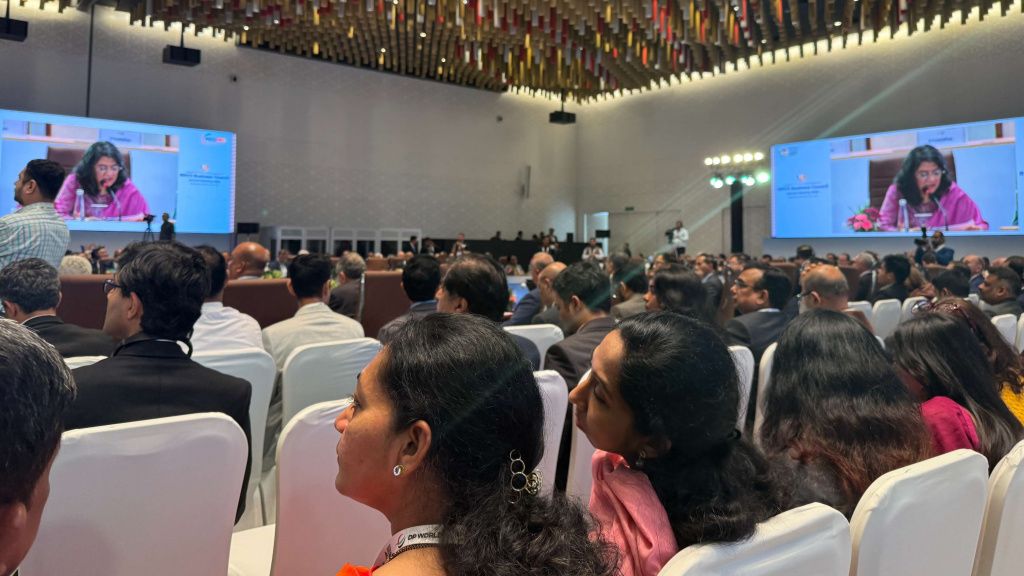 Photo source: TV BRICS
Chair of the Ethiopian Chapter of the BRICS Business Council Taye Leta Elema presented the country's investment opportunities. He noted that Ethiopia's population exceeds 130 million, with an average age of 19.3 years and a working-age population of more than 60 million.
“Our economy is growing at the robust 7.1 per cent, projected to accelerate between 8.0 and 10.2 by 2026-2027,” he said.
Elema invited BRICS countries to cooperate in industry, energy, agriculture and electric vehicle manufacturing. Chinese investment, for example, is present in more than 30 industrial parks and special zones in Ethiopia, he said, with the partnership evolving towards high-tech assembly and solar cell manufacturing.
He invited Brazilian agribusinesses to develop dairy complexes and clean ethanol projects, while describing Russian expertise in mining and energy as well suited to Ethiopia's mining sector, with potential projects involving potash fertilisers, boron processing, caustic soda production and geological mapping.
With Egypt, he sees potential in textiles, maritime logistics and trade along the Mediterranean and Red Sea corridors. He described Gulf partners – the United Arab Emirates (UAE) and Saudi Arabia – as sources of capital for investment in clean energy and the hospitality sector, while proposing cooperation with Iran in the production of fertilisers and pharmaceutical components.
“Ethiopia made history as the world's first country to mandate a complete ban on intra-machine engine passenger vehicle importers. Electric vehicle registrations have surged past 110,000 with electric vehicles, accounting for over 60 per cent of all new vehicle registrations,” Elema said.
Chair of the Indonesian Chapter Anindya Bakrie said that Indonesia is ready to become a manufacturing base for Southeast Asia and the global market. He identified food and energy security, critical mineral processing and the development of modern industry among the promising areas.
“The success of this cooperation should be measured by tangible outcomes. More trade, more investment, and more partnerships between our companies and stronger economic connectivity across our economies,” Bakrie noted.
Chair of the Egyptian Chapter of the BRICS Business Council Ahmed Al-Wakil reported that 29 working group meetings had been held over the year, supported by more than 50 task forces and professional associations.
“We elaborated in our annual report that we shall sign today and present to our heads of state, showing the role of the BRICS private sector and its aspiration to an effective and public-private sector collaboration for the benefits of our people,” Al-Wakil said.
He confirmed that the Egyptian Chapter of the Council would continue its work during China's Chairship in 2027.
-
![]()

 Economy10.09.26Expert: BRICS marks two decades with new financial and digital cooperation mechanisms
 -
![]()
 Economy10.09.26Addis Ababa ranks second globally in climate resilience
 -
![]()
 Economy10.09.26Representatives of BRICS countries to discuss development of port cities at forum in Russia
 -
![]() Economy10.09.26Expert: BRICS has become example of new and equal model of cooperation between countries
Economy10.09.26Expert: BRICS has become example of new and equal model of cooperation between countries -
![]()

 Economy10.09.26China-Laos Railway carries 244,000 cross-border passenger trips in first eight months
 -
![]()
 Economy10.09.26Iran reports world's largest gas discoveries since 2025


















-
![Vladimir Putin]()
 Vladimir PutinPresident of Russia"We are developing mutual trade, which is growing; it increased by over 12 per cent last year. We have a joint commission working in this sphere. Our focus is on agriculture, shipbuilding, information technology and energy, including nuclear power. We have signed a free trade agreement between the Eurasian Economic Union and Indonesia. Jakarta is our reliable and old friend within ASEAN. We are working together at all international platforms, including the UN"
 -
![Vladimir Putin]() Vladimir PutinPresident of Russia"More and more Iranian students are choosing Russian education. We are very pleased about this. A great many future doctors are studying in Russia. In the 2025–2026 academic year, the number of Iranian students in Russia approached 10,000, with 802 of them studying at the expense of the Russian state budget"
Vladimir PutinPresident of Russia"More and more Iranian students are choosing Russian education. We are very pleased about this. A great many future doctors are studying in Russia. In the 2025–2026 academic year, the number of Iranian students in Russia approached 10,000, with 802 of them studying at the expense of the Russian state budget" -
![Xi Jinping]() Xi JinpingPresident of the People’s Republic of China"The foundation of our bilateral relations will only grow stronger, and we will confidently move forward to a better future. […] The striving of nations on our planet for peace, development, cooperation and mutual benefit remains unchanged. The vital mission of the Shanghai Cooperation Organisation is to maintain stability and promote the development of our region"
Xi JinpingPresident of the People’s Republic of China"The foundation of our bilateral relations will only grow stronger, and we will confidently move forward to a better future. […] The striving of nations on our planet for peace, development, cooperation and mutual benefit remains unchanged. The vital mission of the Shanghai Cooperation Organisation is to maintain stability and promote the development of our region" -
![Alisher Salomov]() Alisher SalomovAdviser to the Chairman of the National Committee for Ecology and Climate Change of the Republic of Uzbekistan"First and foremost, I would like to highlight the importance of this Central Asia–Russia initiative, because environmental problems know no borders, and only a shared understanding of these problems and the search for joint solutions can deliver positive results"
Alisher SalomovAdviser to the Chairman of the National Committee for Ecology and Climate Change of the Republic of Uzbekistan"First and foremost, I would like to highlight the importance of this Central Asia–Russia initiative, because environmental problems know no borders, and only a shared understanding of these problems and the search for joint solutions can deliver positive results" -
![Joao Paulo Capobianco]() Joao Paulo CapobiancoBrazilian Minister of the Environment and Climate Change"The BRICS countries have a very high level of responsibility because they share an important part of the world's biodiversity, landscapes, populations, food production and water resources. So, we have an opportunity to lead by example. We have our development bank, which can demonstrate and develop new ways of financing programmes. We can reduce the risks for private capital to invest in restoration and efforts to combat desertification"
Joao Paulo CapobiancoBrazilian Minister of the Environment and Climate Change"The BRICS countries have a very high level of responsibility because they share an important part of the world's biodiversity, landscapes, populations, food production and water resources. So, we have an opportunity to lead by example. We have our development bank, which can demonstrate and develop new ways of financing programmes. We can reduce the risks for private capital to invest in restoration and efforts to combat desertification"