















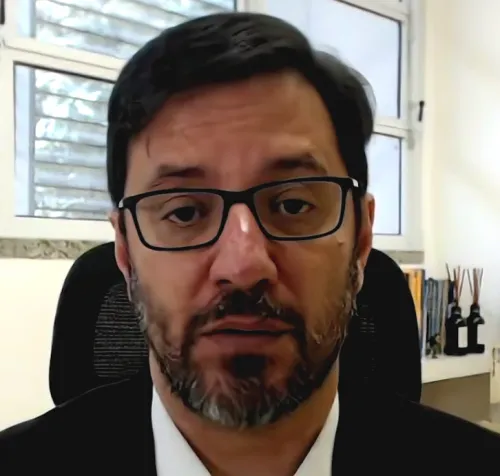
Chinese scientists achieve breakthrough in field of high-frequency transistors
The advancement marks the next step towards 6G systems and ultra-fast sensing technologies
-
![]()
Photo source: SweetBunFactory / iStock

Chinese scientists have achieved a major breakthrough in high-frequency transistor technology, marking an important step towards next-generation electronics, as reported by TV BRICS' partner, Science and Technology Daily.
Researchers from the Institute of Metal Research of the Chinese Academy of Sciences (IMR CAS), in collaboration with several research institutions, have successfully developed the world's first silicon–graphene–germanium barrier transistor. The device achieved record-breaking current gain and cut-off frequency. This innovation paves the way for transistors capable of operating in the terahertz (THz) range, which are essential for future 6G systems and ultra-fast sensing technologies.
As 5G deployment continues to expand and research into 6G accelerates, demand is growing for transistors capable of operating at frequencies above 1 terahertz (THz) to support Internet of Things (IoT) devices, intelligent sensors and high-speed communication systems.
In recent years, vertical two-dimensional-base transistors using two-dimensional materials such as graphene as the base layer have shown considerable promise. The research team proposed a novel device architecture. Using chemical vapour deposition (CVD), they grew a single-crystal graphene layer on a germanium substrate and then precisely stacked a single-crystal silicon thin film, creating a silicon–graphene–germanium vertical heterostructure. The resulting design exploits asymmetric Schottky barriers at the graphene–silicon and graphene–germanium interfaces, combined with the quantum capacitance effect of graphene to modulate the work function (the energy required to remove an electron from a solid or liquid into a vacuum – editor's note).
This design enables a much greater current variation on the germanium side than on the silicon side, achieving a common-emitter current gain of up to 1.8 × 10⁷ – the highest value ever reported for any transistor. In radio-frequency (RF) measurements, the transistor achieved an intrinsic cut-off frequency of 132 GHz, outperforming all previously reported graphene-based vertical transistors.
This work lays the foundation for the practical application of barrier transistors in RF and terahertz communications and creates new technological pathways for future Internet of Things systems, 6G sensing technologies and ultra-fast signal processing.
-
![]()

 Technology30.09.26Uganda targets tourism growth through AI and digital innovation
 -
![]()
 Technology30.09.26Kazakhstan ranks first in Central Asia in Global Innovation Index
 -
![]()
 Technology30.09.26First hydrogen-powered bicycles to appear on Shanghai streets
 -
![]()
 Technology30.09.26Russian scientists make discovery in next-generation flexible electronics
 -
![]() Technology29.09.26China plans to complete geological map of Mars by end of 2028
Technology29.09.26China plans to complete geological map of Mars by end of 2028 -
![]()

 Technology29.09.26Central Asian countries propose simplifying digital cooperation among five states





















-
![Evgeny Solntsev]()
 Evgeny SolntsevGovernor of Orenburg Region (Russia)"We see growth year after year. Last year, the figure increased by 11.6 per cent. The total share of our products on the sales market is around 24.7 per cent. BRICS countries account for a quarter of all our products. Good-neighbourly relations with Kazakhstan are very important for us. Then come China and India. We primarily focus on these countries because they are our closest neighbours"
 -
![Elias Monage]() Elias MonageChairman of the South African side of the Russia-South Africa Business Council"If we are then to do a huge project, for example, on rail infrastructure, we can then bring the rest of the continent to participate in the rail development and infrastructure for the continent together with the partners within the BRICS countries. Whether we then bring, for example, Russia rail, we then bring India, we then bring China"
Elias MonageChairman of the South African side of the Russia-South Africa Business Council"If we are then to do a huge project, for example, on rail infrastructure, we can then bring the rest of the continent to participate in the rail development and infrastructure for the continent together with the partners within the BRICS countries. Whether we then bring, for example, Russia rail, we then bring India, we then bring China" -
![Maksim Reshetnikov]() Maksim ReshetnikovRussian Minister of Economic Development"Plan 2030 has created a strong foundation for the qualitative expansion of trade and economic ties. There are all grounds to believe that by the end of the decade, Russia–China trade will reach US$300 billion"
Maksim ReshetnikovRussian Minister of Economic Development"Plan 2030 has created a strong foundation for the qualitative expansion of trade and economic ties. There are all grounds to believe that by the end of the decade, Russia–China trade will reach US$300 billion"


