














Kyrgyzstan nearly halves economy’s energy intensity over five years
Improved efficiency across industry, agriculture, and energy production supports the country’s economic modernisation efforts
-
![]()
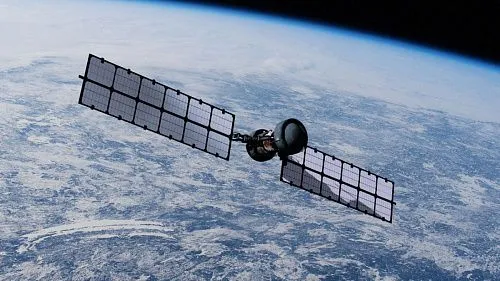
Photo source: MadamLead / iStock

Kyrgyzstan has significantly reduced the amount of energy required to produce goods and services, according to data released by the National Statistical Committee. Over the past five years, the country’s economic energy intensity declined almost twofold, falling from 20.5 to 10.1 tonnes of standard fuel per approximately US$11,400 of gross domestic product (GDP), as reported by Akchabar, a partner of TV BRICS.
Energy intensity is regarded as one of the key indicators of economic efficiency. Lower energy consumption per unit of GDP reflects more effective use of resources and contributes to reduced operational costs for both businesses and the state. The latest figures indicate continued progress in improving productivity and optimising energy consumption across major sectors of the economy.
The most substantial changes were recorded in the mining industry. In 2019, the sector required 23.6 tonnes of standard fuel to produce goods worth around US$11,400. By 2024, this figure had decreased to 9.2 tonnes, marking a reduction of more than 2.5 times and highlighting the sector’s transition towards more efficient production practices.
Positive trends were also observed in agriculture. Over the five-year period, energy intensity in the sector dropped from 1 tonne to 0.6 tonnes of standard fuel per approximately US$11,400 of output. The improvement has been linked to the introduction of more energy-efficient machinery and the optimisation of production processes.
Notable progress was achieved in the energy sector as well. Although electricity, gas, and heat production and distribution remain the most energy-intensive segments of the economy, the indicator declined from 149.5 to 96.3 tonnes of standard fuel per approximately US$11,400 of production between 2019 and 2024. Overall, Kyrgyzstan now uses almost half the amount of energy to generate the equivalent of US$11,400 in GDP compared with five years ago.
-
![]()

 Economy13.09.26China and Egypt deepen cooperation in renewable energy
 -
![]()
 Economy13.09.26Belarus ranks among leaders in achieving sustainable development goals
 -
![]()

 Economy13.09.26BRICS Summit in New Delhi outlines new mechanisms for cooperation in technology, security and economy
 -
![]()
 Economy13.09.26Brazilian Foreign Minister: BRICS prioritises integration of new members and stronger dialogue with partners
 -
![]()
 Economy12.09.26Kyrgyzstan records fastest economic growth in Central Asia
 -
![]() Economy12.09.26Finance to be key topic at BRICS Summit as countries discuss payment system integration and trade in national currencies
Economy12.09.26Finance to be key topic at BRICS Summit as countries discuss payment system integration and trade in national currencies






-
![Ashok Mondal]()
 Ashok MondalNID Director"Signing this Memorandum of Understanding between the National Institute of Design (NID) and TV BRICS marks a pivotal milestone in advancing design diplomacy across the BRICS media space. This moment is especially significant as India hosts the 18th BRICS Summit, following India’s assumption of the BRICS chairship under the visionary leadership of Prime Minister Shri Narendra Modi. The partnership directly embodies his call to elevate Indian design standards through 'Design in India, Design for the World'. Through the global reach and broadcast capabilities of TV BRICS, we are excited to showcase the extraordinary visual storytelling, films, and design research of NID’s Film and Video Communication students to an international audience, while also welcoming and screening film works from BRICS network countries at NID Ahmedabad. This reciprocal exchange strengthens our shared commitment to educational, cultural, and artistic collaboration, fostering sustainable connections among global creative communities. NID Ahmedabad looks forward to leveraging this partnership to deepen cross-cultural dialogue, build international expert networks, and unlock transformative opportunities for filmmakers, researchers, and faculty across member nations"
 -
![Vladimir Putin]() Vladimir PutinPresident of Russia"We are developing mutual trade, which is growing; it increased by over 12 per cent last year. We have a joint commission working in this sphere. Our focus is on agriculture, shipbuilding, information technology and energy, including nuclear power. We have signed a free trade agreement between the Eurasian Economic Union and Indonesia. Jakarta is our reliable and old friend within ASEAN. We are working together at all international platforms, including the UN"
Vladimir PutinPresident of Russia"We are developing mutual trade, which is growing; it increased by over 12 per cent last year. We have a joint commission working in this sphere. Our focus is on agriculture, shipbuilding, information technology and energy, including nuclear power. We have signed a free trade agreement between the Eurasian Economic Union and Indonesia. Jakarta is our reliable and old friend within ASEAN. We are working together at all international platforms, including the UN" -
![Vladimir Putin]() Vladimir PutinPresident of Russia"More and more Iranian students are choosing Russian education. We are very pleased about this. A great many future doctors are studying in Russia. In the 2025–2026 academic year, the number of Iranian students in Russia approached 10,000, with 802 of them studying at the expense of the Russian state budget"
Vladimir PutinPresident of Russia"More and more Iranian students are choosing Russian education. We are very pleased about this. A great many future doctors are studying in Russia. In the 2025–2026 academic year, the number of Iranian students in Russia approached 10,000, with 802 of them studying at the expense of the Russian state budget" -
![Xi Jinping]() Xi JinpingPresident of the People’s Republic of China"The foundation of our bilateral relations will only grow stronger, and we will confidently move forward to a better future. […] The striving of nations on our planet for peace, development, cooperation and mutual benefit remains unchanged. The vital mission of the Shanghai Cooperation Organisation is to maintain stability and promote the development of our region"
Xi JinpingPresident of the People’s Republic of China"The foundation of our bilateral relations will only grow stronger, and we will confidently move forward to a better future. […] The striving of nations on our planet for peace, development, cooperation and mutual benefit remains unchanged. The vital mission of the Shanghai Cooperation Organisation is to maintain stability and promote the development of our region" -
![Alisher Salomov]() Alisher SalomovAdviser to the Chairman of the National Committee for Ecology and Climate Change of the Republic of Uzbekistan"First and foremost, I would like to highlight the importance of this Central Asia–Russia initiative, because environmental problems know no borders, and only a shared understanding of these problems and the search for joint solutions can deliver positive results"
Alisher SalomovAdviser to the Chairman of the National Committee for Ecology and Climate Change of the Republic of Uzbekistan"First and foremost, I would like to highlight the importance of this Central Asia–Russia initiative, because environmental problems know no borders, and only a shared understanding of these problems and the search for joint solutions can deliver positive results"