



 Orchestra
  DIGITAL WORLD
 BRICS+ Media Centre
  MODERN RUSSIAN













Availability of vaccines and development of pharmaceutical sector in Global South
How are medicine and pharmaceuticals becoming part of public policy? What factors influence the formation of global pharmaceutical production and supply chains? Which areas of international cooperation can contribute to the development of the sector? Read more in the TV BRICS article
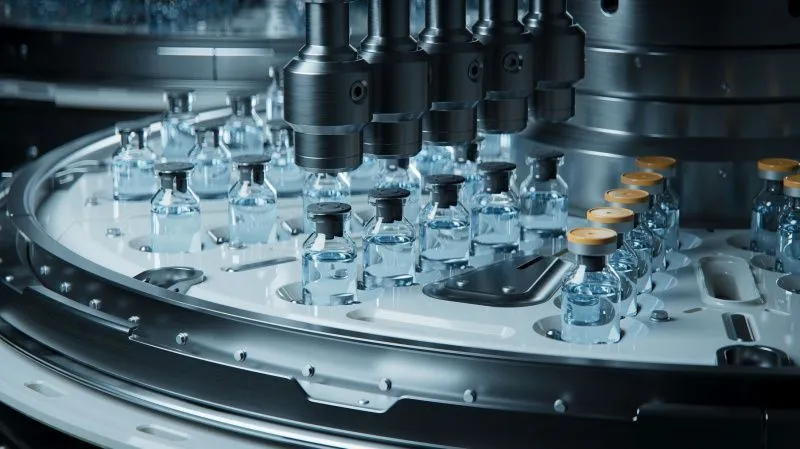
The formula for healthcare sovereignty
The COVID-19 pandemic demonstrated how important resilient healthcare systems, domestic scientific developments, and a strong pharmaceutical manufacturing sector are for states. In recent years, ensuring access to medicines, developing vaccines, and advancing medical technologies have become not only part of social policy but also one of the factors underpinning national resilience.
Today, countries of the Global South are paying particular attention to strengthening their own healthcare capabilities. An important role in this process is played by BRICS, which serves as a platform for scientific cooperation, technology exchange, and the development of joint projects in medicine and pharmaceuticals.
“Recognising the interconnected nature of global health challenges and their transboundary implications, we reaffirm our commitment to strengthening global health governance by enhancing international cooperation and solidarity,” states the final declaration of the 17th BRICS Summit in Rio de Janeiro.
Experts are increasingly speaking about the emergence of so-called pharmaceutical sovereignty – a state's ability to independently provide its population with essential medicines, develop vaccine production, and maintain a highly qualified medical workforce.
At the same time, many countries continue to develop the production capacities and infrastructure required to expand access to modern medicines and vaccines.
“The very concept of ‘availability’ is not limited to the physical presence of a vaccine at the point of care. The economic aspect – affordability, that is, the ability to purchase or obtain a medicine regardless of the end user's income level – is equally important. Moreover, availability is inseparably linked to the readiness of infrastructure to receive, store, and distribute a specific type of vaccine, which is far from always achievable outside major urban centres,” Margarita Isaakova, Head of the International Office of the Department of International Development at the Pirogov Russian National Research Medical University of the Ministry of Health of the Russian Federation, told TV BRICS.
In addition, according to Margarita Isaakova, countries of the Global South remain highly dependent on imports of active pharmaceutical ingredients and auxiliary materials. This dependency persists even in countries where the final stage of production has been established. As a result, healthcare systems across the region remain vulnerable to disruptions in global logistics or changes in the export policies of supplier countries. This vulnerability was clearly demonstrated during the COVID-19 pandemic, when global supplies were controlled by a limited number of corporations.
 Photo: YakobchukOlena /
iStock
Photo: YakobchukOlena /
iStock
Pharmaceuticals in the Global South
At the same time, the situation regarding access to vaccines and medicines across the Global South remains uneven. BRICS serves as the geopolitical and geoeconomic core of the Global South. Meanwhile, the pharmaceutical industries of BRICS countries constitute a powerful and rapidly growing sector. Particular emphasis is placed on achieving pharmaceutical sovereignty and developing advanced vaccines. Member states are building independent production chains and launching joint scientific initiatives.
“A number of countries – including India, China, Brazil, and Egypt – have established their own scientific schools and production clusters capable not only of replicating but, in some cases, modifying well-known molecules. Moreover, for a wide range of ‘neglected’ tropical diseases, multinational pharmaceutical companies do not develop new medicines due to the absence of commercial incentives. The Global South relies on its own capabilities or humanitarian initiatives rather than on multinational corporations,” Margarita Isaakova told TV BRICS.
India is the world’s largest producer and supplier of generic medicines, accounting for approximately one-fifth of global supplies. The country also holds leading positions in vaccine production: Indian companies provide around 60 per cent of vaccine supplies for UNICEF and play a crucial role in ensuring access to affordable immunobiological products in developing countries.
China possesses the world’s largest capacity for vaccine production and an extensive research and development (R&D) base. The country invests billions in developing next-generation medicines against influenza, tuberculosis, and dengue fever.
Russia has developed a strong scientific tradition in virology and epidemiology. The development of the domestic pharmaceutical industry remains one of the priorities of state policy: since 2014, support programmes for the sector have been implemented, and in 2023 the Pharma 2030 Strategy was approved. According to its targets, by the end of the decade the share of full-cycle Russian-made medicines on the domestic market should approach 70 per cent. In addition, Russia has extensive experience in successfully combating numerous epidemics and infectious diseases, including malaria, which had been completely eradicated in the Soviet Union by 1960.
Brazil is also actively developing its biopharmaceutical sector, with a particular focus on combating tropical diseases. The country has one of the largest and most developed pharmaceutical markets in Latin America, while its vaccination sector ranks among the world's leading ones thanks to a strong manufacturing base. Brazil is fully self-sufficient in key immunobiological products and implements large-scale free vaccination programmes.
 Photo: PeopleImages /
iStock
Photo: PeopleImages /
iStock
The pharmaceutical sector of the United Arab Emirates is one of the fastest-growing and most technologically advanced in the Middle East. The country serves as a major regional hub, ensuring strict quality control of medical products and access to cutting-edge innovations and original medicines.
Egypt’s pharmaceutical industry is the largest in the Middle East and North Africa. It meets approximately 90 per cent of domestic demand for medicines. In addition, the country is implementing the National Strategy for Vaccine Manufacturing Localisation for 2024–2030, aiming to become the leading medical hub of the African continent. As reported by Daily News Egypt, a partner of TV BRICS, Egypt plans to reach annual production of 140 million vaccine doses and establish supplies to more than 60 countries by 2030.
South Africa possesses one of the most developed pharmaceutical sectors on the African continent. According to estimates, the country’s pharmaceutical market could reach US$12.4 billion. South Africa has a strong manufacturing base capable of ensuring vaccine independence for the region.
Ethiopia’s pharmaceutical industry is currently undergoing active development and remains critically dependent on imports of finished medicines, which, according to some estimates, account for up to 80–90 per cent of the market. However, the country is implementing a national strategy aimed at establishing domestic vaccine production. As reported by ENA, a TV BRICS partner, the country’s Ministry of Health has significantly increased the production of medicines, vaccines, and medical equipment. According to the ministry, local suppliers now account for more than 44 per cent of national procurement.
According to former Minister of Health Bahram Eynollahi, Iran became the only country in its region in 2023 to produce and develop vaccines against a number of infectious diseases, including poliomyelitis, tuberculosis, and cholera. He noted that the World Health Organisation had recognised the country’s significant progress in biomedical development. Iran independently produces more than 90 per cent of the medicines and pharmaceutical products it consumes, according to Mehr News Agency, a TV BRICS partner.
Indonesia’s pharmaceutical market is one of the largest and fastest-growing in Southeast Asia. The country’s largest state-owned vaccine manufacturer is also one of the leading producers in the region. The company produces vaccines against measles, poliomyelitis, and hepatitis B, and has also developed vaccines against COVID-19.
Nevertheless, despite the notable achievements of BRICS countries in developing the pharmaceutical sector, the issue of access to vaccines and medicines in the Global South remains relevant. Among the factors influencing the situation, experts point to the existing patent protection system, the high cost of innovative medicines, and the limited financing capacities of national healthcare systems.
“Considering developments in recent years across developing countries, it can be assumed that their pharmaceutical industries are on a growth trajectory, particularly following the lessons of the COVID-19 pandemic. It has become evident that dependence solely on large pharmaceutical companies and concentrated global networks creates vulnerability, delays access, and contributes to health inequalities,” Vitoria Davi Marzola, a healthcare and public health specialist, nurse, and digital health researcher within Brazil’s Unified Health System (SUS) and Master of Nursing Management, told TV BRICS.
Experts note that the experience of BRICS countries, as well as the establishment of the BRICS Vaccine Research and Development Centre, can help reduce dependence on external supplies by strengthening scientific, technological, manufacturing, and regulatory cooperation.
BRICS Vaccine Research and Development Centre
The need to combat infections and viruses at the BRICS level was first raised in 2018. At that time, South Africa proposed joining efforts to establish the BRICS Vaccine Research and Development Centre. The Centre was launched in 2022 as a unified platform to facilitate exchange and cooperation in research, development, and testing of medical products.
Today, the Centre consolidates joint research, knowledge exchange, technology transfer, and the development of collaborative projects. All these efforts are aimed at ensuring equitable access to vaccines and immunobiological products.
“In practice, this means that countries of the Global South cease to be merely purchasers of vaccines and medicines produced by major international companies and begin participating in the entire value chain: research, clinical trials, manufacturing, regulation, distribution, and monitoring,” notes Vitoria Davi Marzola.
However, the integration of Global South countries into vaccine production processes may take years or even decades. As specialists explain, vaccine manufacturing requires sophisticated infrastructure, stable financing, highly qualified personnel, and strengthened regulatory authorities. The following measures could accelerate progress:
-
stable public funding;
-
government procurement orders;
-
joint procurement among BRICS countries;
-
technology transfer;
-
specialist training.
 Photo: Thicha Satapitanon /
iStock
Photo: Thicha Satapitanon /
iStock
These are precisely the goals that countries of the Global South are striving to achieve today and for which they expect support from BRICS. In this case, experts believe, developing countries will be able to overcome their dependence on Western technologies and “Big Pharma”. Moreover, tangible results could emerge in the short and medium term.
“BRICS has the opportunity to build a foundation for health and technological sovereignty. Countries such as India, China, and Brazil already possess significant experience in the production of medicines, vaccines, biosimilars, and immunobiological products. The challenge is to transform these national capabilities into a shared platform among the member states,” emphasises Vitoria Davi Marzola.
According to Margarita Isaakova, an important area of cooperation among BRICS countries is the development of regional integration, including the establishment of common regulatory frameworks, joint procurement mechanisms, and technology hubs, which strengthen the negotiating position of the group compared with that of each country acting individually.
Experts view the strengthening of the pharmaceutical capacity of Global South countries as a comprehensive task requiring a combination of technology transfer, scientific, trade, and technological cooperation alongside sustainable state support and long-term financing. They note that it is important not only to introduce technologies but also to adapt them and develop domestic innovation potential. The effectiveness of these processes will largely determine the future development of the pharmaceutical industry and the strengthening of healthcare systems across the region.
Prepared by Svetlana Khristoforova.


 09.06.2614:00
  08.06.2612:00


 24 minutes 26 sec.