















China conducts first-ever laser measurement of satellite at lunar distance
New autonomous navigation system marks major leap toward lunar missions
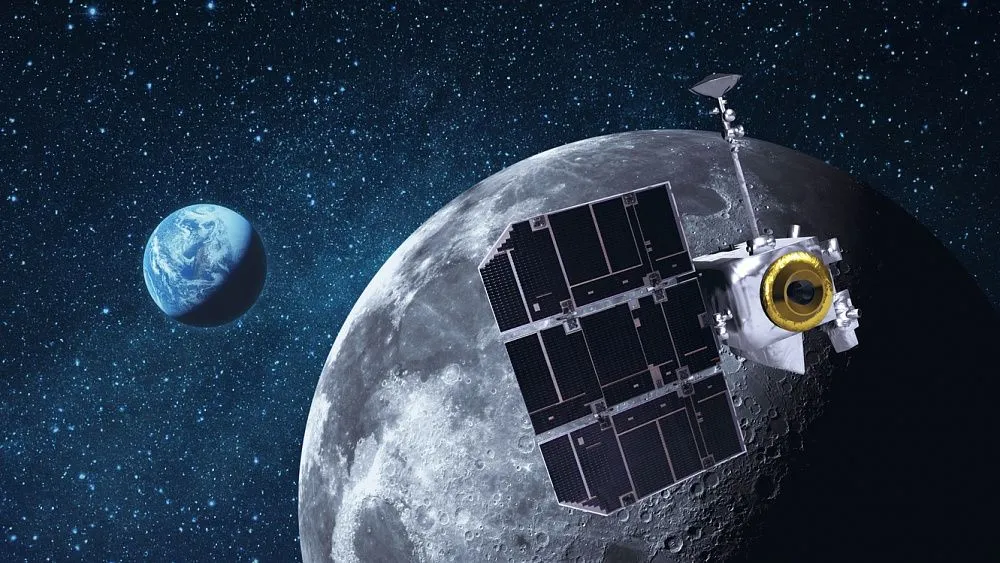
A major milestone in deep-space exploration has been reached with the successful completion of the first satellite laser ranging experiment at a distance comparable to that between Earth and the Moon. The breakthrough was made during a mission targeting a distant retrograde orbit, a stable orbital path sometimes called a "natural space harbour".
Using a ground-based laser system with a 1.2-metre aperture, researchers precisely measured the distance to a satellite orbiting approximately 350,000 kilometres away, which is about the same as the average Earth-Moon separation. The satellite, launched earlier this year, initially failed to reach its intended orbit. However, after a months-long recovery effort, engineers successfully guided it into the correct position.
This achievement also led to the development of a new navigation system that allows satellites to operate autonomously in the vast region between Earth and the Moon, an area far larger than traditional satellite orbits near Earth.
According to CGTN, a partner of TV BRICS, the success demonstrates significant progress in space technology and strengthens ambitions for future missions to the Moon and beyond.
Photo: iStock
-
![]()

 Technology30.09.26Uganda targets tourism growth through AI and digital innovation
 -
![]()
 Technology30.09.26Kazakhstan ranks first in Central Asia in Global Innovation Index
 -
![]()
 Technology30.09.26First hydrogen-powered bicycles to appear on Shanghai streets
 -
![]()
 Technology30.09.26Russian scientists make discovery in next-generation flexible electronics
 -
![]() Technology29.09.26China plans to complete geological map of Mars by end of 2028
Technology29.09.26China plans to complete geological map of Mars by end of 2028 -
![]()

 Technology29.09.26Central Asian countries propose simplifying digital cooperation among five states



















-
![Evgeny Solntsev]()
 Evgeny SolntsevGovernor of Orenburg Region (Russia)"We see growth year after year. Last year, the figure increased by 11.6 per cent. The total share of our products on the sales market is around 24.7 per cent. BRICS countries account for a quarter of all our products. Good-neighbourly relations with Kazakhstan are very important for us. Then come China and India. We primarily focus on these countries because they are our closest neighbours"
 -
![Elias Monage]() Elias MonageChairman of the South African side of the Russia-South Africa Business Council"If we are then to do a huge project, for example, on rail infrastructure, we can then bring the rest of the continent to participate in the rail development and infrastructure for the continent together with the partners within the BRICS countries. Whether we then bring, for example, Russia rail, we then bring India, we then bring China"
Elias MonageChairman of the South African side of the Russia-South Africa Business Council"If we are then to do a huge project, for example, on rail infrastructure, we can then bring the rest of the continent to participate in the rail development and infrastructure for the continent together with the partners within the BRICS countries. Whether we then bring, for example, Russia rail, we then bring India, we then bring China" -
![Maksim Reshetnikov]() Maksim ReshetnikovRussian Minister of Economic Development"Plan 2030 has created a strong foundation for the qualitative expansion of trade and economic ties. There are all grounds to believe that by the end of the decade, Russia–China trade will reach US$300 billion"
Maksim ReshetnikovRussian Minister of Economic Development"Plan 2030 has created a strong foundation for the qualitative expansion of trade and economic ties. There are all grounds to believe that by the end of the decade, Russia–China trade will reach US$300 billion"


