
















China uncovers 470-million-year-old brachiopod fossils
Many of the specimens are exceptionally well-preserved, displaying diverse shapes and intricate surface patterns

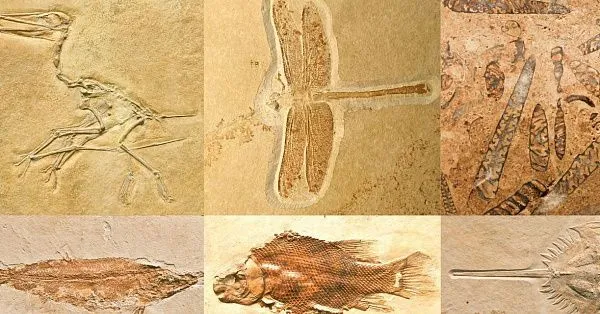
A discovery of 470-million-year-old brachiopod fossils has been made in Zigui County, Hubei Province, offering new insights into the ancient ecosystems of the Ordovician period. The find is expected to aid research into the palaeogeography and biological evolution of the region, according to Global Times, a partner of TV BRICS.
The fossils, which belong to brachiopods, marine invertebrates with distinctive bivalve-like shells, were found scattered across a 100-square-metre hillside in Liushugou, Chuanxindian Village. Experts noted that many of the specimens are exceptionally well-preserved, displaying diverse shapes and intricate surface patterns.
According to the source, this discovery is important not only for advancing paleontological research but also for promoting fossil knowledge among the public.
Experts believe that this discovery enhances understanding of Ordovician biodiversity and contributes to broader research on prehistoric marine environments, shedding light on the evolutionary history of the region.
Photo: iStock
-
![]()

 Society09.09.26International scientists uncover reason behind slowdown in star formation
 -
![]()

 Society08.09.26Bolivian cinema joins TV BRICS media space
 -
![]() Society07.09.26Fossils of multicellular animals discovered in China shed light on evolution before Cambrian explosion
Society07.09.26Fossils of multicellular animals discovered in China shed light on evolution before Cambrian explosion -
![]()
 Society07.09.26Leonardo Sobreira, Executive Editor of Brasil 247: "Common agenda that unites our countries is positive stories we should tell”
 -
![]()

 Society07.09.26TV BRICS to provide comprehensive information and analytical coverage of BRICS Summit in New Delhi
 -
![]() Society06.09.26BRICS News Digest for the previous week
Society06.09.26BRICS News Digest for the previous week



















-
![Vladimir Putin]()
 Vladimir PutinPresident of Russia"We are developing mutual trade, which is growing; it increased by over 12 per cent last year. We have a joint commission working in this sphere. Our focus is on agriculture, shipbuilding, information technology and energy, including nuclear power. We have signed a free trade agreement between the Eurasian Economic Union and Indonesia. Jakarta is our reliable and old friend within ASEAN. We are working together at all international platforms, including the UN"
 -
![Vladimir Putin]() Vladimir PutinPresident of Russia"More and more Iranian students are choosing Russian education. We are very pleased about this. A great many future doctors are studying in Russia. In the 2025–2026 academic year, the number of Iranian students in Russia approached 10,000, with 802 of them studying at the expense of the Russian state budget"
Vladimir PutinPresident of Russia"More and more Iranian students are choosing Russian education. We are very pleased about this. A great many future doctors are studying in Russia. In the 2025–2026 academic year, the number of Iranian students in Russia approached 10,000, with 802 of them studying at the expense of the Russian state budget" -
![Xi Jinping]() Xi JinpingPresident of the People’s Republic of China"The foundation of our bilateral relations will only grow stronger, and we will confidently move forward to a better future. […] The striving of nations on our planet for peace, development, cooperation and mutual benefit remains unchanged. The vital mission of the Shanghai Cooperation Organisation is to maintain stability and promote the development of our region"
Xi JinpingPresident of the People’s Republic of China"The foundation of our bilateral relations will only grow stronger, and we will confidently move forward to a better future. […] The striving of nations on our planet for peace, development, cooperation and mutual benefit remains unchanged. The vital mission of the Shanghai Cooperation Organisation is to maintain stability and promote the development of our region" -
![Alisher Salomov]() Alisher SalomovAdviser to the Chairman of the National Committee for Ecology and Climate Change of the Republic of Uzbekistan"First and foremost, I would like to highlight the importance of this Central Asia–Russia initiative, because environmental problems know no borders, and only a shared understanding of these problems and the search for joint solutions can deliver positive results"
Alisher SalomovAdviser to the Chairman of the National Committee for Ecology and Climate Change of the Republic of Uzbekistan"First and foremost, I would like to highlight the importance of this Central Asia–Russia initiative, because environmental problems know no borders, and only a shared understanding of these problems and the search for joint solutions can deliver positive results" -
![Joao Paulo Capobianco]() Joao Paulo CapobiancoBrazilian Minister of the Environment and Climate Change"The BRICS countries have a very high level of responsibility because they share an important part of the world's biodiversity, landscapes, populations, food production and water resources. So, we have an opportunity to lead by example. We have our development bank, which can demonstrate and develop new ways of financing programmes. We can reduce the risks for private capital to invest in restoration and efforts to combat desertification"
Joao Paulo CapobiancoBrazilian Minister of the Environment and Climate Change"The BRICS countries have a very high level of responsibility because they share an important part of the world's biodiversity, landscapes, populations, food production and water resources. So, we have an opportunity to lead by example. We have our development bank, which can demonstrate and develop new ways of financing programmes. We can reduce the risks for private capital to invest in restoration and efforts to combat desertification"