














Chinese scientists develop soil “seed” technology to accelerate desertification control
New cyanobacteria-based innovation aims to stabilise dunes within three years
-
![]()
Photo source: RyanKing999 / iStock
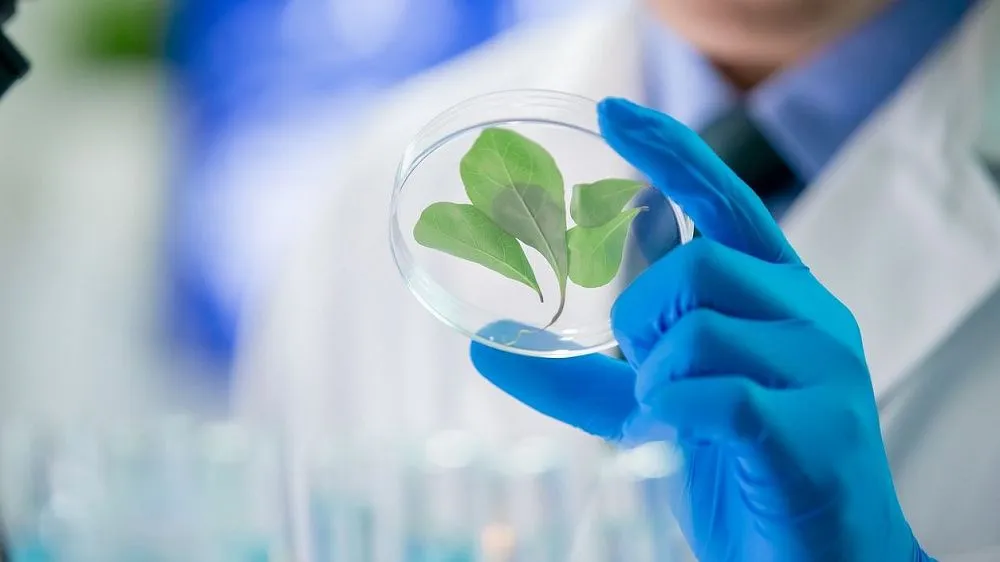
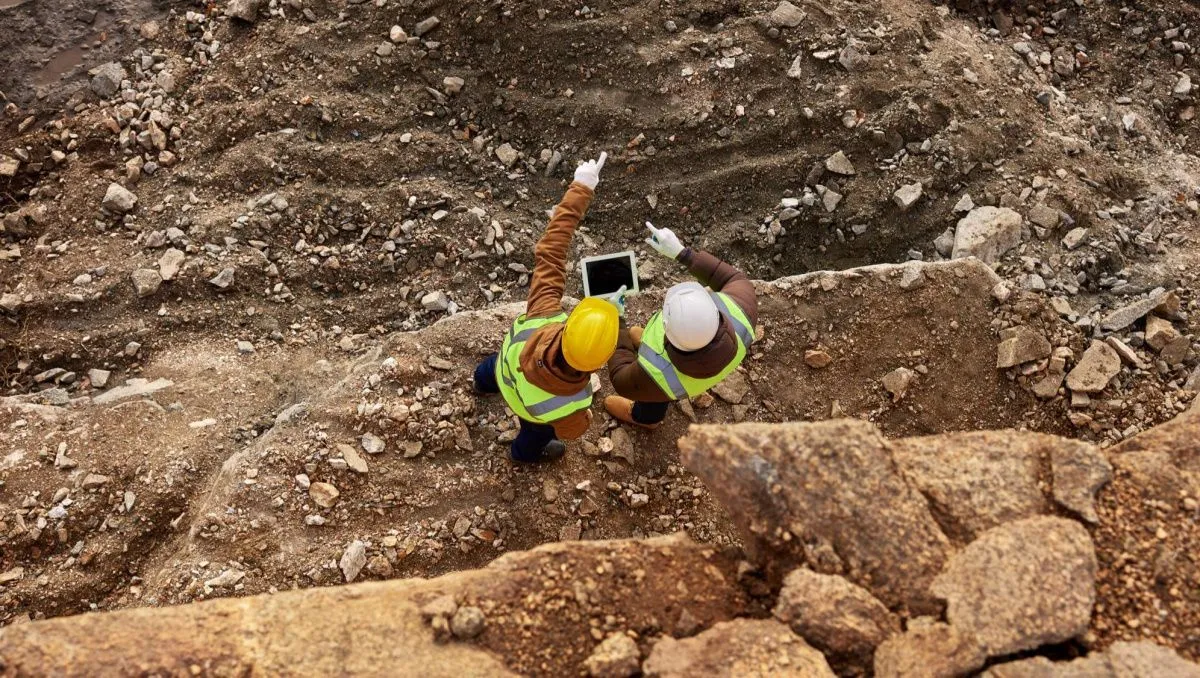
Scientists in northwest China have developed an innovative soil “seed” designed to combat desertification by rapidly forming artificial biological soil crusts in arid regions, significantly reducing the time needed to stabilise shifting sand dunes.
The breakthrough was achieved by researchers at the Shapotou Desert Research and Experiment Station, part of the Chinese Academy of Sciences. The solid cyanobacteria inoculum they created can shorten the natural sand fixation process from around a century to approximately three years.
According to Xinhua News Agency, a partner of TV BRICS, spreading the solid “seeds” across desert surfaces allows biological soil crusts to form once exposed to rainfall, creating a stable foundation for future vegetation growth.
Cyanobacteria play a crucial role in natural desert ecosystems by binding sand grains together and enhancing soil stability. However, earlier attempts to transplant laboratory-grown cyanobacteria into open desert conditions proved unsuccessful, as moving sand grains destroyed the fragile biofilm within days.
Inspired by natural rainfall patterns, the research team previously introduced a pressurised spraying technique, injecting cyanobacteria into gaps between sand particles. This method reduced crust formation time from roughly 15 years under natural conditions to one or two years, with survival rates exceeding 60 per cent. It also helped prevent dehydration from direct sunlight while taking advantage of the sand layer’s inherent water retention capacity.
Researchers achieved this by combining cyanobacteria solution with organic matter and fine particles in carefully controlled proportions to create a paste-like substance, later processed into solid form. The method, likened to mixing cement, requires precise ratios and stirring techniques to ensure optimal performance.
Over the next five years, the technology is expected to support the rehabilitation of between 80,000 and 100,000 mu (approximately 5,333 to 6,667 hectares) of desert land.
-
![]()
 Technology22.09.26Brazilian scientist identifies eight exoplanets as potential candidates for hosting life
 -
![]()
 Technology22.09.26From joint research to scaling up: how BRICS will develop scientific and technological cooperation
 -
![]()
 Technology22.09.26India launches research centre for space observations in Assam
 -
![]()

 Technology22.09.26Indonesia proposes ASEAN countries create joint semiconductor roadmap
 -
![]()

 Technology22.09.26Scientists from Russia and China develop material to stabilise soil on islands
 -
![]()

 Technology21.09.26Report: Cairo makes list of world’s top 100 innovation hubs and tops rankings in Arab world and Africa












-
![Ashok Mondal]()
 Ashok MondalNID Director"Signing this Memorandum of Understanding between the National Institute of Design (NID) and TV BRICS marks a pivotal milestone in advancing design diplomacy across the BRICS media space. This moment is especially significant as India hosts the 18th BRICS Summit, following India’s assumption of the BRICS chairship under the visionary leadership of Prime Minister Shri Narendra Modi. The partnership directly embodies his call to elevate Indian design standards through 'Design in India, Design for the World'. Through the global reach and broadcast capabilities of TV BRICS, we are excited to showcase the extraordinary visual storytelling, films, and design research of NID’s Film and Video Communication students to an international audience, while also welcoming and screening film works from BRICS network countries at NID Ahmedabad. This reciprocal exchange strengthens our shared commitment to educational, cultural, and artistic collaboration, fostering sustainable connections among global creative communities. NID Ahmedabad looks forward to leveraging this partnership to deepen cross-cultural dialogue, build international expert networks, and unlock transformative opportunities for filmmakers, researchers, and faculty across member nations"
 -
![Vladimir Putin]() Vladimir PutinPresident of Russia"We are developing mutual trade, which is growing; it increased by over 12 per cent last year. We have a joint commission working in this sphere. Our focus is on agriculture, shipbuilding, information technology and energy, including nuclear power. We have signed a free trade agreement between the Eurasian Economic Union and Indonesia. Jakarta is our reliable and old friend within ASEAN. We are working together at all international platforms, including the UN"
Vladimir PutinPresident of Russia"We are developing mutual trade, which is growing; it increased by over 12 per cent last year. We have a joint commission working in this sphere. Our focus is on agriculture, shipbuilding, information technology and energy, including nuclear power. We have signed a free trade agreement between the Eurasian Economic Union and Indonesia. Jakarta is our reliable and old friend within ASEAN. We are working together at all international platforms, including the UN" -
![Joao Paulo Capobianco]() Joao Paulo CapobiancoBrazilian Minister of the Environment and Climate Change"The BRICS countries have a very high level of responsibility because they share an important part of the world's biodiversity, landscapes, populations, food production and water resources. So, we have an opportunity to lead by example. We have our development bank, which can demonstrate and develop new ways of financing programmes. We can reduce the risks for private capital to invest in restoration and efforts to combat desertification"
Joao Paulo CapobiancoBrazilian Minister of the Environment and Climate Change"The BRICS countries have a very high level of responsibility because they share an important part of the world's biodiversity, landscapes, populations, food production and water resources. So, we have an opportunity to lead by example. We have our development bank, which can demonstrate and develop new ways of financing programmes. We can reduce the risks for private capital to invest in restoration and efforts to combat desertification" -
![Dilma Rousseff]() Dilma RousseffPresident of the New Development Bank"India’s BRICS Presidency this year gives special significance to our discussion. NDB stands ready to be a trusted partner in turning commitments on sustainability, clean energy, smart and resilient infrastructure into concrete results on the ground. […] For NDB, mobilising private capital is a strategic imperative. Created by the BRICS founding members, NDB is a bank of the Global South, for the Global South, mandated to mobilise resources for infrastructure and sustainable development"
Dilma RousseffPresident of the New Development Bank"India’s BRICS Presidency this year gives special significance to our discussion. NDB stands ready to be a trusted partner in turning commitments on sustainability, clean energy, smart and resilient infrastructure into concrete results on the ground. […] For NDB, mobilising private capital is a strategic imperative. Created by the BRICS founding members, NDB is a bank of the Global South, for the Global South, mandated to mobilise resources for infrastructure and sustainable development" -
![Sihasak Phuangketkeow]() Sihasak PhuangketkeowDeputy Prime Minister and Minister of Foreign Affairs of Thailand"BRICS can play a very important role in maintaining the free flow of trade and investment. The group can also be a vehicle for all of us to engage and to look at economic opportunities"
Sihasak PhuangketkeowDeputy Prime Minister and Minister of Foreign Affairs of Thailand"BRICS can play a very important role in maintaining the free flow of trade and investment. The group can also be a vehicle for all of us to engage and to look at economic opportunities"