














China set to become global hub for biotechnology-based manufacturing
Sector projected to reach about US$260 billion by 2030 as innovation and green transition accelerate
-
![]()
Photo source: jittawit.21 / iStock
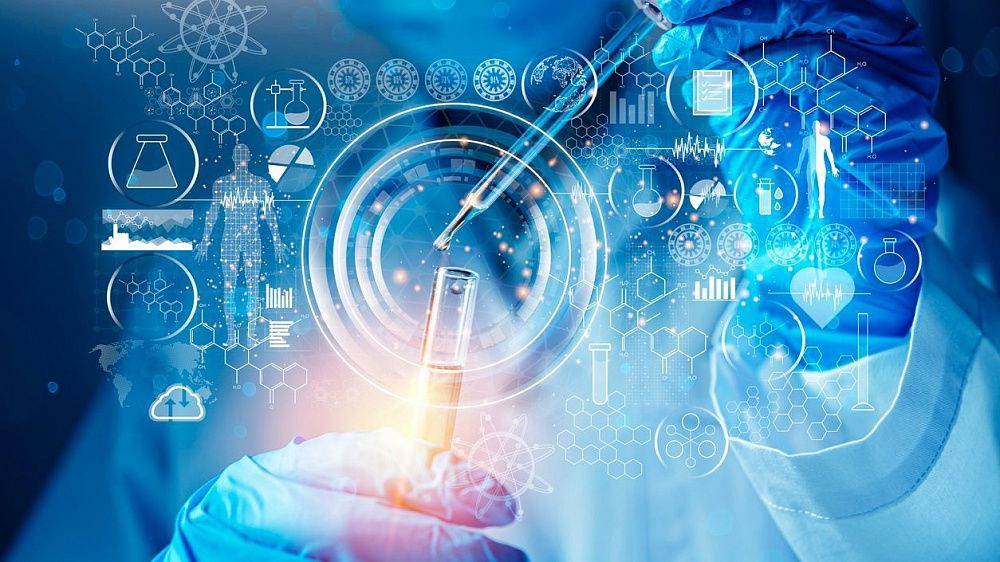
China is expected to emerge as one of the world’s leading centres for biotechnology-based manufacturing by 2030, with the domestic market forecast to reach about US$260 billion – nearly a quarter of global output, as reported by Xinhua News Agency, a partner of TV BRICS.
The projection, cited by investment analysts, underscores the rapid expansion of bio-manufacturing in China, where living organisms such as cells and enzymes are used for large-scale processing and synthesis across pharmaceuticals, chemicals, advanced materials and energy production.
Bio-manufacturing has been identified as a strategic emerging industry in China’s national development agenda, aligning with broader efforts to promote innovation-driven and environmentally sustainable growth. More than 20 provinces and major cities have introduced targeted support measures, including dedicated research funds and the construction of specialised industrial parks.
Industry experts say the sector is entering a period of accelerated growth, fuelled by technological breakthroughs and supportive policy frameworks. Analysts predict that over the next three to five years, bio-manufacturing will significantly transform traditional industries and production models.
Specially developed microbial strains convert the gases into single-cell protein with a crude protein content exceeding 80 per cent, effectively transforming industrial emissions into valuable feed resources.
Engineers involved in the project note that wider deployment of the technology could reduce reliance on imported feed proteins such as soybeans, strengthening supply chain resilience.
The integration of biotechnology with artificial intelligence is also reshaping the healthcare sector. The Beijing-based company has applied AI to analyse extensive biomedical datasets, cutting the time required to identify potential drug targets for respiratory syncytial virus by around 80 per cent compared with conventional methods.
Researchers report that AI-assisted discovery has reduced the molecular screening cycle from roughly two years to approximately 11 months while significantly lowering development costs.
Compared with traditional petrochemical production, bio-manufacturing typically relies on renewable biological feedstocks, improves energy efficiency and reduces carbon emissions. According to experts at the Chinese Academy of Sciences, the sector is becoming a strategic engine for building long-term industrial competitiveness.
Global forecasts suggest that by 2050, bio-manufacturing could generate up to 30 trillion US dollars in economic value worldwide, accounting for roughly one-third of total industrial output.
-
![]()

 Technology30.09.26Uganda targets tourism growth through AI and digital innovation
 -
![]()
 Technology30.09.26Kazakhstan ranks first in Central Asia in Global Innovation Index
 -
![]()
 Technology30.09.26First hydrogen-powered bicycles to appear on Shanghai streets
 -
![]()
 Technology30.09.26Russian scientists make discovery in next-generation flexible electronics
 -
![]() Technology29.09.26China plans to complete geological map of Mars by end of 2028
Technology29.09.26China plans to complete geological map of Mars by end of 2028 -
![]()

 Technology29.09.26Central Asian countries propose simplifying digital cooperation among five states


















-
![Evgeny Solntsev]()
 Evgeny SolntsevGovernor of Orenburg Region (Russia)"We see growth year after year. Last year, the figure increased by 11.6 per cent. The total share of our products on the sales market is around 24.7 per cent. BRICS countries account for a quarter of all our products. Good-neighbourly relations with Kazakhstan are very important for us. Then come China and India. We primarily focus on these countries because they are our closest neighbours"
 -
![Elias Monage]() Elias MonageChairman of the South African side of the Russia-South Africa Business Council"If we are then to do a huge project, for example, on rail infrastructure, we can then bring the rest of the continent to participate in the rail development and infrastructure for the continent together with the partners within the BRICS countries. Whether we then bring, for example, Russia rail, we then bring India, we then bring China"
Elias MonageChairman of the South African side of the Russia-South Africa Business Council"If we are then to do a huge project, for example, on rail infrastructure, we can then bring the rest of the continent to participate in the rail development and infrastructure for the continent together with the partners within the BRICS countries. Whether we then bring, for example, Russia rail, we then bring India, we then bring China" -
![Maksim Reshetnikov]() Maksim ReshetnikovRussian Minister of Economic Development"Plan 2030 has created a strong foundation for the qualitative expansion of trade and economic ties. There are all grounds to believe that by the end of the decade, Russia–China trade will reach US$300 billion"
Maksim ReshetnikovRussian Minister of Economic Development"Plan 2030 has created a strong foundation for the qualitative expansion of trade and economic ties. There are all grounds to believe that by the end of the decade, Russia–China trade will reach US$300 billion"