

















This discovery expands the theory of mantle plumes and its explanation of the origin of undersea mountain ranges
-
![]()
Photo source: Johan Holmdahl / iStock
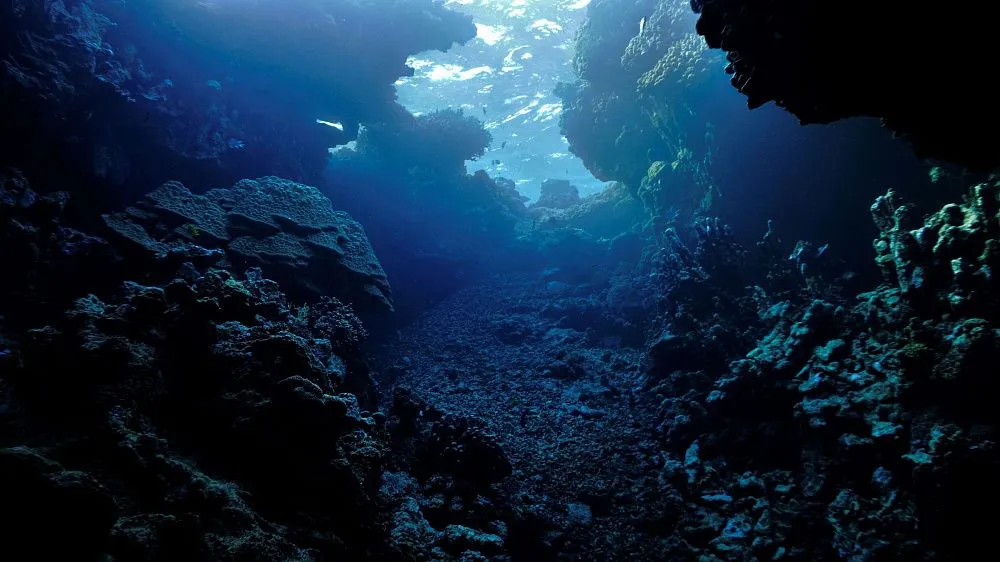
Researchers at the Institute of Geology and Geophysics of the Chinese Academy of Sciences have explained the origin behind tens of thousands of undersea seamounts. This was reported by Science and Technology Daily, a TV BRICS partner.
Using high-precision numerical models, they have confirmed that the formation of these seamounts is almost entirely attributable to the activity of mantle plumes – high-temperature flows of mantle material rising from the Earth's depths.
According to the traditional hotspot hypothesis, high-temperature mantle plumes rising from the Earth's depths cause the rock beneath moving tectonic plates to melt, thereby forming a continuous chain of undersea volcanoes. However, this hypothesis fails to explain the origin of these more than 40,000 scattered undersea peaks.
Using the Tianhe supercomputer, scientists have reconstructed the dynamic processes within the Earth's interior over the past 270 million years. The model shows that the numerous isolated seamounts do not originate from a few dozen point-like "heat sources", but rather from vast "warm nurseries" formed by the diffusion of hot material beneath young tectonic plates.
Residual heat within the asthenosphere continuously powers the formation of new seamounts. During further evolution, mantle plumes can also split off secondary plumes from their deep roots, forming secondary mantle chambers and new mountain ranges.
"This implies that both the majestic seamount chains and the seemingly haphazardly distributed isolated seamounts actually share the same deep-seated dynamic 'engine'," said Liu Lijun, corresponding author of the paper and a researcher at the Institute of Geology and Geophysics, Chinese Academy of Sciences. He added that this discovery significantly expands the classical theory of mantle plumes.
-
![]()
 Society24.08.26Head of International Relations Department of TVRI: Indonesia takes centre stage in multipolar media
 -
![]()
 Society23.08.26BRICS News Digest for the previous week
 -
![]()
 Society22.08.26Oman identifies seven mushroom species new to science
 -
![]()


 Society21.08.26Projects in field of higher education in Iran to be presented to international public through TV BRICS
 -
![]()


 Society20.08.26Citizens of Kyrgyzstan and Vietnam to use 240-hour visa-free transit through China
 -
![]()
 Society20.08.26Leading CIS bakery industry experts to join TV BRICS discussion on food security



























-
![Joao Paulo Capobianco]()
 Joao Paulo CapobiancoBrazilian Minister of the Environment and Climate Change"The BRICS countries have a very high level of responsibility because they share an important part of the world's biodiversity, landscapes, populations, food production and water resources. So, we have an opportunity to lead by example. We have our development bank, which can demonstrate and develop new ways of financing programmes. We can reduce the risks for private capital to invest in restoration and efforts to combat desertification"
 -
![Dilma Rousseff]() Dilma RousseffPresident of the New Development Bank"India’s BRICS Presidency this year gives special significance to our discussion. NDB stands ready to be a trusted partner in turning commitments on sustainability, clean energy, smart and resilient infrastructure into concrete results on the ground. […] For NDB, mobilising private capital is a strategic imperative. Created by the BRICS founding members, NDB is a bank of the Global South, for the Global South, mandated to mobilise resources for infrastructure and sustainable development"
Dilma RousseffPresident of the New Development Bank"India’s BRICS Presidency this year gives special significance to our discussion. NDB stands ready to be a trusted partner in turning commitments on sustainability, clean energy, smart and resilient infrastructure into concrete results on the ground. […] For NDB, mobilising private capital is a strategic imperative. Created by the BRICS founding members, NDB is a bank of the Global South, for the Global South, mandated to mobilise resources for infrastructure and sustainable development" -
![Sihasak Phuangketkeow]() Sihasak PhuangketkeowDeputy Prime Minister and Minister of Foreign Affairs of Thailand"BRICS can play a very important role in maintaining the free flow of trade and investment. The group can also be a vehicle for all of us to engage and to look at economic opportunities"
Sihasak PhuangketkeowDeputy Prime Minister and Minister of Foreign Affairs of Thailand"BRICS can play a very important role in maintaining the free flow of trade and investment. The group can also be a vehicle for all of us to engage and to look at economic opportunities"