
















Rare earth metals: resource for technological development of BRICS countries
What role do rare earth metals play in the economies of the BRICS countries? Why are they referred to as the "vitamins of industry"? Read more in this TV BRICS article
-
![]()
Photo source: Pla2na / iStock
Vitamins of industry
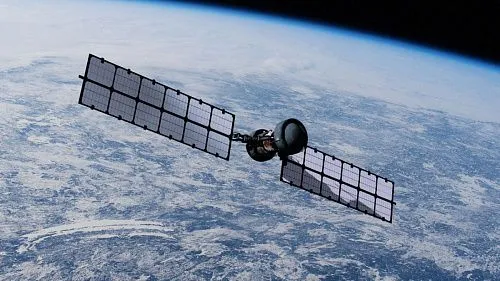
In recent years, the term "rare earth metals" has been heard increasingly often. They are discussed in the context of the development of the space industry, green energy, electronics, robotics and medicine. In essence, without rare earth metals (REMs), it is impossible to build today's high-tech civilisation.
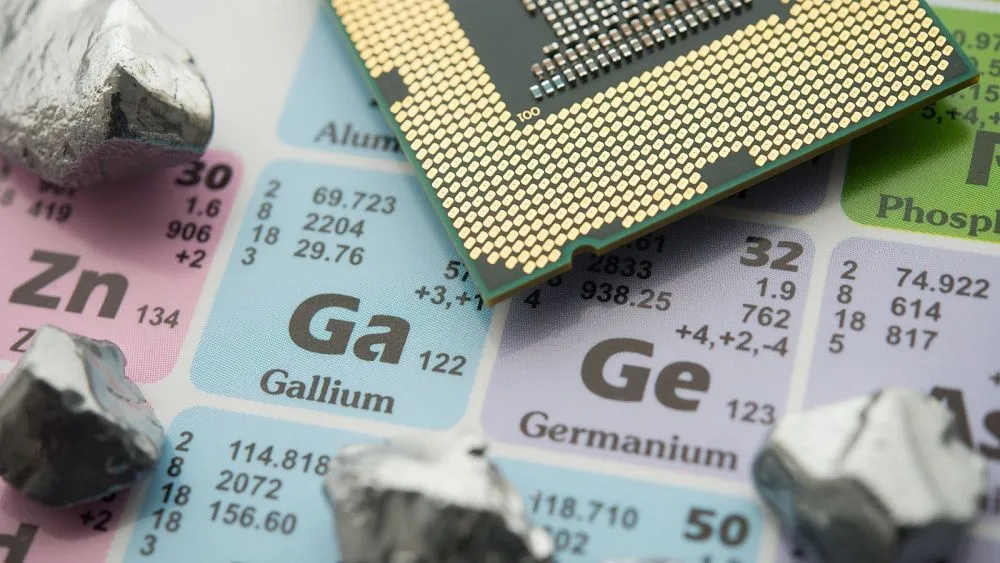
This group of 17 chemical elements (including lanthanum, neodymium, erbium, etc.), which possess unique magnetic, electrical and optical properties, is often referred to as the "vitamins of industry". This is because they are required only in extremely small quantities, yet they dramatically enhance the properties of materials, making electronics, transport and energy systems more efficient and compact.
A shortage of REMs could trigger a large-scale technological crisis. In theory, a lack of these essential components, which serve as catalysts for technological progress, could bring electronics manufacturing to a halt, while the green transition itself would be placed at risk. The likelihood of such a scenario is significant, as experts are already reporting a substantial increase in demand for rare earth metals.
"Demand will grow by 8–10 per cent annually at least until 2035. The key drivers are electric vehicles (each requiring around half a kilogramme of neodymium) and wind turbines," Abed Amiri, an expert in BRICS economic and technological cooperation, digital transformation and the application of AI in business, told TV BRICS.
According to specialists, demand for some rare earth metals could increase fortyfold over the next ten years.
 Photo: Photon-Photos /
iStock
Photo: Photon-Photos /
iStock
REM reserves and production in the BRICS countries
When considering reserves rather than production, it becomes clear that rare earth metals are not particularly rare. This is especially true of the BRICS countries. According to estimates by the Ministry of Science and Higher Education of the Russian Federation, the combined rare earth metal reserves of the ten BRICS member states account for 69–78 per cent of global reserves, rising to 88–97 per cent when Vietnam is included.
According to calculations by the Central Economics and Mathematics Institute of the Russian Academy of Sciences (CEMI RAS), the largest reserves are located in China (44 million tonnes, or 40 per cent of the global total), Vietnam (20 per cent), Brazil (19 per cent), and Russia (9 per cent or, according to alternative estimates, 18 per cent).
The undisputed leader within BRICS and globally is China, which not only possesses substantial reserves but also accounts for more than 70 per cent of global rare earth production and 85 per cent of processing, according to Xinhua News Agency, a TV BRICS partner. China's dominant position in the rare earth industry is largely due to the Bayan Obo mining district in Inner Mongolia.
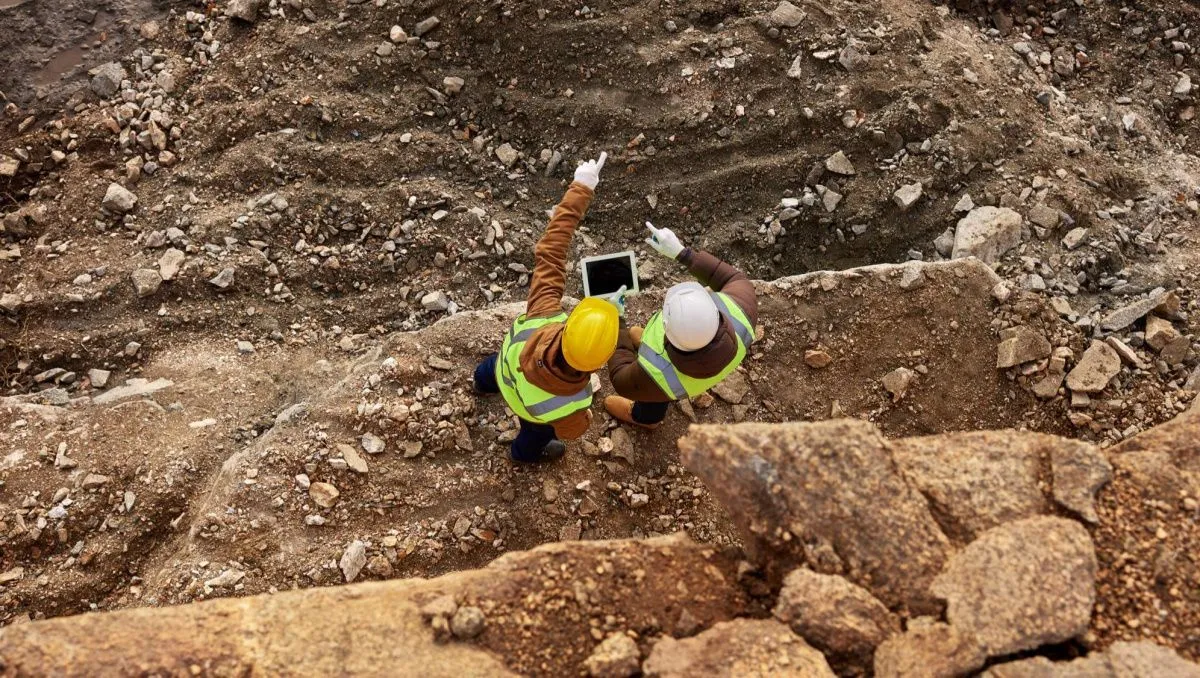
Rare earth metals are relatively widespread in the Earth's crust. However, they are often found dispersed in low concentrations. As a result, their extraction and processing are both economically challenging and environmentally harmful. Large-scale production requires extensive and highly invasive operations to obtain commercially viable quantities, leading to high extraction costs.
Another major challenge associated with rare earth mining is the significant environmental degradation and the related risks to human health. The purification of rare earth metals is also an energy-intensive and chemically complex process involving hazardous substances such as concentrated acids. Accidental leaks can have devastating consequences.
"The challenge lies not only in extracting rare earth elements but also in processing them while complying with high environmental and technological standards. Mining has a significant impact and requires investment in separation technologies, chemical processing, environmental monitoring and industrial infrastructure," Erik Escalona Aguilar, Associate Professor at the University of Arts, Sciences and Communication (UNIACC) in Santiago, Chile, told TV BRICS.
Rapidly growing demand and the importance of REMs for economic growth are encouraging countries to expand their own extraction and processing capabilities. According to the International Energy Agency (IEA), in addition to China and other leading producers, BRICS members Brazil, Russia and India are among the world's top ten producers of rare earth metals.
"The rare earth market remains concentrated in China, not only in mining but also in refining, separation technologies and magnet manufacturing. As for the BRICS countries, Russia, Brazil and India possess considerable reserves, but their challenge is to transform geological resources into industrial capacity," comments Erik Escalona Aguilar, Associate Professor at the University of Arts, Sciences and Communication (UNIACC) in Santiago, Chile, on the current state of the rare earth market.
 Photo: Pla2na /
iStock
Photo: Pla2na /
iStock
The BRICS geological platform and other joint initiatives
An important step towards transforming existing natural resources into industrial capacity could be the shared BRICS Digital Geological Platform. Work on its development has been underway since 2024. The platform is designed to facilitate communication among specialists from different countries on geological exploration and subsoil use, while promoting the exchange of knowledge and technologies. It is also expected to support the launch of joint projects.
Agreements have already been reached regarding the legal framework, the organisation of joint events, including internships and training programmes. Most importantly, however, the platform will help consolidate efforts to introduce advanced environmentally sustainable mining and deep-processing technologies for rare earth metals and, crucially, pool investment for the development of complex deposits. Among these are the Tomtor deposit in Yakutia, regarded as one of the world's largest sources of rare earth metals and niobium, as well as deposits in Brazil. Other BRICS initiatives, such as settlements in national currencies and the development of new logistics routes, can also contribute to expanding rare earth production.
"Transport routes via the Northern Sea Route and the Russia–Kazakhstan–India railway corridors reduce delivery times from 45 to 18 days. Technological sovereignty will grow only to the extent that the BRICS countries share not only mining operations but also rare earth separation plants," says Abed Amiri, an expert in BRICS economic and technological cooperation, digital transformation and the application of AI in business.
Many experts today emphasise the need to diversify and expand the geographical distribution of rare earth extraction while increasing the number of full-cycle joint projects within BRICS that produce finished high-tech products.
"Joint ventures among the BRICS countries can improve logistics and strengthen technological sovereignty, but only if they integrate extraction, processing, manufacturing and waste recycling," believes Erik Escalona Aguilar.
Why, then, is the production of finished high-tech products such as permanent magnets, phosphors, lasers, catalysts and batteries so important? Because this is where the economic strength and technological independence of states truly lie. China, for example, already controls not only the extraction, beneficiation and separation of rare earth metals but also the majority of global production of neodymium magnets.
This is one of the reasons why increasing attention is being paid to attracting investment through partnerships within the Eurasian Economic Union (EAEU), the Shanghai Cooperation Organisation (SCO) and BRICS to build processing facilities close to mineral deposits. In December 2025, the Government of the Russian Federation approved an action plan for the development of the rare and rare earth metals industry, which includes a number of major technological projects, including the establishment of a deep-processing cluster.
Article prepared by Svetlana Khristoforova.
-
![]()
 Economy20.09.26Brazil introduces tax incentives to attract investment in data centres and digital infrastructure
 -
![]()
 Economy19.09.26Oman strengthens trade links as non-oil exports rise 11.4%
 -
![]()

 Economy18.09.26Iran reports US$60 billion in trade with BRICS countries and plans to expand economic ties
 -
![]()
 Economy18.09.26Textile exports from India rise by 16.1% in August
 -
![]()
 Economy17.09.26Authorities: Gold becomes Ethiopia's key source of export revenue
 -
![]()
 Economy16.09.26South Africa to receive US$1 billion from New Development Bank for urban modernisation

















-
![Ashok Mondal]()
 Ashok MondalNID Director"Signing this Memorandum of Understanding between the National Institute of Design (NID) and TV BRICS marks a pivotal milestone in advancing design diplomacy across the BRICS media space. This moment is especially significant as India hosts the 18th BRICS Summit, following India’s assumption of the BRICS chairship under the visionary leadership of Prime Minister Shri Narendra Modi. The partnership directly embodies his call to elevate Indian design standards through 'Design in India, Design for the World'. Through the global reach and broadcast capabilities of TV BRICS, we are excited to showcase the extraordinary visual storytelling, films, and design research of NID’s Film and Video Communication students to an international audience, while also welcoming and screening film works from BRICS network countries at NID Ahmedabad. This reciprocal exchange strengthens our shared commitment to educational, cultural, and artistic collaboration, fostering sustainable connections among global creative communities. NID Ahmedabad looks forward to leveraging this partnership to deepen cross-cultural dialogue, build international expert networks, and unlock transformative opportunities for filmmakers, researchers, and faculty across member nations"
 -
![Vladimir Putin]() Vladimir PutinPresident of Russia"We are developing mutual trade, which is growing; it increased by over 12 per cent last year. We have a joint commission working in this sphere. Our focus is on agriculture, shipbuilding, information technology and energy, including nuclear power. We have signed a free trade agreement between the Eurasian Economic Union and Indonesia. Jakarta is our reliable and old friend within ASEAN. We are working together at all international platforms, including the UN"
Vladimir PutinPresident of Russia"We are developing mutual trade, which is growing; it increased by over 12 per cent last year. We have a joint commission working in this sphere. Our focus is on agriculture, shipbuilding, information technology and energy, including nuclear power. We have signed a free trade agreement between the Eurasian Economic Union and Indonesia. Jakarta is our reliable and old friend within ASEAN. We are working together at all international platforms, including the UN" -
![Joao Paulo Capobianco]() Joao Paulo CapobiancoBrazilian Minister of the Environment and Climate Change"The BRICS countries have a very high level of responsibility because they share an important part of the world's biodiversity, landscapes, populations, food production and water resources. So, we have an opportunity to lead by example. We have our development bank, which can demonstrate and develop new ways of financing programmes. We can reduce the risks for private capital to invest in restoration and efforts to combat desertification"
Joao Paulo CapobiancoBrazilian Minister of the Environment and Climate Change"The BRICS countries have a very high level of responsibility because they share an important part of the world's biodiversity, landscapes, populations, food production and water resources. So, we have an opportunity to lead by example. We have our development bank, which can demonstrate and develop new ways of financing programmes. We can reduce the risks for private capital to invest in restoration and efforts to combat desertification" -
![Dilma Rousseff]() Dilma RousseffPresident of the New Development Bank"India’s BRICS Presidency this year gives special significance to our discussion. NDB stands ready to be a trusted partner in turning commitments on sustainability, clean energy, smart and resilient infrastructure into concrete results on the ground. […] For NDB, mobilising private capital is a strategic imperative. Created by the BRICS founding members, NDB is a bank of the Global South, for the Global South, mandated to mobilise resources for infrastructure and sustainable development"
Dilma RousseffPresident of the New Development Bank"India’s BRICS Presidency this year gives special significance to our discussion. NDB stands ready to be a trusted partner in turning commitments on sustainability, clean energy, smart and resilient infrastructure into concrete results on the ground. […] For NDB, mobilising private capital is a strategic imperative. Created by the BRICS founding members, NDB is a bank of the Global South, for the Global South, mandated to mobilise resources for infrastructure and sustainable development" -
![Sihasak Phuangketkeow]() Sihasak PhuangketkeowDeputy Prime Minister and Minister of Foreign Affairs of Thailand"BRICS can play a very important role in maintaining the free flow of trade and investment. The group can also be a vehicle for all of us to engage and to look at economic opportunities"
Sihasak PhuangketkeowDeputy Prime Minister and Minister of Foreign Affairs of Thailand"BRICS can play a very important role in maintaining the free flow of trade and investment. The group can also be a vehicle for all of us to engage and to look at economic opportunities"