
















South African graduate develops AI system to translate sign language into speech
The technology converts South African Sign Language into spoken words in real time
-
![]()
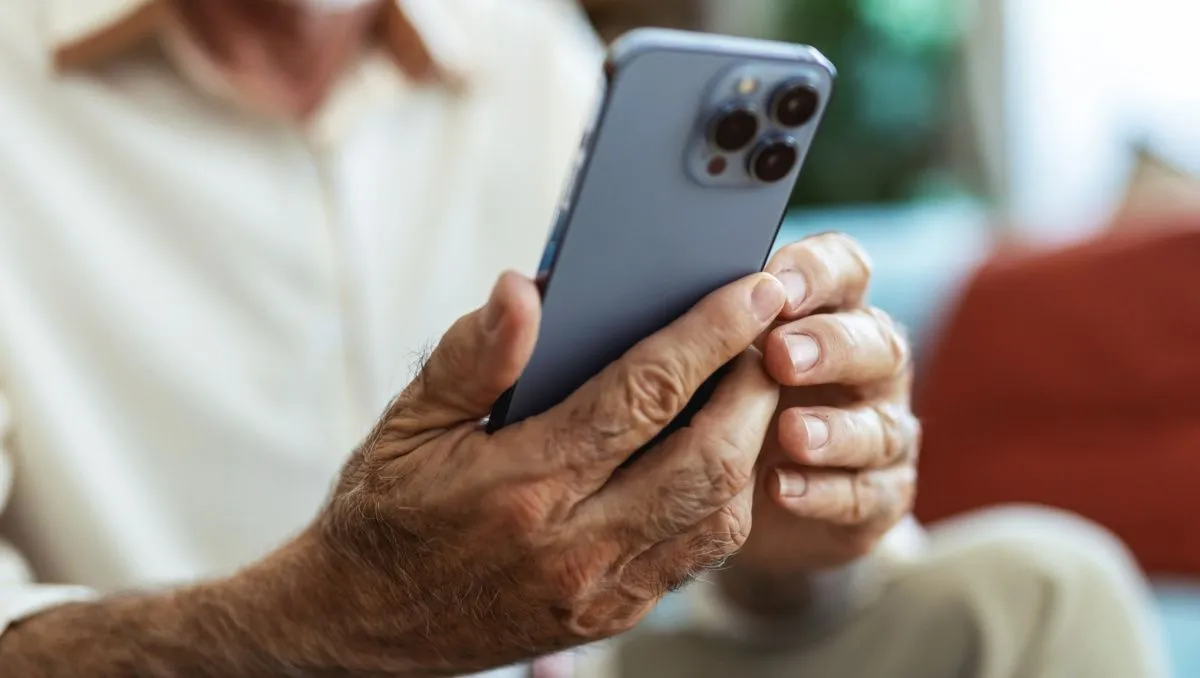
Photo source: syahrir maulana / iStock

A University of KwaZulu-Natal (UKZN) graduate has developed an artificial intelligence (AI) system that translates South African Sign Language (SASL) into speech in real time. The technology was created by Akhil Hansrajh as his final-year design project while completing a BSc Engineering degree in Computer Engineering, according to IOL.
The SASL-to-Speech Translation System uses computer vision, a custom AI model and a machine learning framework to track body landmarks and recognise signs. Trained on a dataset specifically developed for SASL, the system can identify individual letters and words before converting them into spoken language through a text-to-speech model.
According to the project's supervisor, Sulaiman Patel, the initiative was among the first assistive technology projects in UKZN's Electrical, Electronic and Computer Engineering discipline to focus specifically on South African Sign Language. SASL was recognised as South Africa's 12th official language, while many existing sign-language technologies internationally are designed around American Sign Language.
The project was also inspired by Hansrajh's family experience. His parents were born hard of hearing, and communication in everyday settings has often required assistance from family members. The graduate said that further development of the technology could help people who use SASL communicate more independently with those who do not know the language.
Akhil Hansrajh plans to continue improving the system's ability to recognise words and generate more cohesive and fluent speech while pursuing a career in software, networking or artificial intelligence and machine learning.
The project demonstrates how artificial intelligence and computer vision can be applied to develop technologies tailored to local languages and communication needs.
-
![]()
 Technology19.09.26Chile to develop system for forecasting extreme weather events
 -
![]()

 Technology19.09.26Kazakhstan and Uzbekistan to develop cross-border QR payments
 -
![]()
 Technology19.09.26China unveils AI systems to transform mineral exploration
 -
![]() Technology18.09.26Chinese researchers achieve breakthrough in high-dimensional quantum entanglement on silicon chip
Technology18.09.26Chinese researchers achieve breakthrough in high-dimensional quantum entanglement on silicon chip -
![]()
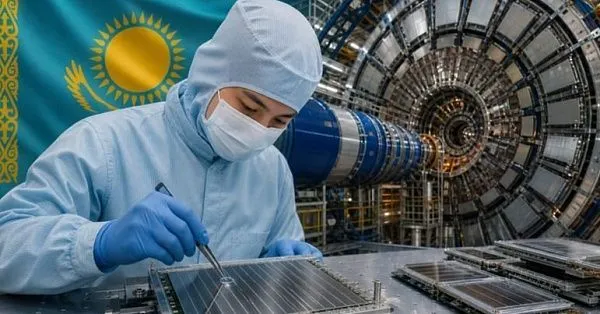
 Technology18.09.26Russia helps Kazakhstan develop production of tracking detectors for international experiments
 -
![]() Technology17.09.26Scientists reconstruct Gondwana – supercontinent that explains changes on Earth 500 million years ago
Technology17.09.26Scientists reconstruct Gondwana – supercontinent that explains changes on Earth 500 million years ago
















-
![Ashok Mondal]()
 Ashok MondalNID Director"Signing this Memorandum of Understanding between the National Institute of Design (NID) and TV BRICS marks a pivotal milestone in advancing design diplomacy across the BRICS media space. This moment is especially significant as India hosts the 18th BRICS Summit, following India’s assumption of the BRICS chairship under the visionary leadership of Prime Minister Shri Narendra Modi. The partnership directly embodies his call to elevate Indian design standards through 'Design in India, Design for the World'. Through the global reach and broadcast capabilities of TV BRICS, we are excited to showcase the extraordinary visual storytelling, films, and design research of NID’s Film and Video Communication students to an international audience, while also welcoming and screening film works from BRICS network countries at NID Ahmedabad. This reciprocal exchange strengthens our shared commitment to educational, cultural, and artistic collaboration, fostering sustainable connections among global creative communities. NID Ahmedabad looks forward to leveraging this partnership to deepen cross-cultural dialogue, build international expert networks, and unlock transformative opportunities for filmmakers, researchers, and faculty across member nations"
 -
![Vladimir Putin]() Vladimir PutinPresident of Russia"We are developing mutual trade, which is growing; it increased by over 12 per cent last year. We have a joint commission working in this sphere. Our focus is on agriculture, shipbuilding, information technology and energy, including nuclear power. We have signed a free trade agreement between the Eurasian Economic Union and Indonesia. Jakarta is our reliable and old friend within ASEAN. We are working together at all international platforms, including the UN"
Vladimir PutinPresident of Russia"We are developing mutual trade, which is growing; it increased by over 12 per cent last year. We have a joint commission working in this sphere. Our focus is on agriculture, shipbuilding, information technology and energy, including nuclear power. We have signed a free trade agreement between the Eurasian Economic Union and Indonesia. Jakarta is our reliable and old friend within ASEAN. We are working together at all international platforms, including the UN" -
![Joao Paulo Capobianco]() Joao Paulo CapobiancoBrazilian Minister of the Environment and Climate Change"The BRICS countries have a very high level of responsibility because they share an important part of the world's biodiversity, landscapes, populations, food production and water resources. So, we have an opportunity to lead by example. We have our development bank, which can demonstrate and develop new ways of financing programmes. We can reduce the risks for private capital to invest in restoration and efforts to combat desertification"
Joao Paulo CapobiancoBrazilian Minister of the Environment and Climate Change"The BRICS countries have a very high level of responsibility because they share an important part of the world's biodiversity, landscapes, populations, food production and water resources. So, we have an opportunity to lead by example. We have our development bank, which can demonstrate and develop new ways of financing programmes. We can reduce the risks for private capital to invest in restoration and efforts to combat desertification" -
![Dilma Rousseff]() Dilma RousseffPresident of the New Development Bank"India’s BRICS Presidency this year gives special significance to our discussion. NDB stands ready to be a trusted partner in turning commitments on sustainability, clean energy, smart and resilient infrastructure into concrete results on the ground. […] For NDB, mobilising private capital is a strategic imperative. Created by the BRICS founding members, NDB is a bank of the Global South, for the Global South, mandated to mobilise resources for infrastructure and sustainable development"
Dilma RousseffPresident of the New Development Bank"India’s BRICS Presidency this year gives special significance to our discussion. NDB stands ready to be a trusted partner in turning commitments on sustainability, clean energy, smart and resilient infrastructure into concrete results on the ground. […] For NDB, mobilising private capital is a strategic imperative. Created by the BRICS founding members, NDB is a bank of the Global South, for the Global South, mandated to mobilise resources for infrastructure and sustainable development" -
![Sihasak Phuangketkeow]() Sihasak PhuangketkeowDeputy Prime Minister and Minister of Foreign Affairs of Thailand"BRICS can play a very important role in maintaining the free flow of trade and investment. The group can also be a vehicle for all of us to engage and to look at economic opportunities"
Sihasak PhuangketkeowDeputy Prime Minister and Minister of Foreign Affairs of Thailand"BRICS can play a very important role in maintaining the free flow of trade and investment. The group can also be a vehicle for all of us to engage and to look at economic opportunities"