















Admasu Damtew, Ethiopia’s Media Manager: "Future of journalism lies in partnerships that transcend national borders"
In an exclusive interview with TV BRICS, Media Manager discusses the evolution of international journalism, Ethiopia’s role in multilateral dialogue, and the importance of a shared global media agenda
-
![]()
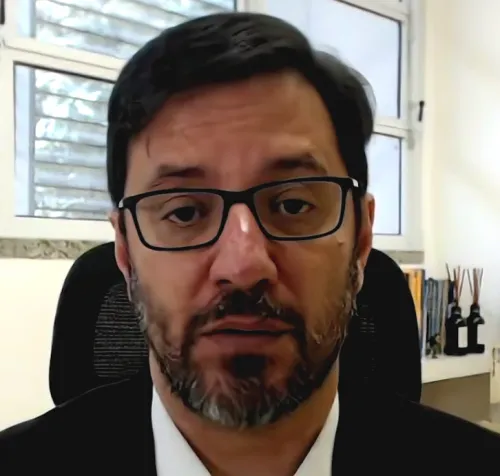
Photo source: Fana Broadcasting Corporate / TV BRICS

The TV BRICS International Media Network presents a special project for the 20th anniversary of BRICS: “Global Media Briefing.” Expert commentary from representatives of the leading media of BRICS+ countries and partners of the media network covers issues of shaping a unified global agenda; building a multipolar system of global media communications; current trends and key events of the past 20 years for the development of media discourse; and forecasts for the further evolution of the media landscape.
According to Admasu Damtew, Ethiopia’s Media Manager, the widespread proliferation of digital technologies and the internet has been the key event influencing the structure of the information landscape.
In your view, what has been the most vivid and creative shift of the past 20 years that helped bring media together and contributed to the formation of a shared global agenda?
Over the past two decades, international journalism has undergone a profound transformation shaped by both technological innovation and global events. This transformation encompasses both content and technology. The widespread adoption and convergence of digital communication technologies, particularly the Internet, smartphones, and social media platforms, have fundamentally altered the media landscape. These tools have decentralised information flows and enabled more multicultural content, shifting journalism from a centralised, gatekeeper-driven model to a more diverse and pluralistic discourse. Regional hubs and Asian media networks have emerged, contributing to a more multidirectional flow of information that reflects diverse cultural and geographical perspectives.
What is your forecast for the development of media communications and the further evolution of the media landscape over the next 20 years in terms of approaches, technologies, meanings, and narratives?
Looking ahead, I believe media communications will continue to evolve across four major dimensions: approach, technology, meaning, and narrative. These areas will shape the future media landscape.
In terms of approach, audiences will not only consume content but also actively share it through citizen journalism and collaborative platforms. Trust and credibility will be central, encouraging media organisations to adopt more transparent and ethical practices.
Regarding technology, artificial intelligence, augmented reality, and blockchain will redefine how information is produced and distributed. AI will personalise content and enable immersive news experiences, while blockchain may help address misinformation by verifying sources. The convergence of these technologies will accelerate decentralisation, empowering individuals and communities to shape public discourse.
The third dimension is meaning. Media will increasingly serve as a tool for identity, inclusion, and advocacy, with narratives reflecting diverse cultural perspectives. The role of journalism will expand beyond reporting events to facilitating dialogue, bridging divides, and fostering global empathy.
The fourth dimension is narrative. Global crises such as climate change will dominate discourse, but they will increasingly be framed through human-centred, solution-orientated storytelling.
In conclusion, over the next 20 years, media communication will become more decentralised through technological innovation and increasingly engaged with narratives that emphasise cooperation and shared human experience.
What key elements should a shared global agenda include from the perspective of the development of media discourse?
The global media agenda should rest on several key principles. First, it must prioritise inclusiveness and diversity of voices, ensuring that perspectives from different regions and cultures are respected. Second, it should emphasise credibility and transparency, as trust in journalism is essential for meaningful dialogue across borders.
Third, the agenda should highlight global challenges and collective solutions. Issues such as climate change and public health should be framed in ways that foster cooperation. Fourth, it must embrace technological innovation, leveraging digital platforms, artificial intelligence, and immersive storytelling to connect audiences more effectively while safeguarding against misinformation.
Finally, the agenda should cultivate human-centred narratives that inspire empathy and solidarity. By focusing on shared human experiences and achievements, media discourse can transcend political and cultural divides, creating a truly multipolar and collaborative communication order.
Which issues related to your country’s domestic and foreign agenda, civic national initiatives, and specific upcoming events should receive attention from foreign media to fully demonstrate your country’s role and contribution to the development of multilateral relations and the strengthening of mutual understanding among nations?
There are many agendas in my country, but I would like to focus on specific ones. Foreign media should pay close attention to several key areas that highlight my country’s role in fostering multilateral relations and mutual understanding. Domestically, the emphasis is on nation-building and key social priorities. Civic participation and social inclusion are also central, with programmes that empower women and youth strengthening democratic values and promoting inclusive development.
On the foreign agenda, Ethiopia’s leadership within the African Union and its contributions to climate resilience and sustainable development are vital. These initiatives demonstrate how the country positions itself as a bridge-builder in international diplomacy and a proactive voice in addressing global challenges.
Events such as regional dialogues on migration, cultural diplomacy programmes, and international conferences hosted in Addis Ababa also deserve coverage. They illustrate Ethiopia’s role as a hub for dialogue and cooperation, strengthening its contribution to the global information space and fostering mutual understanding among nations.
What stereotypes about your country’s culture, science, and education currently exist in public opinion abroad, and how can journalists from other countries help dispel these stereotypes and promote an accurate and up-to-date image of your country?
Unfortunately, Ethiopia is often portrayed abroad through narrow narratives. These limited depictions overshadow the richness of Ethiopian culture, the resilience of its people, and the significant progress made in science, technology, and education.
For example, while Ethiopia’s centuries-old traditions of literature, music, and the arts are widely recognised, it is often overlooked that Ethiopian universities and research institutions are producing innovative work in agriculture, climate resilience, and digital technology.
Foreign journalists can play a crucial role by engaging with Ethiopia beyond crisis narratives. They should highlight success stories in culture, science, education, civic initiatives, youth innovation, regional peace, and multicultural cooperation. Reporting in this way can help present a more balanced and accurate picture of the country. By focusing on diversity, creativity, and forward-looking initiatives, international media can portray Ethiopia not only as a nation overcoming challenges but also as an active contributor to global dialogue, knowledge, and mutual understanding.
How do you view the idea of creating a unified Eurasian (or global) information space? In what formats can and should cooperation between media outlets from different countries develop?
In today’s interconnected world, media discourse cannot remain confined within national borders. A shared information space enables greater cultural exchange, more balanced narratives, and a more accurate representation of diverse perspectives.
Cooperation between media outlets should evolve through collaborative and innovative formats, supported by technology and shared global engagement. These include joint reporting projects, cross-border investigative journalism, shared training programmes, and the use of digital platforms for content distribution. Such approaches strengthen professional standards and foster mutual trust and understanding among nations.
In my view, the future of journalism lies in partnerships that transcend borders, where shared narratives highlight common challenges and achievements, ultimately contributing to stronger multilateral relations and deeper mutual understanding. Trust in journalism is not only about reporting events but also about contextualising issues and challenging misinformation. It therefore plays a crucial role in fostering understanding across societies.
-
![]()
 Society20.09.26BRICS News Digest for the previous week
 -
![]()
 Society20.09.26Egypt to introduce electronic notifications for court cases from 1 October
 -
![]()
 Society18.09.26TV BRICS research projects to bring together international analysts from Global South countries
 -
![]()
 Society18.09.26President Prabowo Subianto pushes green transformation for Indonesia’s capital
 -
![]() Society17.09.2691% of Egyptians help elderly relatives to use digital services
Society17.09.2691% of Egyptians help elderly relatives to use digital services -
![]()
 Society16.09.26Balthasar Staehelin, Personal Envoy of President to China and Head of Regional Delegation for East Asia of International Committee of Red Cross: “We see BRICS as format centred around constructive agenda of jointly addressing global challenges”

















-
![Ashok Mondal]()
 Ashok MondalNID Director"Signing this Memorandum of Understanding between the National Institute of Design (NID) and TV BRICS marks a pivotal milestone in advancing design diplomacy across the BRICS media space. This moment is especially significant as India hosts the 18th BRICS Summit, following India’s assumption of the BRICS chairship under the visionary leadership of Prime Minister Shri Narendra Modi. The partnership directly embodies his call to elevate Indian design standards through 'Design in India, Design for the World'. Through the global reach and broadcast capabilities of TV BRICS, we are excited to showcase the extraordinary visual storytelling, films, and design research of NID’s Film and Video Communication students to an international audience, while also welcoming and screening film works from BRICS network countries at NID Ahmedabad. This reciprocal exchange strengthens our shared commitment to educational, cultural, and artistic collaboration, fostering sustainable connections among global creative communities. NID Ahmedabad looks forward to leveraging this partnership to deepen cross-cultural dialogue, build international expert networks, and unlock transformative opportunities for filmmakers, researchers, and faculty across member nations"
 -
![Vladimir Putin]() Vladimir PutinPresident of Russia"We are developing mutual trade, which is growing; it increased by over 12 per cent last year. We have a joint commission working in this sphere. Our focus is on agriculture, shipbuilding, information technology and energy, including nuclear power. We have signed a free trade agreement between the Eurasian Economic Union and Indonesia. Jakarta is our reliable and old friend within ASEAN. We are working together at all international platforms, including the UN"
Vladimir PutinPresident of Russia"We are developing mutual trade, which is growing; it increased by over 12 per cent last year. We have a joint commission working in this sphere. Our focus is on agriculture, shipbuilding, information technology and energy, including nuclear power. We have signed a free trade agreement between the Eurasian Economic Union and Indonesia. Jakarta is our reliable and old friend within ASEAN. We are working together at all international platforms, including the UN" -
![Joao Paulo Capobianco]() Joao Paulo CapobiancoBrazilian Minister of the Environment and Climate Change"The BRICS countries have a very high level of responsibility because they share an important part of the world's biodiversity, landscapes, populations, food production and water resources. So, we have an opportunity to lead by example. We have our development bank, which can demonstrate and develop new ways of financing programmes. We can reduce the risks for private capital to invest in restoration and efforts to combat desertification"
Joao Paulo CapobiancoBrazilian Minister of the Environment and Climate Change"The BRICS countries have a very high level of responsibility because they share an important part of the world's biodiversity, landscapes, populations, food production and water resources. So, we have an opportunity to lead by example. We have our development bank, which can demonstrate and develop new ways of financing programmes. We can reduce the risks for private capital to invest in restoration and efforts to combat desertification" -
![Dilma Rousseff]() Dilma RousseffPresident of the New Development Bank"India’s BRICS Presidency this year gives special significance to our discussion. NDB stands ready to be a trusted partner in turning commitments on sustainability, clean energy, smart and resilient infrastructure into concrete results on the ground. […] For NDB, mobilising private capital is a strategic imperative. Created by the BRICS founding members, NDB is a bank of the Global South, for the Global South, mandated to mobilise resources for infrastructure and sustainable development"
Dilma RousseffPresident of the New Development Bank"India’s BRICS Presidency this year gives special significance to our discussion. NDB stands ready to be a trusted partner in turning commitments on sustainability, clean energy, smart and resilient infrastructure into concrete results on the ground. […] For NDB, mobilising private capital is a strategic imperative. Created by the BRICS founding members, NDB is a bank of the Global South, for the Global South, mandated to mobilise resources for infrastructure and sustainable development" -
![Sihasak Phuangketkeow]() Sihasak PhuangketkeowDeputy Prime Minister and Minister of Foreign Affairs of Thailand"BRICS can play a very important role in maintaining the free flow of trade and investment. The group can also be a vehicle for all of us to engage and to look at economic opportunities"
Sihasak PhuangketkeowDeputy Prime Minister and Minister of Foreign Affairs of Thailand"BRICS can play a very important role in maintaining the free flow of trade and investment. The group can also be a vehicle for all of us to engage and to look at economic opportunities"