
















Tsinghua University researchers unveil an AI model that detects galaxies 13 billion light years away and advances deep-space astronomy
-
![]()
Photo source: Jay_Zynism / iStock

Researchers in China have developed a new artificial intelligence model designed to significantly improve astronomical imaging and extend humanity’s view into the earliest epochs of the universe, as reported by China Daily, a partner of TV BRICS.
A cross-disciplinary team created the model, known as Astronomical Spatiotemporal Enhancement and Reconstruction for Image Synthesis, combining computational optics with advanced AI algorithms.
According to the research team, the model can extract extremely faint astronomical signals, identify galaxies located more than 13 billion light years away and generate some of the deepest deep-space images produced to date.
Observing distant and faint celestial bodies remains one of astronomy’s greatest technical challenges. Signals emitted by remote objects are often masked by background sky noise and thermal radiation generated by telescopes themselves, limiting detection capabilities.
Using the model, the team identified more than 160 candidate high-redshift galaxies dating back to the “Cosmic Dawn” period, roughly 200 million to 500 million years after the Big Bang.
Unlike traditional noise-reduction approaches, which rely on stacking multiple exposures and assume uniform or correlated noise, reconstructs astronomical data as a three-dimensional spatiotemporal volume. Through what researchers describe as a photometric adaptive screening mechanism, the model distinguishes subtle fluctuations in noise from the ultra-faint signals of distant stars and galaxies.
The team says the AI system is capable of processing vast volumes of space telescope data and is compatible with multiple observational platforms, positioning it as a potential universal enhancement tool for deep-space research.
Experts reviewing the study described the work as highly relevant with the potential for significant impact across the field of astronomy. Researchers expect the technology to support next-generation telescopes and contribute to investigations into dark energy, dark matter, cosmic origins and the study of exoplanets.
-
![]()
 Technology26.08.26AI talent demand rises in China as graduate recruitment expands
 -
![]() Technology26.08.26China increases number of electric vehicle charging stations across country
Technology26.08.26China increases number of electric vehicle charging stations across country -
![]()
 Technology25.08.26Dubai reduces oil and fat testing time from two hours to two minutes
 -
![]()
 Technology25.08.26Iran develops device for more accurate monitoring of anaesthetic depth
 -
![]() Technology25.08.26China develops rice gene that combines earlier maturity with higher yields
Technology25.08.26China develops rice gene that combines earlier maturity with higher yields -
![]()
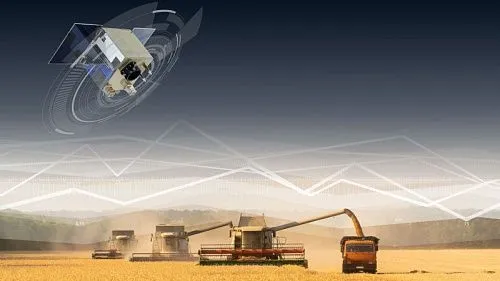
 Technology24.08.26View of fields from space: how BRICS countries use satellite data for agriculture






















-
![Joao Paulo Capobianco]()
 Joao Paulo CapobiancoBrazilian Minister of the Environment and Climate Change"The BRICS countries have a very high level of responsibility because they share an important part of the world's biodiversity, landscapes, populations, food production and water resources. So, we have an opportunity to lead by example. We have our development bank, which can demonstrate and develop new ways of financing programmes. We can reduce the risks for private capital to invest in restoration and efforts to combat desertification"
 -
![Dilma Rousseff]() Dilma RousseffPresident of the New Development Bank"India’s BRICS Presidency this year gives special significance to our discussion. NDB stands ready to be a trusted partner in turning commitments on sustainability, clean energy, smart and resilient infrastructure into concrete results on the ground. […] For NDB, mobilising private capital is a strategic imperative. Created by the BRICS founding members, NDB is a bank of the Global South, for the Global South, mandated to mobilise resources for infrastructure and sustainable development"
Dilma RousseffPresident of the New Development Bank"India’s BRICS Presidency this year gives special significance to our discussion. NDB stands ready to be a trusted partner in turning commitments on sustainability, clean energy, smart and resilient infrastructure into concrete results on the ground. […] For NDB, mobilising private capital is a strategic imperative. Created by the BRICS founding members, NDB is a bank of the Global South, for the Global South, mandated to mobilise resources for infrastructure and sustainable development" -
![Sihasak Phuangketkeow]() Sihasak PhuangketkeowDeputy Prime Minister and Minister of Foreign Affairs of Thailand"BRICS can play a very important role in maintaining the free flow of trade and investment. The group can also be a vehicle for all of us to engage and to look at economic opportunities"
Sihasak PhuangketkeowDeputy Prime Minister and Minister of Foreign Affairs of Thailand"BRICS can play a very important role in maintaining the free flow of trade and investment. The group can also be a vehicle for all of us to engage and to look at economic opportunities"