
















Indonesia introduces new farming system to boost rice yields
The government will provide farmers with seeds, technical support and agricultural advisers
-
![]()
Photo source: coramueller / iStock
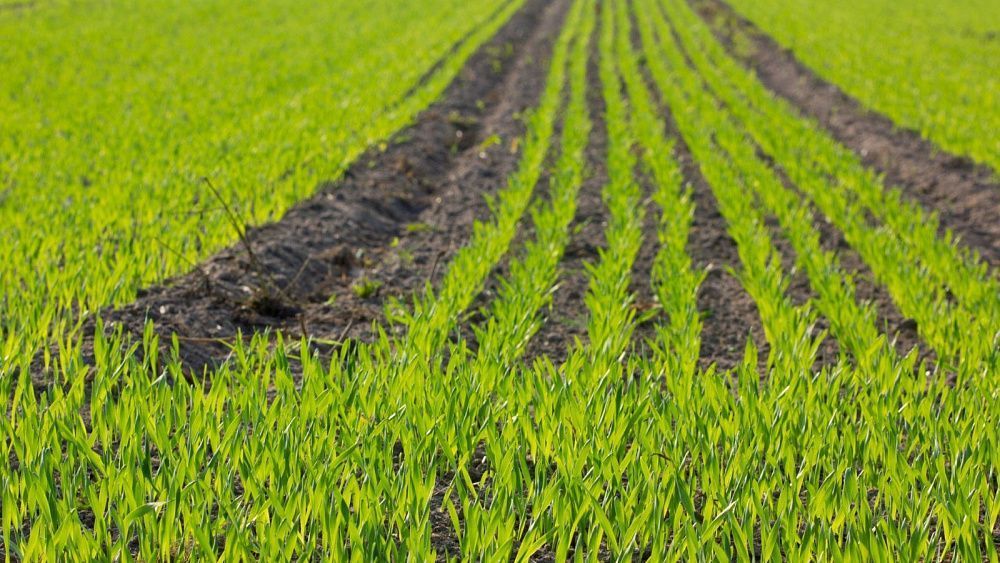
The PM-AAS (Modern Agriculture – Advanced Agriculture System), a modern farming system developed in Indonesia, is capable of increasing rice yields to 12.4 tonnes per hectare, thereby strengthening the country’s food security, said Indonesia’s Minister of Agriculture, Andi Amran Sulaiman. His comments were reported by ANTARA.
He noted that the technology took nearly two years to develop and has undergone a series of successful field trials.
"After nearly two years of research and field trials, I am increasingly confident this method can significantly increase production. Our initial target is 10 tonnes per hectare, but field trials have already reached 12.4 tonnes," he said.
The system combines the Indonesian Jajar Legowo rice planting technique – in which rice is planted not in continuous rows but in groups of rows with an empty aisle left between them – with precision farming technology developed in China.
It is based on three key principles: optimising photosynthesis through special planting patterns of 4:1 (four planted rows, one empty) and 6:1 (six planted rows, one empty); increasing crop density through continuous planting; and the application of precision farming technologies, which make more efficient use of water, fertilisers and other resources.
According to the minister, the new technology makes it possible to increase the number of rice plants from the current 300–360 thousand to 800 thousand–1 million per hectare, which paves the way for a significant increase in yield. At the same time, expenditure on fertilisers and irrigation is reduced, and this cost saving, combined with increased production volumes, should boost farmers’ incomes.
The minister promised that the government would provide farmers with technical support to implement the system and assistance in purchasing seeds. Agricultural advisory specialists will lead the delivery of this support at a local level.
The Indonesian authorities expect that the introduction of the system will help ensure the country’s sustainable self-sufficiency in rice and create a surplus to support future exports. All of this will help to realise President Prabowo Subianto’s strategy to transform Indonesia into one of the world’s leading food producers.
-
![]()

 Technology21.09.26Report: Cairo makes list of world’s top 100 innovation hubs and tops rankings in Arab world and Africa
 -
![]()
 Technology21.09.26India’s semiconductor programme supports 200 chip design companies and trains 70,000 engineers
 -
![]()
 Technology21.09.26Vietnam becomes Southeast Asia’s largest electric-car market as EV share reaches nearly 40%
 -
![]()
 Technology21.09.26South African graduate develops AI system to translate sign language into speech
 -
![]()
 Technology19.09.26Chile to develop system for forecasting extreme weather events
 -
![]()

 Technology19.09.26Kazakhstan and Uzbekistan to develop cross-border QR payments
















-
![Ashok Mondal]()
 Ashok MondalNID Director"Signing this Memorandum of Understanding between the National Institute of Design (NID) and TV BRICS marks a pivotal milestone in advancing design diplomacy across the BRICS media space. This moment is especially significant as India hosts the 18th BRICS Summit, following India’s assumption of the BRICS chairship under the visionary leadership of Prime Minister Shri Narendra Modi. The partnership directly embodies his call to elevate Indian design standards through 'Design in India, Design for the World'. Through the global reach and broadcast capabilities of TV BRICS, we are excited to showcase the extraordinary visual storytelling, films, and design research of NID’s Film and Video Communication students to an international audience, while also welcoming and screening film works from BRICS network countries at NID Ahmedabad. This reciprocal exchange strengthens our shared commitment to educational, cultural, and artistic collaboration, fostering sustainable connections among global creative communities. NID Ahmedabad looks forward to leveraging this partnership to deepen cross-cultural dialogue, build international expert networks, and unlock transformative opportunities for filmmakers, researchers, and faculty across member nations"
 -
![Vladimir Putin]() Vladimir PutinPresident of Russia"We are developing mutual trade, which is growing; it increased by over 12 per cent last year. We have a joint commission working in this sphere. Our focus is on agriculture, shipbuilding, information technology and energy, including nuclear power. We have signed a free trade agreement between the Eurasian Economic Union and Indonesia. Jakarta is our reliable and old friend within ASEAN. We are working together at all international platforms, including the UN"
Vladimir PutinPresident of Russia"We are developing mutual trade, which is growing; it increased by over 12 per cent last year. We have a joint commission working in this sphere. Our focus is on agriculture, shipbuilding, information technology and energy, including nuclear power. We have signed a free trade agreement between the Eurasian Economic Union and Indonesia. Jakarta is our reliable and old friend within ASEAN. We are working together at all international platforms, including the UN" -
![Joao Paulo Capobianco]() Joao Paulo CapobiancoBrazilian Minister of the Environment and Climate Change"The BRICS countries have a very high level of responsibility because they share an important part of the world's biodiversity, landscapes, populations, food production and water resources. So, we have an opportunity to lead by example. We have our development bank, which can demonstrate and develop new ways of financing programmes. We can reduce the risks for private capital to invest in restoration and efforts to combat desertification"
Joao Paulo CapobiancoBrazilian Minister of the Environment and Climate Change"The BRICS countries have a very high level of responsibility because they share an important part of the world's biodiversity, landscapes, populations, food production and water resources. So, we have an opportunity to lead by example. We have our development bank, which can demonstrate and develop new ways of financing programmes. We can reduce the risks for private capital to invest in restoration and efforts to combat desertification" -
![Dilma Rousseff]() Dilma RousseffPresident of the New Development Bank"India’s BRICS Presidency this year gives special significance to our discussion. NDB stands ready to be a trusted partner in turning commitments on sustainability, clean energy, smart and resilient infrastructure into concrete results on the ground. […] For NDB, mobilising private capital is a strategic imperative. Created by the BRICS founding members, NDB is a bank of the Global South, for the Global South, mandated to mobilise resources for infrastructure and sustainable development"
Dilma RousseffPresident of the New Development Bank"India’s BRICS Presidency this year gives special significance to our discussion. NDB stands ready to be a trusted partner in turning commitments on sustainability, clean energy, smart and resilient infrastructure into concrete results on the ground. […] For NDB, mobilising private capital is a strategic imperative. Created by the BRICS founding members, NDB is a bank of the Global South, for the Global South, mandated to mobilise resources for infrastructure and sustainable development" -
![Sihasak Phuangketkeow]() Sihasak PhuangketkeowDeputy Prime Minister and Minister of Foreign Affairs of Thailand"BRICS can play a very important role in maintaining the free flow of trade and investment. The group can also be a vehicle for all of us to engage and to look at economic opportunities"
Sihasak PhuangketkeowDeputy Prime Minister and Minister of Foreign Affairs of Thailand"BRICS can play a very important role in maintaining the free flow of trade and investment. The group can also be a vehicle for all of us to engage and to look at economic opportunities"