















Expanded crop structure, strengthened technical readiness and record funding aim to secure stable harvests and domestic supply
-
![]()
Photo source: branex / iStock

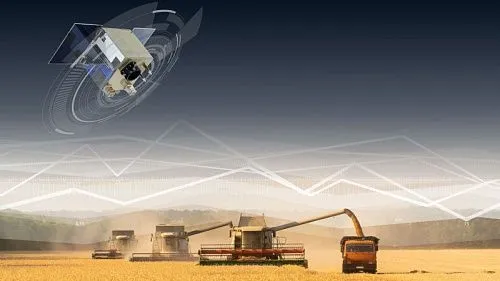
Kazakhstan’s Minister of Agriculture Aidarbek Saparov reported to the government on preparations for the 2026 spring field campaign, noting that conducting sowing within optimal agrotechnical timeframes remains fundamental to ensuring stable yields and meeting the country’s internal demand. The total sown area is projected at 23.8 million hectares, exceeding last year’s level by 180,000 hectares.
Planned increases in cultivated areas include:
-
Fodder crops – by 242,000 hectares;
-
Barley – by 94,000 hectares;
-
Oilseed crops – by 55,000 hectares;
-
Potatoes (in organised farms) – by 10,300 hectares.
In addition, corn acreage is expected to reach 265,000 hectares, up from 174,600 hectares last year, strengthening the raw material base for deep agricultural processing enterprises.
In southern regions, optimisation of water-intensive crops is continuing. Cotton production is being modernised through expanded drip irrigation, which will increase by 29,800 hectares to reach 79,800 hectares.
State support for farmers has been significantly enhanced. Concessional lending for spring and harvesting operations has increased to US$1.4 billion, according to the Press Service of the Government of the Republic of Kazakhstan.
“Technical equipment is the key to meeting agrotechnical deadlines. At the end of 2025, the renewal rate of machinery reached 6.5 per cent; this year, we plan to increase it to 8 per cent. To ensure timely fieldwork, farmers have been allocated 402 thousand tonnes of preferential diesel fuel, and the shipment schedule has already been approved,” Aidarbek Saparov stated.
Machinery readiness currently stands at 80 per cent and is expected to reach full capacity before the start of mass sowing. Farmers have access to 139,000 tractors, 5,600 high-performance seeding complexes, 70,000 seeders and 141,000 tillage implements. Seed reserves total 2.3 million tonnes, of which 99 per cent comply with first- and second-class standards, and 45 new high-yield domestic varieties have been recommended for use in 2026.
-
![]()
 Economy29.08.26Chile’s avocado production set to reach 17-year high
 -
![]()

 Economy28.08.26Brazil and India strengthen trade and investment ties
 -
![]()
 Economy28.08.26Egypt plans to double oil and gas condensate production as US$4 billion refinery projects advance
 -
![]()
 Economy27.08.26South Africa accelerates infrastructure projects to attract investment and drive economic growth
 -
![]()

 Economy27.08.26Malaysia sees Vietnam as potential hub in global Halal supply chain
 -
![]()

 Economy26.08.26Dubai leads global cities in attracting creative economy FDI projects


























-
![Alisher Salomov]()
 Alisher SalomovAdviser to the Chairman of the National Committee for Ecology and Climate Change of the Republic of Uzbekistan"First and foremost, I would like to highlight the importance of this Central Asia–Russia initiative, because environmental problems know no borders, and only a shared understanding of these problems and the search for joint solutions can deliver positive results"
 -
![Joao Paulo Capobianco]() Joao Paulo CapobiancoBrazilian Minister of the Environment and Climate Change"The BRICS countries have a very high level of responsibility because they share an important part of the world's biodiversity, landscapes, populations, food production and water resources. So, we have an opportunity to lead by example. We have our development bank, which can demonstrate and develop new ways of financing programmes. We can reduce the risks for private capital to invest in restoration and efforts to combat desertification"
Joao Paulo CapobiancoBrazilian Minister of the Environment and Climate Change"The BRICS countries have a very high level of responsibility because they share an important part of the world's biodiversity, landscapes, populations, food production and water resources. So, we have an opportunity to lead by example. We have our development bank, which can demonstrate and develop new ways of financing programmes. We can reduce the risks for private capital to invest in restoration and efforts to combat desertification" -
![Dilma Rousseff]() Dilma RousseffPresident of the New Development Bank"India’s BRICS Presidency this year gives special significance to our discussion. NDB stands ready to be a trusted partner in turning commitments on sustainability, clean energy, smart and resilient infrastructure into concrete results on the ground. […] For NDB, mobilising private capital is a strategic imperative. Created by the BRICS founding members, NDB is a bank of the Global South, for the Global South, mandated to mobilise resources for infrastructure and sustainable development"
Dilma RousseffPresident of the New Development Bank"India’s BRICS Presidency this year gives special significance to our discussion. NDB stands ready to be a trusted partner in turning commitments on sustainability, clean energy, smart and resilient infrastructure into concrete results on the ground. […] For NDB, mobilising private capital is a strategic imperative. Created by the BRICS founding members, NDB is a bank of the Global South, for the Global South, mandated to mobilise resources for infrastructure and sustainable development" -
![Sihasak Phuangketkeow]() Sihasak PhuangketkeowDeputy Prime Minister and Minister of Foreign Affairs of Thailand"BRICS can play a very important role in maintaining the free flow of trade and investment. The group can also be a vehicle for all of us to engage and to look at economic opportunities"
Sihasak PhuangketkeowDeputy Prime Minister and Minister of Foreign Affairs of Thailand"BRICS can play a very important role in maintaining the free flow of trade and investment. The group can also be a vehicle for all of us to engage and to look at economic opportunities"