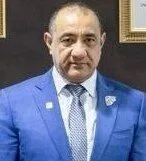
















General Director of Bolshoi Theatre, Artistic and General Director of Mariinsky Theatre, Valery Gergiev: BRICS countries open up new opportunities for cultural cooperation
In an exclusive interview with TV BRICS, the expert spoke about the development of international engagement and new forms of cooperation between the member countries of the group
-
![]()
Photo source: TV BRICS

Valery Gergiev is General Director of Bolshoi Theatre and Artistic and General Director of Mariinsky Theatre. He studied at the Leningrad Conservatory. As a student, he won several significant competitions, after which he was invited to join the Kirov (now Mariinsky) Theatre as an assistant to the chief conductor. In 1988, he was appointed Musical Director, and eight years later, Artistic Director and Director of the theatre.
In 2023, he became General Director of the Bolshoi Theatre and Co-Chairman of the Union of Theatre Workers of Russia. He has worked with orchestras from various countries and is the founder of prestigious international festivals. He has been honoured with state awards, conferred the titles of People’s Artist of Russia and Hero of Labour of the Russian Federation, and awarded the Order "For Merit to the Fatherland".
Valery Abisalovich, in 2026 the Bolshoi Theatre will celebrate its 250th anniversary, with a grand celebration featuring gala concerts, exhibitions and premieres. Which events of the anniversary season do you consider to be the most significant for the theatre?
This is a huge date in the history of Russian culture. The 250th anniversary of such a grand state institution as the Bolshoi Theatre. One might mention the Hermitage or the Mariinsky Theatre. This is undoubtedly an event of, in some respects, global significance.
Above all, it encompasses the creative output of the greatest figures in world culture. In the history of world civilisation, there are dozens of names without whom the genres of musical theatre, opera, ballet, and symphonic, instrumental, piano and violin music could not exist at all.
Russia has given the world dozens of great names. The global reach of the works of Pushkin, Gogol, Tolstoy and Dostoevsky is very closely linked to the history of musical theatre, in particular the Bolshoi Theatre. Therefore, stories such as "Ruslan and Lyudmila", "The Queen of Spades" and "Eugene Onegin" can be viewed as a reflection of Tchaikovsky’s creative genius. But then you think: "No, it’s both Tchaikovsky and Pushkin together."
Then you remember that there is Tolstoy’s "War and Peace". That’s Prokofiev, a genius; Tolstoy – two geniuses. Then you think about the fact that there is also Chekhov, and Dostoevsky’s "The Gambler". You could travel endlessly through the greatest pages of world history.
Shakespeare’s role in the history of the Bolshoi Theatre itself is also enormous, because in just ten years’ time we will be celebrating the centenary of the production of "Romeo and Juliet".
That is why I am saying that we are witnessing works of genius that first emerged in literature.
You head Russia’s two largest theatres – the Bolshoi and the Mariinsky – bringing their companies together, creating joint projects, and transferring Bolshoi productions to the Mariinsky stage and vice versa. How do you manage to achieve such integration of the repertoire, and what is your aim?
We have enriched the Bolshoi Theatre’s repertoire quite significantly. Even by the most conservative estimates, there are perhaps around fifty operas and ballets. We haven’t even included symphonies, piano concertos, oratorios or cantatas in these figures yet.
But the major opera productions that travel from St. Petersburg to Moscow and back again number many, many dozens.
As it happens, for some time now, neither "Eugene Onegin", nor "The Queen of Spades", nor Glinka’s "A Life for the Tsar" have been staged at the Bolshoi Theatre. "Ruslan and Ludmila" was not staged for a long time, and "Prince Igor" was off the programme for a while.
We manage this task quite quickly. And there’s no need to think about it for long, because it would be much more difficult if Russia had only one and a half, two, or perhaps three major national composers at most. But, as I’ve already said, there’s Tchaikovsky, Prokofiev and many others. Fortunately, there are plenty of them. So we have a rich selection, just like our colleagues in Italy or France.
A vast selection. It’s just that in France, operas began to be written as early as the 16th century, and the theatres that emerged there in the 17th and 18th centuries are, of course, older than the Bolshoi or the Mariinsky. But over the course of their roughly 250 years – the Mariinsky Theatre is also around 250 years old – these two theatres have presented the world with a vast number of world premieres.
These include the first performances of works by Giuseppe Verdi. Beethoven’s "Missa Solemnis" was first performed in St. Petersburg. Its world premiere took place there. This "Missa Solemnis" by Beethoven is the greatest achievement of German-Austrian culture. And its world premiere was in St. Petersburg. Tsar Aleksander I wished to witness such an event in the capital of the empire – which at that time was St. Petersburg. And in 1824, it came to pass.
I very much want to believe that it is precisely this which, even today, binds us in such bonds of historic friendship with our colleagues and friends in many countries.
The Mariinsky Theatre runs an Academy of Young Opera Singers, whilst students from the Moscow State Academy of Choreography take part in productions at the Bolshoi Theatre. In your view, what opportunities should be provided to young artists so that they may become professional musicians, singers and dancers in the future? What are the Bolshoi and Mariinsky Theatres doing to achieve this? How do they discover new talent and help them to flourish?
I believe the history of the Mariinsky Theatre’s Academy of Young Opera Singers began back in the late 1990s, that is, more than 25 years ago. At that time, they discovered remarkable young singers with brilliant voices, and many of them went on to become world-famous. The Bolshoi Theatre, too, has always produced truly brilliant stars, both singers and ballet dancers.
But over the last two to two-and-a-half years, I have personally placed a huge emphasis on promoting young singers. There are also very interesting developments taking place in ballet – and they have never ceased – but this group of young singers is like a burst of sunlight; they have illuminated dozens of performances.
Even the flagship productions that were staged here five, ten and twenty years ago have been given a new lease of life. Of course, new productions have also emerged, filled with this modern surge of energy and the sound of young voices. Young performers look splendid on stage. It’s always a pleasure to think that the singer playing Aida is, after all, closer to thirty than to sixty.
That’s always a good thing, isn’t it? And we welcome the emergence of young Lenskys, Tatyanas and Olgas. Eugene Onegin himself is also a young man. As a rule, these roles should be performed by people who look the part on stage and sound young.
I repeat, we attach enormous importance to this process and place particular emphasis on it. This, if you like, is our conviction, my conviction. And we are moving forward steadily and quite actively, both in expanding our repertoire and in attracting new creative talent.
For example, the revival of the Bolshoi Theatre’s legendary production of "Dead Souls" by our great friend, the outstanding composer Rodion Shchedrin, who recently passed away, is a huge success for the Bolshoi Theatre’s youth opera programme in particular.
I was truly delighted to see just how much the young singers of the Bolshoi Theatre are capable of. We provide them with this opportunity and will continue to do so. That is why they will achieve a great deal more over the next five to six months.
Russia is renowned for its musical and choreographic education. Young talents from various countries, including the BRICS nations, come here to study. In your view, what advantages does studying in Russia offer to international students?
I know that today the world needs new programmers, new technologies and talented people in all spheres of human activity.
I define my remit quite narrowly. Everything that happens in Russia – from Vladivostok to Kaliningrad or from Vladikavkaz to Murmansk – whether North to South or West to East – falls within my remit.
We have branches, for example, in Vladivostok. There, we are significantly and extensively expanding opportunities for both young people and artists in general.
I believe our cross-border contacts are also important, for example, with China. Or we could mention countries such as Türkiye, Iran, and the United Arab Emirates. We perform in these countries quite regularly. As for the Arab world, we have performed in Oman, Bahrain, Saudi Arabia, and the United Arab Emirates.
And some time ago, we also performed in Jordan and Lebanon. We performed as, if you like, Russia’s elite artistic forces. The arrival of the Mariinsky Theatre or the Bolshoi Theatre was a long-awaited event in all these countries.
I have been part of these processes many times, on numerous occasions. So I can speak about this as a participant, rather than as someone who has merely heard about what goes on there.
I have even led these touring trips – at one time with the Mariinsky Theatre and now with the Bolshoi.
It seems to me that studying in Russia means studying in the land of Tchaikovsky, in the land of Pushkin, in the land where the creators of spacecraft and the first cosmonauts in human history emerged.
Continuing on the subject of international cooperation, how are the Bolshoi and Mariinsky Theatres currently collaborating with the BRICS countries?
I think our contacts have never ceased – not three years ago, nor five years ago, nor ten years ago. We can talk about a period of fifteen to twenty years. I have performed in Brazil myself, and I certainly remember those performances very well.
We are doing our utmost to strengthen our cultural ties with our colleagues from the People’s Republic of China. This is perhaps the most dynamic growth currently observable in the world of opera and ballet, because we are not talking about a one-off event each year. Every year sees dozens of creative events: opera and ballet performances, concerts, young singers, individual soloists, and winners of the Tchaikovsky Competition. And among the winners are representatives from many BRICS countries, too.
In particular, we have expanded the programme of the Tchaikovsky Competition. For example, performers on woodwind instruments – the flute, oboe and clarinet – as well as on brass instruments – the French horn, trumpet, trombone and tuba – have now been included. This is a very significant step – broadening the scope of the competition to encompass young people from all over the world.
At the St. Petersburg International United Cultures Forum, you said that the Bolshoi Theatre is ready to make its stages available to ensembles from the BRICS countries. What agreements have already been implemented in this area? What are the plans, and, in your view, what is the significance of this initiative?
We will be working on this over the next fifteen to twenty days, including with colleagues from the Ministry of Culture of the Russian Federation. It is not out of the question that we will also be working with those in the Government of the Russian Federation.
And not just in the cultural sphere, nor just through direct contacts with the Ministry of Culture. No, contacts there could involve everyone: diplomats as well as representatives of the education system.
We have enormous potential. Suffice it to say that at the Mariinsky Theatre, around ten auditoriums host performers simultaneously. We also stage children’s performances.
It seems to me that such opportunities will now grow rapidly for the Bolshoi Theatre. At one time, the Bolshoi Theatre performed quite frequently and successfully at the State Kremlin Palace, within the Kremlin. Such events are rare at present, but steps will be taken over the next year and a half to two years, and the Bolshoi Theatre will also gain a tremendous, unique opportunity to accommodate many thousands of people at once.
Of course, we will find ways to strengthen creative ties and cultural exchanges with the BRICS countries. I am speaking about this in a completely official capacity.
I am well aware that this cannot be achieved in the blink of an eye. But for many young people, and indeed for renowned artists, it will still be a wonderful prospect – to appear on the stage of the Bolshoi Theatre, to perform on the stages of the Mariinsky Theatre, to give a concert in the Grand Hall of the St. Petersburg Philharmonia or in the Grand Hall of the Moscow Conservatory.
There is a wonderful new venue – the Zaryadye Hall in Moscow. In other words, we are talking about opportunities that offer tens of thousands of chances every day. If we assume that the two capitals can host audiences for some 300 days a year, that already amounts to tens of millions of people.
What does music mean to you? Does it help you cope with the pressure? Where do you draw your energy from with such a busy work schedule? What inspires you?
My answer is very simple. I was born in Moscow. I studied and grew up in Vladikavkaz – the capital of the Republic of North Ossetia–Alania. My childhood and youth are linked not only to Moscow but also to Vladikavkaz.
I became a student when I was just over eighteen and studied in Leningrad under the most renowned, world-class teachers. There I received immense professional guidance and saw for the first time in my life the very highest level to which masters of the arts can aspire. I am referring to the legendary orchestras and theatres of Leningrad. Even then, I would travel from Leningrad to Moscow. I used to go to performances at the Bolshoi Theatre whilst still a student.
That is why the history of the Bolshoi Theatre for me is not some mysterious script hidden from us, who were still young students at the time. It is something we had a very clear picture of.
I heard the greatest singers, saw world-class ballet dancers, and then simply became friends with many of them whilst still in my youth.
In particular, my friendship with Maya Plisetskaya and Rodion Shchedrin is one of the greatest wonders. It is a miracle of human friendship, and one forged through music and theatre.
For example, the history of the Mariinsky Theatre was enriched thanks to my friendship with Rodion Shchedrin and Maya Plisetskaya. I also spent time with Galina Ulanova during the final years of her life and even interviewed her.
It seems to me that a true friend is a gift from fate in every instance.
What does music actually mean to you?
Music is a tremendous privilege, a tremendous treasure. It’s an incredible opportunity to experience the world through music.
Yes, we love to read; we appreciate historians who explain to us what happened a hundred, two hundred, or even a thousand or five thousand years ago. But music that is played keeps the composer alive.
Take Bach, for example: he was born a very long time ago – way back at the end of the 17th century. Today we are in the 21st century. Let’s say that Bach appeared, if not 400, then at least nearly 340–350 years ago, and his numerous works continue to move and enrich the lives of millions of people in Russia, Germany, Europe and all over the world. That is the power of music.
Watch the full version of the interview here.
-
![]()

 Culture11.09.26Republic of India to promote creative industries abroad through TV BRICS
 -
![]()
 Culture09.09.26"Russian theatre changes world's perception of performing arts" – InteRussia participants on their fellowship at GITIS
 -
![]()
 Culture03.09.26FAM 2026 International Film Festival returns to Santa Catarina, celebrating 30 years
 -
![]()
 Culture26.08.26Films from BRICS countries to be screened at “Salt of the Earth” Film Festival in Russia
 -
![]() Culture25.08.26Fellowship programme for actors from BRICS+ countries starts in Russia
Culture25.08.26Fellowship programme for actors from BRICS+ countries starts in Russia -
![]()
 Culture14.08.26Summer "Russian Seasons" comes to close in Thailand




-
![Ashok Mondal]()
 Ashok MondalNID Director"Signing this Memorandum of Understanding between the National Institute of Design (NID) and TV BRICS marks a pivotal milestone in advancing design diplomacy across the BRICS media space. This moment is especially significant as India hosts the 18th BRICS Summit, following India’s assumption of the BRICS chairship under the visionary leadership of Prime Minister Shri Narendra Modi. The partnership directly embodies his call to elevate Indian design standards through 'Design in India, Design for the World'. Through the global reach and broadcast capabilities of TV BRICS, we are excited to showcase the extraordinary visual storytelling, films, and design research of NID’s Film and Video Communication students to an international audience, while also welcoming and screening film works from BRICS network countries at NID Ahmedabad. This reciprocal exchange strengthens our shared commitment to educational, cultural, and artistic collaboration, fostering sustainable connections among global creative communities. NID Ahmedabad looks forward to leveraging this partnership to deepen cross-cultural dialogue, build international expert networks, and unlock transformative opportunities for filmmakers, researchers, and faculty across member nations"
 -
![Vladimir Putin]() Vladimir PutinPresident of Russia"We are developing mutual trade, which is growing; it increased by over 12 per cent last year. We have a joint commission working in this sphere. Our focus is on agriculture, shipbuilding, information technology and energy, including nuclear power. We have signed a free trade agreement between the Eurasian Economic Union and Indonesia. Jakarta is our reliable and old friend within ASEAN. We are working together at all international platforms, including the UN"
Vladimir PutinPresident of Russia"We are developing mutual trade, which is growing; it increased by over 12 per cent last year. We have a joint commission working in this sphere. Our focus is on agriculture, shipbuilding, information technology and energy, including nuclear power. We have signed a free trade agreement between the Eurasian Economic Union and Indonesia. Jakarta is our reliable and old friend within ASEAN. We are working together at all international platforms, including the UN" -
![Vladimir Putin]() Vladimir PutinPresident of Russia"More and more Iranian students are choosing Russian education. We are very pleased about this. A great many future doctors are studying in Russia. In the 2025–2026 academic year, the number of Iranian students in Russia approached 10,000, with 802 of them studying at the expense of the Russian state budget"
Vladimir PutinPresident of Russia"More and more Iranian students are choosing Russian education. We are very pleased about this. A great many future doctors are studying in Russia. In the 2025–2026 academic year, the number of Iranian students in Russia approached 10,000, with 802 of them studying at the expense of the Russian state budget" -
![Xi Jinping]() Xi JinpingPresident of the People’s Republic of China"The foundation of our bilateral relations will only grow stronger, and we will confidently move forward to a better future. […] The striving of nations on our planet for peace, development, cooperation and mutual benefit remains unchanged. The vital mission of the Shanghai Cooperation Organisation is to maintain stability and promote the development of our region"
Xi JinpingPresident of the People’s Republic of China"The foundation of our bilateral relations will only grow stronger, and we will confidently move forward to a better future. […] The striving of nations on our planet for peace, development, cooperation and mutual benefit remains unchanged. The vital mission of the Shanghai Cooperation Organisation is to maintain stability and promote the development of our region" -
![Alisher Salomov]() Alisher SalomovAdviser to the Chairman of the National Committee for Ecology and Climate Change of the Republic of Uzbekistan"First and foremost, I would like to highlight the importance of this Central Asia–Russia initiative, because environmental problems know no borders, and only a shared understanding of these problems and the search for joint solutions can deliver positive results"
Alisher SalomovAdviser to the Chairman of the National Committee for Ecology and Climate Change of the Republic of Uzbekistan"First and foremost, I would like to highlight the importance of this Central Asia–Russia initiative, because environmental problems know no borders, and only a shared understanding of these problems and the search for joint solutions can deliver positive results"