















Egypt boosts localisation of automotive industry and aims to reach 100,000 cars by 2030
Agreement signed to launch local production of modern vehicles in Egyptian factories
-
![]()
Photo source: FTiare / iStock

Egypt’s Minister of Industry, Khaled Hashem, witnessed the signing of a new investment partnership agreement between a leading local investment group and a global company specialising in the automotive industry.
The agreement aims to establish a joint venture to commence local production of modern vehicles in Egyptian factories and was signed in the presence of the Minister of Investment and Foreign Trade, Mohamed Farid, and senior executives from both companies.
Sada El-Balad, a partner of TV BRICS, quoted the Minister of Industry as saying that the agreement represents a practical implementation of the national strategy for the automotive industry and reflects the success of the state’s efforts to attract high-quality industrial investment. The minister noted that Egypt is undergoing a radical transformation in its investment environment, with an increasing number of international companies seeking to make direct investments and establish genuine production partnerships.
Hashim added that this transformation reflects the country’s transition from a phase of promoting investment opportunities to one of reaping the benefits of the advanced infrastructure and economic and industrial reforms that have bolstered international investors’ confidence in the Egyptian market. He explained that the project is in line with the state’s policy of localising industry and deepening domestic manufacturing, particularly in priority sectors, foremost among which is the automotive industry, noting the government’s focus on boosting the production of clean-energy vehicles and electric cars.
The Egyptian Minister of Industry noted that the National Automotive Industry Development Programme aims to increase domestic production to 100,000 cars by 2030, supported by a comprehensive package of incentives and investment facilities. He also called on companies to draw up a clear plan to increase local manufacturing ratios in parallel with the expansion of projects, thereby supporting the transfer of modern technology and enhancing the competitiveness of Egyptian industry in global markets.
In a related development, the pace of the automotive sector’s transition towards sustainability and increased local production is accelerating across BRICS and partner countries.
Brazil recorded its highest level of new car sales in 13 years, driven by growing demand for electric and hybrid vehicles. Band News, a partner of TV BRICS, reported that more than 1.7 million new vehicles were sold in Brazil during the first four months of 2026, an increase of 16 per cent compared with last year. Sales of hybrid cars rose by more than 71 per cent to exceed 90,000 units, while sales of fully electric vehicles surged by 173 per cent, with more than 48,000 units sold.
In Indonesia, the government plans to establish a national automotive manufacturing hub in the Subang region of West Java province, with a target production capacity of 300,000 vehicles per year, according to ANTARA. The project, which covers an area of 539 hectares, aims to strengthen the industrial base and support technology and will create around 2,000 jobs. It is being implemented in three phases, with the first phase targeting the production of 50,000 vehicles by 2028.
Thailand’s Ministry of Industry is working to accelerate the implementation of a project to recycle end-of-life vehicles, with the aim of improving waste management and ensuring the proper disposal of old cars when they are replaced with new ones. According to Vietnam News Agency (VNA), a partner of TV BRICS, this initiative forms part of the Bio-Circular-Green Economy (BCG) model promoted by the Thai government. The authorities are currently assessing vehicle dismantling techniques and establishing recycling plants, with the aim of strengthening national capabilities in this field and contributing to the development of a more sustainable automotive industry.
-
![]()

 Economy09.09.26Maksim Oreshkin, Deputy Chief of Staff of Russian Presidential Executive Office: Russia sees BRICS as future of global economy
 -
![]()

 Economy09.09.26South Africa to help BRICS strengthen economic development agenda
 -
![]()

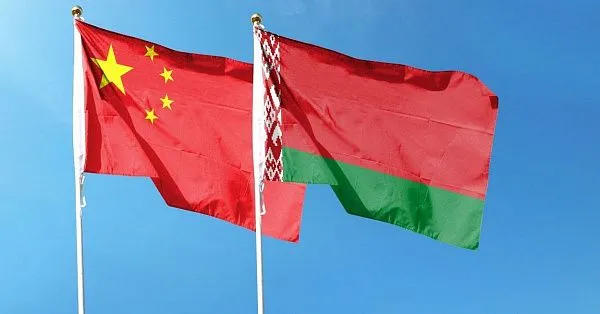
 Economy09.09.26Belarus and China increase stock exchange trading volumes
 -
![]()
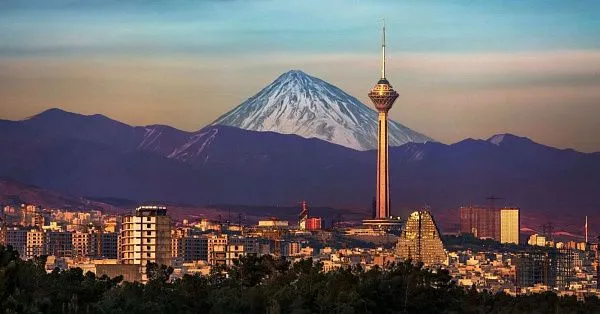
 Economy09.09.26Tehran enters list of world's top 100 innovation clusters
 -
![]()
 Economy09.09.26Expert: BRICS should turn cooperation into practical opportunities for partner countries
 -
![]()

 Economy09.09.26Tunisia and Egypt intend to increase trade volumes and explore opportunities for joint investment




















-
![Vladimir Putin]()
 Vladimir PutinPresident of Russia"We are developing mutual trade, which is growing; it increased by over 12 per cent last year. We have a joint commission working in this sphere. Our focus is on agriculture, shipbuilding, information technology and energy, including nuclear power. We have signed a free trade agreement between the Eurasian Economic Union and Indonesia. Jakarta is our reliable and old friend within ASEAN. We are working together at all international platforms, including the UN"
 -
![Vladimir Putin]() Vladimir PutinPresident of Russia"More and more Iranian students are choosing Russian education. We are very pleased about this. A great many future doctors are studying in Russia. In the 2025–2026 academic year, the number of Iranian students in Russia approached 10,000, with 802 of them studying at the expense of the Russian state budget"
Vladimir PutinPresident of Russia"More and more Iranian students are choosing Russian education. We are very pleased about this. A great many future doctors are studying in Russia. In the 2025–2026 academic year, the number of Iranian students in Russia approached 10,000, with 802 of them studying at the expense of the Russian state budget" -
![Xi Jinping]() Xi JinpingPresident of the People’s Republic of China"The foundation of our bilateral relations will only grow stronger, and we will confidently move forward to a better future. […] The striving of nations on our planet for peace, development, cooperation and mutual benefit remains unchanged. The vital mission of the Shanghai Cooperation Organisation is to maintain stability and promote the development of our region"
Xi JinpingPresident of the People’s Republic of China"The foundation of our bilateral relations will only grow stronger, and we will confidently move forward to a better future. […] The striving of nations on our planet for peace, development, cooperation and mutual benefit remains unchanged. The vital mission of the Shanghai Cooperation Organisation is to maintain stability and promote the development of our region" -
![Alisher Salomov]() Alisher SalomovAdviser to the Chairman of the National Committee for Ecology and Climate Change of the Republic of Uzbekistan"First and foremost, I would like to highlight the importance of this Central Asia–Russia initiative, because environmental problems know no borders, and only a shared understanding of these problems and the search for joint solutions can deliver positive results"
Alisher SalomovAdviser to the Chairman of the National Committee for Ecology and Climate Change of the Republic of Uzbekistan"First and foremost, I would like to highlight the importance of this Central Asia–Russia initiative, because environmental problems know no borders, and only a shared understanding of these problems and the search for joint solutions can deliver positive results" -
![Joao Paulo Capobianco]() Joao Paulo CapobiancoBrazilian Minister of the Environment and Climate Change"The BRICS countries have a very high level of responsibility because they share an important part of the world's biodiversity, landscapes, populations, food production and water resources. So, we have an opportunity to lead by example. We have our development bank, which can demonstrate and develop new ways of financing programmes. We can reduce the risks for private capital to invest in restoration and efforts to combat desertification"
Joao Paulo CapobiancoBrazilian Minister of the Environment and Climate Change"The BRICS countries have a very high level of responsibility because they share an important part of the world's biodiversity, landscapes, populations, food production and water resources. So, we have an opportunity to lead by example. We have our development bank, which can demonstrate and develop new ways of financing programmes. We can reduce the risks for private capital to invest in restoration and efforts to combat desertification"