



 Orchestra
  DIGITAL WORLD
 BRICS+ Media Centre
  MODERN RUSSIAN












 17.06.2617:00
  15.06.2612:00
International Taijiquan Day marks 21 March worldwide
Traditional Chinese art of Tai Chi was previously included in UNESCO’s Intangible Cultural Heritage list
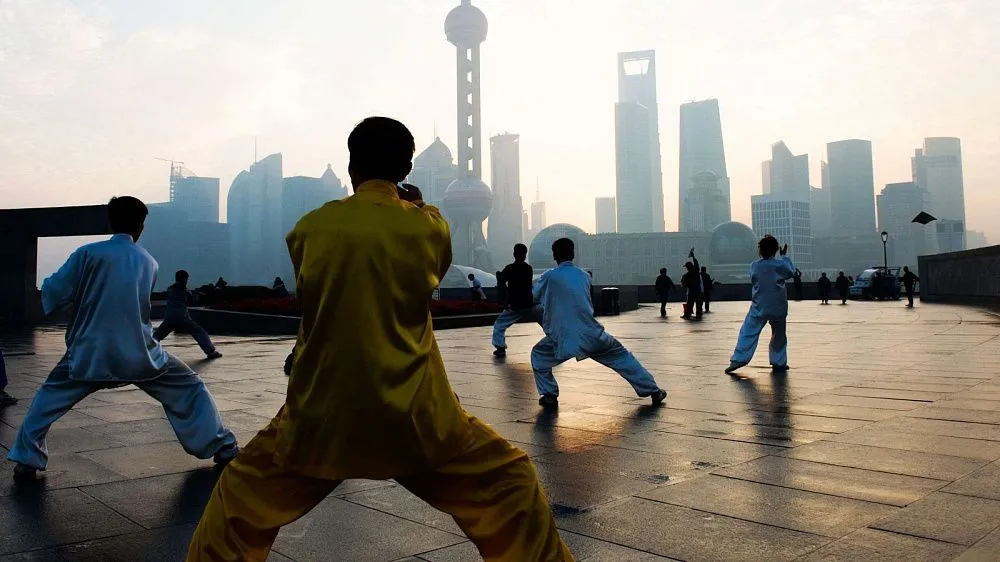
International Taijiquan Day (Tai Chi), a traditional Chinese martial art, is celebrated worldwide on 21 March. The observance was established in 2025 at the 43rd session of the General Conference of the United Nations Educational, Scientific and Cultural Organisation (UNESCO).
The art of Taijiquan originated in ancient China and has a history of nearly 400 years. The practice is based on traditional Chinese philosophy and health concepts, including the balance of yin and yang and the harmony between humans and nature. In December 2020, Taijiquan was inscribed on UNESCO’s Representative List of Intangible Cultural Heritage of Humanity.
"The ethics offered by Taijiquan are highly compatible with UNESCO’s mandate, which states, 'It is in the minds of men that the defences of peace must be constructed,' and the International Charter of Physical Education, Physical Activity and Sport," the organisation’s documents note.
Taijiquan embodies the principles of balance, the pursuit of peace, harmonious coexistence and mutual respect. It is a form of exercise characterised by gentle and flowing movements. It can be practised individually, in pairs or in groups.
Scientific studies confirm that long-term practice improves cardiovascular function, increases flexibility, reduces stress, strengthens the immune system and enhances sleep quality. Taijiquan is accessible to everyone and can be practised in various conditions, regardless of gender, age or physical fitness.
Practicing this type of martial arts is widespread in more than 180 countries. For example, the Society for the Study of Traditional Taijiquan was established in Russia last year.
"Taijiquan originated in the depths of Chinese culture but went beyond the limits of Chinese civilization, became the intangible heritage of all mankind. [...] Taijiquan has a unique code of written tradition describing the principles of this art. The Society for the Study of Traditional Taijiquan, headed by Stanislav Sergeevich Voskresensky, Governor of the Ivanovo Region, is engaged in the comprehensive study of Taijiquan. The society unites people who practice traditional Taijiquan, scientists and researchers in various fields, allowing everyone to touch the authentic tradition of this unique cultural phenomenon," said Dmitry Petrovsky, Executive Secretary of the Society for the Study of Traditional Taijiquan.
It can be seen in parks, public squares and major sporting events, including the World Games, the Universiade and the Asian Games. In January 2020, the International Olympic Committee included Taijiquan in the programme of the 2026 Summer Youth Olympic Games in Dakar, Senegal, as part of wushu competitions.
"For all fans of Taijiquan in Russia, it is gratifying that this particular martial art was the first to be included in the UNESCO calendar of International Days. Last year, Russia, together with China and a number of countries, initiated the naming of an international day in honor of the martial art for the first time in the UN system, which marks the widespread global recognition of Taijiquan," said Dmitry Petrovsky.
The date of 21 March is symbolic. It coincides with the spring equinox, when day and night are equal in length. In the Chinese calendar, it is part of the 24 solar terms – a system of timekeeping and traditions developed through observation of the Sun's annual movement – which is also included in UNESCO’s Intangible Cultural Heritage list.

MORE ON THE TOPIC


 30 minutes 39 sec.