















Kazakh scientists propose innovative methods to remove space debris from Earth’s orbit
The project explores multiple strategies, including capturing debris, deorbiting it and ensuring its safe destruction

Kazakh scientists have proposed new technological approaches to tackling space debris, warning that the growing accumulation of man-made objects in near-Earth orbit poses a direct threat to global satellite infrastructure, as reported by Kazinform, a partner of TV BRICS.
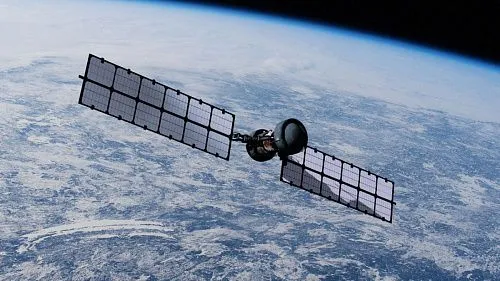
Researchers note that around 30,000 pieces of space debris larger than 10 centimetres are currently orbiting the Earth. These include defunct satellites, discarded rocket stages and fragments of metal left behind by previous space missions. Travelling at speeds of several kilometres per second, such objects can collide and generate even more debris, further contaminating orbital pathways.
Scientists stress that without effective intervention, the continued build-up of orbital waste could jeopardise GPS navigation, satellite communications and weather monitoring systems, which underpin modern economies and public safety worldwide.
To address the challenge, researchers are developing a dedicated scientific project focused on neutralising and removing uncontrolled objects from orbit. The project explores multiple strategies, including capturing debris, deorbiting it and ensuring its safe destruction in the Earth’s atmosphere.
The core concept involves slowing down large, unmanaged debris objects by attaching a specially designed structure that increases their surface area. This leads to higher atmospheric drag, gradually reducing the object’s velocity.
As the debris slows, it descends into lower orbits and eventually burns up upon re-entry, eliminating the risk of further orbital collisions. Mathematical models are used to calculate debris control mechanisms, including systems based on tether technology, which employs thin connecting cables to stabilise and guide objects.
According to researchers, space debris mitigation is emerging as a fast-developing and strategically important scientific field, reflecting humanity’s responsibility in managing shared orbital resources.
Photo: Alones Creative / iStock
-
![]()

 Technology21.09.26Report: Cairo makes list of world’s top 100 innovation hubs and tops rankings in Arab world and Africa
 -
![]()
 Technology21.09.26India’s semiconductor programme supports 200 chip design companies and trains 70,000 engineers
 -
![]()
 Technology21.09.26Vietnam becomes Southeast Asia’s largest electric-car market as EV share reaches nearly 40%
 -
![]()
 Technology21.09.26South African graduate develops AI system to translate sign language into speech
 -
![]()
 Technology19.09.26Chile to develop system for forecasting extreme weather events
 -
![]()

 Technology19.09.26Kazakhstan and Uzbekistan to develop cross-border QR payments


















-
![Ashok Mondal]()
 Ashok MondalNID Director"Signing this Memorandum of Understanding between the National Institute of Design (NID) and TV BRICS marks a pivotal milestone in advancing design diplomacy across the BRICS media space. This moment is especially significant as India hosts the 18th BRICS Summit, following India’s assumption of the BRICS chairship under the visionary leadership of Prime Minister Shri Narendra Modi. The partnership directly embodies his call to elevate Indian design standards through 'Design in India, Design for the World'. Through the global reach and broadcast capabilities of TV BRICS, we are excited to showcase the extraordinary visual storytelling, films, and design research of NID’s Film and Video Communication students to an international audience, while also welcoming and screening film works from BRICS network countries at NID Ahmedabad. This reciprocal exchange strengthens our shared commitment to educational, cultural, and artistic collaboration, fostering sustainable connections among global creative communities. NID Ahmedabad looks forward to leveraging this partnership to deepen cross-cultural dialogue, build international expert networks, and unlock transformative opportunities for filmmakers, researchers, and faculty across member nations"
 -
![Vladimir Putin]() Vladimir PutinPresident of Russia"We are developing mutual trade, which is growing; it increased by over 12 per cent last year. We have a joint commission working in this sphere. Our focus is on agriculture, shipbuilding, information technology and energy, including nuclear power. We have signed a free trade agreement between the Eurasian Economic Union and Indonesia. Jakarta is our reliable and old friend within ASEAN. We are working together at all international platforms, including the UN"
Vladimir PutinPresident of Russia"We are developing mutual trade, which is growing; it increased by over 12 per cent last year. We have a joint commission working in this sphere. Our focus is on agriculture, shipbuilding, information technology and energy, including nuclear power. We have signed a free trade agreement between the Eurasian Economic Union and Indonesia. Jakarta is our reliable and old friend within ASEAN. We are working together at all international platforms, including the UN" -
![Joao Paulo Capobianco]() Joao Paulo CapobiancoBrazilian Minister of the Environment and Climate Change"The BRICS countries have a very high level of responsibility because they share an important part of the world's biodiversity, landscapes, populations, food production and water resources. So, we have an opportunity to lead by example. We have our development bank, which can demonstrate and develop new ways of financing programmes. We can reduce the risks for private capital to invest in restoration and efforts to combat desertification"
Joao Paulo CapobiancoBrazilian Minister of the Environment and Climate Change"The BRICS countries have a very high level of responsibility because they share an important part of the world's biodiversity, landscapes, populations, food production and water resources. So, we have an opportunity to lead by example. We have our development bank, which can demonstrate and develop new ways of financing programmes. We can reduce the risks for private capital to invest in restoration and efforts to combat desertification" -
![Dilma Rousseff]() Dilma RousseffPresident of the New Development Bank"India’s BRICS Presidency this year gives special significance to our discussion. NDB stands ready to be a trusted partner in turning commitments on sustainability, clean energy, smart and resilient infrastructure into concrete results on the ground. […] For NDB, mobilising private capital is a strategic imperative. Created by the BRICS founding members, NDB is a bank of the Global South, for the Global South, mandated to mobilise resources for infrastructure and sustainable development"
Dilma RousseffPresident of the New Development Bank"India’s BRICS Presidency this year gives special significance to our discussion. NDB stands ready to be a trusted partner in turning commitments on sustainability, clean energy, smart and resilient infrastructure into concrete results on the ground. […] For NDB, mobilising private capital is a strategic imperative. Created by the BRICS founding members, NDB is a bank of the Global South, for the Global South, mandated to mobilise resources for infrastructure and sustainable development" -
![Sihasak Phuangketkeow]() Sihasak PhuangketkeowDeputy Prime Minister and Minister of Foreign Affairs of Thailand"BRICS can play a very important role in maintaining the free flow of trade and investment. The group can also be a vehicle for all of us to engage and to look at economic opportunities"
Sihasak PhuangketkeowDeputy Prime Minister and Minister of Foreign Affairs of Thailand"BRICS can play a very important role in maintaining the free flow of trade and investment. The group can also be a vehicle for all of us to engage and to look at economic opportunities"