















Chinese researchers complete world's first in-orbit test of 400V electrical power system
Technology developed entirely by Chinese specialists was successfully validated aboard the Tianzhou-10 cargo spacecraft
-
![]()
Photo source: dima_zel / iStock

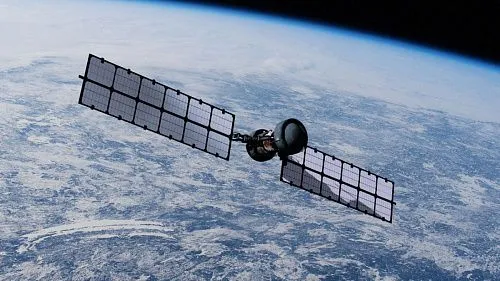
China has achieved another major technological breakthrough in space by successfully conducting the world's first in-orbit test of a 400V electrical power system, an innovative technology expected to supply high-power space missions. The information was reported by the Global Times, a TV BRICS partner.
The project was led by the Institute of Manned Space System Engineering under the China Academy of Space Technology (CAST), with the participation of other research institutes and industry partners.
The new technology addresses a major challenge in space engineering: low-voltage electrical systems are no longer sufficient to meet the growing demand for onboard equipment. As space missions become increasingly advanced, spacecraft require greater power capacity to operate for longer periods, support heavier payloads and function in increasingly extreme environments.
To address these challenges, the institute identified high-voltage, high-power energy control technology as a key area within its technological development programme. Two in-orbit tests confirmed the system's reliability and adaptability in the space environment.
According to the specialists, following the insertion of the Tianzhou-10 spacecraft into orbit, the 400V electrical power system – developed entirely by Chinese institutions – achieved independent control across the entire technological chain and all core components, including power generation, storage, distribution and transmission.
The project team stated that it will continue optimising the system's performance and strengthening China's space power technology capabilities in support of future major missions, including crewed lunar exploration programmes.
China's progress in space is mirrored in other parts of the world. BRICS countries and partner states are advancing innovation and expanding the frontiers of space science through projects ranging from satellites and telescopes to agriculture and particle physics.
In South Africa, researchers have launched a programme that will send rooibos seeds to the International Space Station for the first time to study the plant's behaviour under space conditions. According to IOL, the seeds will remain exposed to microgravity and space radiation for several weeks. Upon their return, they will be analysed and compared with a control group in terms of germination, growth, resilience and productivity.
Russian scientists from the National Research Nuclear University MEPhI, working in partnership with international specialists, have proposed a new model for dark matter. Rather than consisting of a single isolated particle, the new theory suggests the existence of a "dark chemistry", with its own atoms, electrons and photons, believed to have formed in the early Universe. The research, reported by the Ministry of Science and Higher Education of the Russian Federation, opens a new theoretical pathway towards understanding invisible matter and broadens scientific knowledge of the composition of the cosmos.
In Chile, the observatory in Coquimbo has launched a ten-year project to survey the southern sky using high-definition imaging, rapid capture technology and an ultra-wide field of view. According to Crónica Digital, a TV BRICS partner, the objectives include identifying near-Earth asteroids, trans-Neptunian objects and potential interstellar bodies.
-
![]()

 Technology21.09.26Report: Cairo makes list of world’s top 100 innovation hubs and tops rankings in Arab world and Africa
 -
![]()
 Technology21.09.26India’s semiconductor programme supports 200 chip design companies and trains 70,000 engineers
 -
![]()
 Technology21.09.26Vietnam becomes Southeast Asia’s largest electric-car market as EV share reaches nearly 40%
 -
![]()
 Technology21.09.26South African graduate develops AI system to translate sign language into speech
 -
![]()
 Technology19.09.26Chile to develop system for forecasting extreme weather events
 -
![]()

 Technology19.09.26Kazakhstan and Uzbekistan to develop cross-border QR payments
















-
![Ashok Mondal]()
 Ashok MondalNID Director"Signing this Memorandum of Understanding between the National Institute of Design (NID) and TV BRICS marks a pivotal milestone in advancing design diplomacy across the BRICS media space. This moment is especially significant as India hosts the 18th BRICS Summit, following India’s assumption of the BRICS chairship under the visionary leadership of Prime Minister Shri Narendra Modi. The partnership directly embodies his call to elevate Indian design standards through 'Design in India, Design for the World'. Through the global reach and broadcast capabilities of TV BRICS, we are excited to showcase the extraordinary visual storytelling, films, and design research of NID’s Film and Video Communication students to an international audience, while also welcoming and screening film works from BRICS network countries at NID Ahmedabad. This reciprocal exchange strengthens our shared commitment to educational, cultural, and artistic collaboration, fostering sustainable connections among global creative communities. NID Ahmedabad looks forward to leveraging this partnership to deepen cross-cultural dialogue, build international expert networks, and unlock transformative opportunities for filmmakers, researchers, and faculty across member nations"
 -
![Vladimir Putin]() Vladimir PutinPresident of Russia"We are developing mutual trade, which is growing; it increased by over 12 per cent last year. We have a joint commission working in this sphere. Our focus is on agriculture, shipbuilding, information technology and energy, including nuclear power. We have signed a free trade agreement between the Eurasian Economic Union and Indonesia. Jakarta is our reliable and old friend within ASEAN. We are working together at all international platforms, including the UN"
Vladimir PutinPresident of Russia"We are developing mutual trade, which is growing; it increased by over 12 per cent last year. We have a joint commission working in this sphere. Our focus is on agriculture, shipbuilding, information technology and energy, including nuclear power. We have signed a free trade agreement between the Eurasian Economic Union and Indonesia. Jakarta is our reliable and old friend within ASEAN. We are working together at all international platforms, including the UN" -
![Joao Paulo Capobianco]() Joao Paulo CapobiancoBrazilian Minister of the Environment and Climate Change"The BRICS countries have a very high level of responsibility because they share an important part of the world's biodiversity, landscapes, populations, food production and water resources. So, we have an opportunity to lead by example. We have our development bank, which can demonstrate and develop new ways of financing programmes. We can reduce the risks for private capital to invest in restoration and efforts to combat desertification"
Joao Paulo CapobiancoBrazilian Minister of the Environment and Climate Change"The BRICS countries have a very high level of responsibility because they share an important part of the world's biodiversity, landscapes, populations, food production and water resources. So, we have an opportunity to lead by example. We have our development bank, which can demonstrate and develop new ways of financing programmes. We can reduce the risks for private capital to invest in restoration and efforts to combat desertification" -
![Dilma Rousseff]() Dilma RousseffPresident of the New Development Bank"India’s BRICS Presidency this year gives special significance to our discussion. NDB stands ready to be a trusted partner in turning commitments on sustainability, clean energy, smart and resilient infrastructure into concrete results on the ground. […] For NDB, mobilising private capital is a strategic imperative. Created by the BRICS founding members, NDB is a bank of the Global South, for the Global South, mandated to mobilise resources for infrastructure and sustainable development"
Dilma RousseffPresident of the New Development Bank"India’s BRICS Presidency this year gives special significance to our discussion. NDB stands ready to be a trusted partner in turning commitments on sustainability, clean energy, smart and resilient infrastructure into concrete results on the ground. […] For NDB, mobilising private capital is a strategic imperative. Created by the BRICS founding members, NDB is a bank of the Global South, for the Global South, mandated to mobilise resources for infrastructure and sustainable development" -
![Sihasak Phuangketkeow]() Sihasak PhuangketkeowDeputy Prime Minister and Minister of Foreign Affairs of Thailand"BRICS can play a very important role in maintaining the free flow of trade and investment. The group can also be a vehicle for all of us to engage and to look at economic opportunities"
Sihasak PhuangketkeowDeputy Prime Minister and Minister of Foreign Affairs of Thailand"BRICS can play a very important role in maintaining the free flow of trade and investment. The group can also be a vehicle for all of us to engage and to look at economic opportunities"