















Report: Cairo makes list of world’s top 100 innovation hubs and tops rankings in Arab world and Africa
Cairo came first in the Arab world and 86th globally
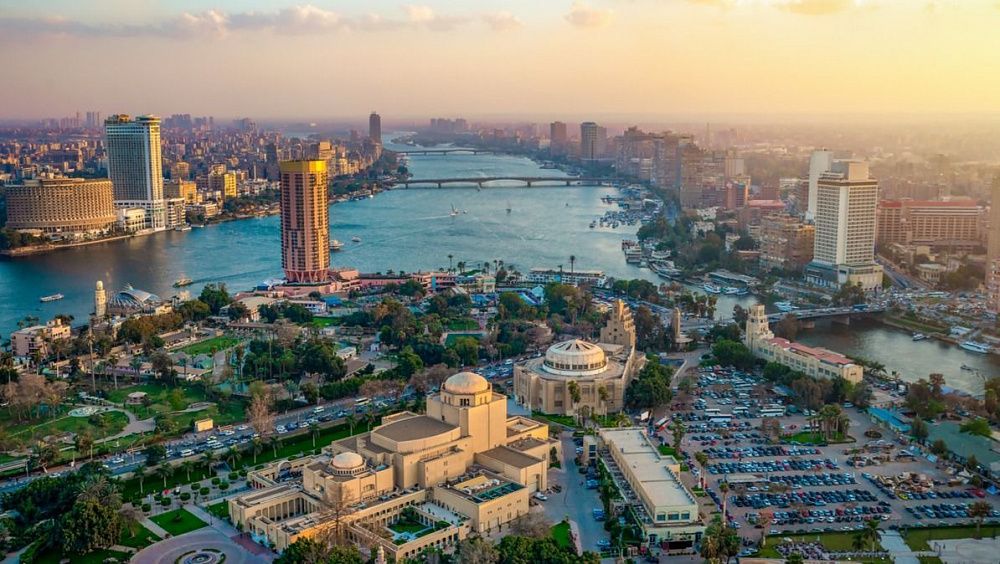
Cairo has made a notable mark on the global innovation map, ranking 86th on the list of the world’s top 100 innovation hubs for 2026, according to the World Intellectual Property Organisation (WIPO) ranking. It is the only hub from the African continent on the list and the top-ranked in the Arab world.
Sada El-Balad, a partner of TV BRICS, reported on a study issued by the Information and Decision Support Centre of the Council of Ministers, which noted that this progress reflects the growing innovation ecosystem in Cairo, which combines scientific research, inventions and technological investment.
According to the report, Cairo’s ranking is based on the strength of its scientific and research output, particularly in the fields of medical technology and chemistry, as well as venture capital activity supporting start-ups. The WIPO ranking is based on indicators including the locations of inventors in international patent applications, authors of scientific research papers, and the locations of companies receiving investment funding.
Globally, China accounts for 25 clusters among the world’s top 100, whilst India accounts for four. In the Arab world, Cairo ranked first and 86th globally, while Riyadh entered the list of the top 100 innovation clusters for the first time, ranking 92nd globally.
The ranking also highlighted the expansion of innovation hubs beyond traditional advanced economies, with clusters from middle-income countries such as Brazil, Egypt, Iran, Malaysia, Mexico, and Türkiye making the list. WIPO emphasised that these hubs represent a key component of national innovation ecosystems, by strengthening links between universities, researchers, inventors, businesses and venture capital, and by transforming knowledge into economic and social value.
As the BRICS countries seek to strengthen their role in the global knowledge-based economy, innovation, science and technology have become key areas of cooperation amongst member states. Through the development of scientific research, the nurturing of talent and the establishment of technology centres, the group is working to build a more integrated innovation ecosystem. The BRICS science ministers adopted the Chennai Declaration during the BRICS Science Ministers’ Meeting in the Indian city of Chennai. This declaration sets out the key avenues for cooperation among the group’s member states in the fields of science, technology and innovation and calls for the establishment of an effective and sustainable cooperation framework capable of meeting the challenges of the future, according to IANS, a partner of TV BRICS.
In the same context, Iran continues to develop its innovation ecosystem, with Tehran entering the list of the world’s top innovation hubs, ranking 65th, making it the only Iranian city to feature in this ranking, as reported by IRNA, a partner of TV BRICS.
Alongside the efforts of the BRICS nations, the experiences of partner countries working to accelerate the transition towards an innovation-driven economy are noteworthy. Among these is Vietnam, which places the development of a skilled workforce at the heart of its science strategy, where Tra Vinh University in Vietnam has, over the course of approximately two years, successfully trained more than 5,800 students and pupils in innovation as part of efforts to implement a government programme for the development of science, technology and digital transformation, according to Vietnam News Agency (VNA), a partner of TV BRICS.
The university’s programmes have also reached more than 350,000 young people in the Mekong Delta and around 1,200 productive organisations and households, with support for start-ups shifting from training to project mentoring, product development and market launch.
Student projects have achieved tangible results, with five out of seven projects securing funding during Demo Day 2025, whilst a project producing instant soup using freeze-drying technology received awards and additional funding. In 2026, the province plans to strengthen support for start-ups by developing business models, applying artificial intelligence, marketing products, and expanding cooperation between the government, the university, and the business sector to transform research into commercial products.
-
![]()
 Technology21.09.26India’s semiconductor programme supports 200 chip design companies and trains 70,000 engineers
 -
![]()
 Technology21.09.26Vietnam becomes Southeast Asia’s largest electric-car market as EV share reaches nearly 40%
 -
![]()
 Technology21.09.26South African graduate develops AI system to translate sign language into speech
 -
![]()
 Technology19.09.26Chile to develop system for forecasting extreme weather events
 -
![]()

 Technology19.09.26Kazakhstan and Uzbekistan to develop cross-border QR payments
 -
![]()
 Technology19.09.26China unveils AI systems to transform mineral exploration
















-
![Ashok Mondal]()
 Ashok MondalNID Director"Signing this Memorandum of Understanding between the National Institute of Design (NID) and TV BRICS marks a pivotal milestone in advancing design diplomacy across the BRICS media space. This moment is especially significant as India hosts the 18th BRICS Summit, following India’s assumption of the BRICS chairship under the visionary leadership of Prime Minister Shri Narendra Modi. The partnership directly embodies his call to elevate Indian design standards through 'Design in India, Design for the World'. Through the global reach and broadcast capabilities of TV BRICS, we are excited to showcase the extraordinary visual storytelling, films, and design research of NID’s Film and Video Communication students to an international audience, while also welcoming and screening film works from BRICS network countries at NID Ahmedabad. This reciprocal exchange strengthens our shared commitment to educational, cultural, and artistic collaboration, fostering sustainable connections among global creative communities. NID Ahmedabad looks forward to leveraging this partnership to deepen cross-cultural dialogue, build international expert networks, and unlock transformative opportunities for filmmakers, researchers, and faculty across member nations"
 -
![Vladimir Putin]() Vladimir PutinPresident of Russia"We are developing mutual trade, which is growing; it increased by over 12 per cent last year. We have a joint commission working in this sphere. Our focus is on agriculture, shipbuilding, information technology and energy, including nuclear power. We have signed a free trade agreement between the Eurasian Economic Union and Indonesia. Jakarta is our reliable and old friend within ASEAN. We are working together at all international platforms, including the UN"
Vladimir PutinPresident of Russia"We are developing mutual trade, which is growing; it increased by over 12 per cent last year. We have a joint commission working in this sphere. Our focus is on agriculture, shipbuilding, information technology and energy, including nuclear power. We have signed a free trade agreement between the Eurasian Economic Union and Indonesia. Jakarta is our reliable and old friend within ASEAN. We are working together at all international platforms, including the UN" -
![Joao Paulo Capobianco]() Joao Paulo CapobiancoBrazilian Minister of the Environment and Climate Change"The BRICS countries have a very high level of responsibility because they share an important part of the world's biodiversity, landscapes, populations, food production and water resources. So, we have an opportunity to lead by example. We have our development bank, which can demonstrate and develop new ways of financing programmes. We can reduce the risks for private capital to invest in restoration and efforts to combat desertification"
Joao Paulo CapobiancoBrazilian Minister of the Environment and Climate Change"The BRICS countries have a very high level of responsibility because they share an important part of the world's biodiversity, landscapes, populations, food production and water resources. So, we have an opportunity to lead by example. We have our development bank, which can demonstrate and develop new ways of financing programmes. We can reduce the risks for private capital to invest in restoration and efforts to combat desertification" -
![Dilma Rousseff]() Dilma RousseffPresident of the New Development Bank"India’s BRICS Presidency this year gives special significance to our discussion. NDB stands ready to be a trusted partner in turning commitments on sustainability, clean energy, smart and resilient infrastructure into concrete results on the ground. […] For NDB, mobilising private capital is a strategic imperative. Created by the BRICS founding members, NDB is a bank of the Global South, for the Global South, mandated to mobilise resources for infrastructure and sustainable development"
Dilma RousseffPresident of the New Development Bank"India’s BRICS Presidency this year gives special significance to our discussion. NDB stands ready to be a trusted partner in turning commitments on sustainability, clean energy, smart and resilient infrastructure into concrete results on the ground. […] For NDB, mobilising private capital is a strategic imperative. Created by the BRICS founding members, NDB is a bank of the Global South, for the Global South, mandated to mobilise resources for infrastructure and sustainable development" -
![Sihasak Phuangketkeow]() Sihasak PhuangketkeowDeputy Prime Minister and Minister of Foreign Affairs of Thailand"BRICS can play a very important role in maintaining the free flow of trade and investment. The group can also be a vehicle for all of us to engage and to look at economic opportunities"
Sihasak PhuangketkeowDeputy Prime Minister and Minister of Foreign Affairs of Thailand"BRICS can play a very important role in maintaining the free flow of trade and investment. The group can also be a vehicle for all of us to engage and to look at economic opportunities"