















Malaysia outlines AI-driven strategy to transform Kuala Lumpur into regional smart city hub
This digital environment is designed to support proactive urban planning, disaster response, and resource optimisation

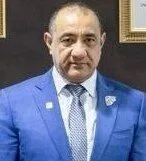
Malaysia has identified Artificial Intelligence (AI) as a core pillar of its strategy to transform Kuala Lumpur into a leading smart city and strengthen its regional competitiveness within ASEAN, according to Malaysian Minister of Digital Gobind Singh Deo.
The minister outlined a comprehensive roadmap to develop the capital into a model AI-powered urban centre. This initiative forms part of the wider “Malaysia Digital 2030” strategy and aims to establish the foundations for a national “Smart Nation” framework, as reported by VNA, a partner of TV BRICS.
AI systems are already being deployed to manage real-time traffic flow, city surveillance, and environmental monitoring. One of the key innovations is the development of a “digital twin” of Kuala Lumpur – a virtual replica of the city that enables dynamic modelling of infrastructure, energy usage, transport, and public services. This digital environment is designed to support proactive urban planning, disaster response, and resource optimisation.
Gobind Singh Deo emphasised that robust digital infrastructure is essential for enabling AI solutions. The government is pursuing a cloud-first policy across all ministries and working to centralise and digitise public sector data to ensure it is accessible and AI-compatible.
The government aims to ensure Malaysia is technologically prepared within the next five years to support these transformations. The initiative also aligns with Prime Minister Anwar Ibrahim’s broader digital transformation agenda, which prioritises systemic readiness and cybersecurity in deploying new technologies.
Photo: iStock
-
![]()
 Technology12.09.26Brazil launches AI solutions bank for public administration
 -
![]()

 Technology12.09.26India to showcase its scientific and technological potential through TV BRICS
 -
![]() Technology12.09.26Russia launches 5G network
Technology12.09.26Russia launches 5G network -
![]()
 Technology11.09.26Iranian researchers improve water quality modelling accuracy by up to 43%
 -
![]() Technology10.09.26Russian scientists develop technology to build houses at lower cost
Technology10.09.26Russian scientists develop technology to build houses at lower cost -
![]()
 Technology09.09.26INOTEX 2026 connects 10 countries through technology, investment and startup cooperation








-
![Ashok Mondal]()
 Ashok MondalNID Director"Signing this Memorandum of Understanding between the National Institute of Design (NID) and TV BRICS marks a pivotal milestone in advancing design diplomacy across the BRICS media space. This moment is especially significant as India hosts the 18th BRICS Summit, following India’s assumption of the BRICS chairship under the visionary leadership of Prime Minister Shri Narendra Modi. The partnership directly embodies his call to elevate Indian design standards through 'Design in India, Design for the World'. Through the global reach and broadcast capabilities of TV BRICS, we are excited to showcase the extraordinary visual storytelling, films, and design research of NID’s Film and Video Communication students to an international audience, while also welcoming and screening film works from BRICS network countries at NID Ahmedabad. This reciprocal exchange strengthens our shared commitment to educational, cultural, and artistic collaboration, fostering sustainable connections among global creative communities. NID Ahmedabad looks forward to leveraging this partnership to deepen cross-cultural dialogue, build international expert networks, and unlock transformative opportunities for filmmakers, researchers, and faculty across member nations"
 -
![Vladimir Putin]() Vladimir PutinPresident of Russia"We are developing mutual trade, which is growing; it increased by over 12 per cent last year. We have a joint commission working in this sphere. Our focus is on agriculture, shipbuilding, information technology and energy, including nuclear power. We have signed a free trade agreement between the Eurasian Economic Union and Indonesia. Jakarta is our reliable and old friend within ASEAN. We are working together at all international platforms, including the UN"
Vladimir PutinPresident of Russia"We are developing mutual trade, which is growing; it increased by over 12 per cent last year. We have a joint commission working in this sphere. Our focus is on agriculture, shipbuilding, information technology and energy, including nuclear power. We have signed a free trade agreement between the Eurasian Economic Union and Indonesia. Jakarta is our reliable and old friend within ASEAN. We are working together at all international platforms, including the UN" -
![Vladimir Putin]() Vladimir PutinPresident of Russia"More and more Iranian students are choosing Russian education. We are very pleased about this. A great many future doctors are studying in Russia. In the 2025–2026 academic year, the number of Iranian students in Russia approached 10,000, with 802 of them studying at the expense of the Russian state budget"
Vladimir PutinPresident of Russia"More and more Iranian students are choosing Russian education. We are very pleased about this. A great many future doctors are studying in Russia. In the 2025–2026 academic year, the number of Iranian students in Russia approached 10,000, with 802 of them studying at the expense of the Russian state budget" -
![Xi Jinping]() Xi JinpingPresident of the People’s Republic of China"The foundation of our bilateral relations will only grow stronger, and we will confidently move forward to a better future. […] The striving of nations on our planet for peace, development, cooperation and mutual benefit remains unchanged. The vital mission of the Shanghai Cooperation Organisation is to maintain stability and promote the development of our region"
Xi JinpingPresident of the People’s Republic of China"The foundation of our bilateral relations will only grow stronger, and we will confidently move forward to a better future. […] The striving of nations on our planet for peace, development, cooperation and mutual benefit remains unchanged. The vital mission of the Shanghai Cooperation Organisation is to maintain stability and promote the development of our region" -
![Alisher Salomov]() Alisher SalomovAdviser to the Chairman of the National Committee for Ecology and Climate Change of the Republic of Uzbekistan"First and foremost, I would like to highlight the importance of this Central Asia–Russia initiative, because environmental problems know no borders, and only a shared understanding of these problems and the search for joint solutions can deliver positive results"
Alisher SalomovAdviser to the Chairman of the National Committee for Ecology and Climate Change of the Republic of Uzbekistan"First and foremost, I would like to highlight the importance of this Central Asia–Russia initiative, because environmental problems know no borders, and only a shared understanding of these problems and the search for joint solutions can deliver positive results"